The trade-offs Americans are making to afford summer travel

 Getty Images
Summer 2026 was supposed to be the year many Americans travelled big again. Instead, higher fuel costs, long-haul uncertainty and a shakier economic mood are changing the trips they feel able – or willing – to take. We spoke to US travellers about what they're doing instead.
This upcoming travel season is shaping up to be unusually complicated, from disrupted flight paths across the Middle East to higher gas and jet fuel prices – not to mention Spirit Airlines ceasing operations and the hantavirus striking a cruise ship.
According to a new survey by US News and World Report, 65% of Americans have already altered summer travel plans because of rising prices, with 31% changing destinations or cancelling vacations entirely. While two-thirds of Americans are still planning to travel this summer, an Ibotta Summer Outlook survey found a third expect to take fewer trips.
"Summer 2026 is shaping up around three clear priorities: confidence, ease and reassurance," said Alison Zacher, global managing director at luxury tour operator Scott Dunn. "Since March, we've seen guests gravitating towards destinations that feel secure, are straightforward to reach and offer strong support on the ground."
This has led to some hard decisions, and smart swaps: Disney for the Smokies, cross-country flights for closer-to-home baseball weekends, ambitious road trips for shorter breaks and complicated international itineraries for routes that feel safer and easier.
 Getty Images
"This is a more calculated traveller than we've seen in years," says Jim Augerinos, owner and travel advisor at Perfect Honeymoons. "People still want the experience, they're just being smarter about how they get it."
Trading down, not staying home
Walter Bennett, based in Chicago, was hoping this was the year his family of four finally made it to Disney World in Orlando. But when his company went through a round of layoffs in February, the $9,000 (£6,650) price tag – including flights, hotel, park tickets and food – suddenly felt risky.
"I kept my job – but two people on my team didn't, and it spooked me," he said. "I don't feel unsafe, but I also don't feel like dropping nine grand on a vacation right now is the smartest move," he said. Not only that, but flight prices kept creeping up every time he checked.
Instead, the family is planning a road trip to the Smoky Mountains in Tennessee, a nine-hour drive from Chicago, and renting a cabin outside Gatlinburg. "We've never been, the kids are pumped about hiking and white-water stuff, and the whole trip is going to come in around $2,200-$2,500 (£1,630-£1,850) all in," he said.
 Getty Images
The cabin has a kitchen, allowing them to save on meals, and many of the biggest draws – including Great Smoky Mountains National Park – are free or low-cost. A parking pass costs $5 (£3.70) for the day or $15 (£11) for the week.
Augerinos is seeing a similar pattern among clients, who still want a memorable trip but are rethinking what that means. "I'm booking more Montana ranches, Utah and Wyoming national parks and high-end domestic trips that still feel like a real experience," he said. "For a lot of people, that bigger international trip is getting pushed out until things calm down."
Waiting for certainty
Jagdish Khubchandani, a professor of public health at New Mexico State University, had promised to fly to Delhi to support his mother through surgery but the Iran war complicated his plans. "I checked tickets and the travel was chaotic," he said. "I could get a ticket from El Paso to Delhi, but via the Middle East and there was a note on airline websites: 'airspaces may remain closed'."
So far, the uncertainty has kept him from booking, but he's keeping his eye on flights for the next few weeks as more carriers are adding Asia-bound routes through Europe. If he finds a routing that feels reliable, he will pull the trigger, even knowing that it will add four to six hours to his total travel time.
His hesitation reflects a wider pattern. "While there is some uncertainty around travel this summer, we are still seeing people want to travel," explained Joanna Reeve, a general manager at Intrepid Travel. “They're just adjusting where, when and how they're travelling."
Shorter trips, closer to home
With US gasoline prices rising sharply – topping $4.50 (£3.35) a gallon in early May – even the classic American road trip is being reimagined this year.
Last summer, Oregon resident Eric Goranson saved carefully for a week-long trip to Boston to see the Boston Red Sox play the Seattle Mariners at Fenway Park. "My girlfriend Alisa is a huge lifelong Red Sox fan and I'm a die-hard Seattle Mariners fan, so we were really excited to turn it into our big summer getaway," he said.
 Getty Images
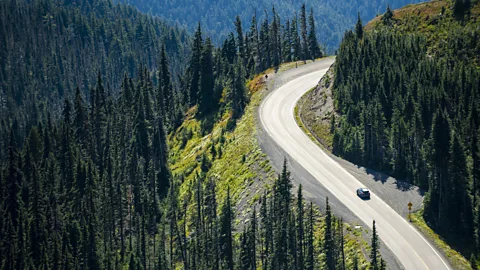
But with fuel prices and travel costs soaring, they decided to scrap the Boston trip. Instead, they bought tickets to the Mariners series in Seattle, much closer to home. "We'll still get to enjoy some great baseball together. It's only a three-hour drive, which saves us a ton of money," he said. The switch also frees them up to take local camping trips in Oregon and Washington.
More like this:
For Gabrielle Wallace, who typically drives between properties she manages in Kansas City and Portland, Maine, fuel costs changed the equation altogether.
"It is a 1,500-mile trip each way, and the significant increase in gas prices makes it not worth it to drive at this time," she said. She is considering a shorter trip by air instead, though the change comes with disappointment. "Usually, I would spend a few months in Maine, so the road trip is a highlight of my summer."
Finding value in disruption
While some Americans are avoiding long-haul travel, others are looking for opportunity in the disruption. Frequent traveller Janice Lintz is avoiding all routings through the Middle East, but she has also been looking for deals in usually expensive destinations where prices have softened due to decreased demand.
 Getty Images
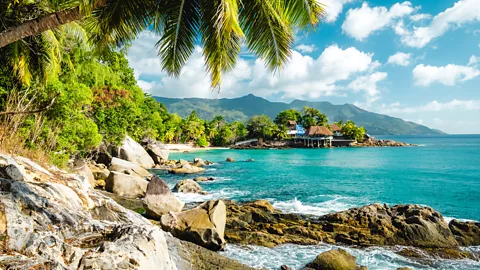
She recently returned from the Seychelles, the archipelago nation north of Madagascar, where she said disruption in the region had affected usual travel patterns. Rather than flying with Qatar or Etihad Airways, she routed through Addis Ababa on Ethiopian Airlines and found lower prices and uncrowded beaches.
"This is the perfect time to visit the Seychelles," she said. "I was able to negotiate rates including taxis. Plus, I had the beach to myself, which is unheard of in an Instagram world."
--
If you liked this story, sign up for The Essential List newsletter – a handpicked selection of features, videos and can't-miss news, delivered to your inbox twice a week.
