Cool Machine to Land: 14 of the best books of 2026 so far

 Macmillan/ Penguin Random House
From a dizzyingly brilliant heist to a devastating tale of generational loss, here are the year's most acclaimed works of fiction so far.
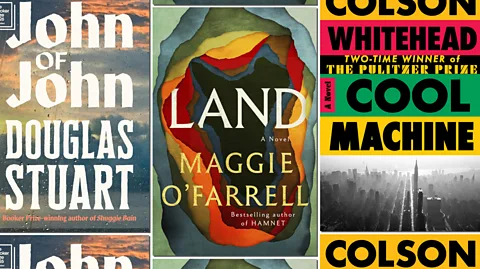
John of John by Douglas Stuart
When 22-year-old art student Cal returns home to the Isle of Harris in Scotland's Outer Hebrides, tensions arise with his father, John, a farmer and deacon in a tight-knit, Presbyterian community. At the heart of the story is the long-held secret relationship between John and his bachelor friend, Innes MacInnes, through which is explored wrenching loneliness and different forms of alienation. From the author of 2020's Booker winner Shuggie Bain and 2022's Young Mungo, John of John is being described by some critics as Stuart's best yet. "Rarely can a novel set on such a small scale have seemed so epic" writes The Herald Scotland. "The novel is outstandingly canny and wrenching on self-contempt, on the toilsome art of deceit, and on the contradictions we all contain, as well as the friction that can exist between the personal and the collective" writes The Guardian. (RL)
Land by Maggie O'Farrell
Set in 1865, Land follows mapmaker Tomás, along with his son Liam, as he surveys for the British government the landscape of a windswept Irish peninsula after the catastrophic great hunger. Following an encounter at a mysterious spring, Tomás's mindset profoundly shifts. It is O'Farrell's best novel yet, according to The New Statesman. The author behind Hamnet is "a masterful storyteller" it says, and "the best contemporary novelist in the English-speaking world". Land is "epic and intimate, tender and crushingly devastating". The Oxford Review of Books points to O'Farrell's "adept ability to render scenes with painterly precision," and the novel's "imagery and soundscapes alike seem to demand cinematic translation". Perhaps no surprise, then, that the makers of the recent Hamnet adaptation have secured the screen rights to Land. (LB)
 Penguin Random House
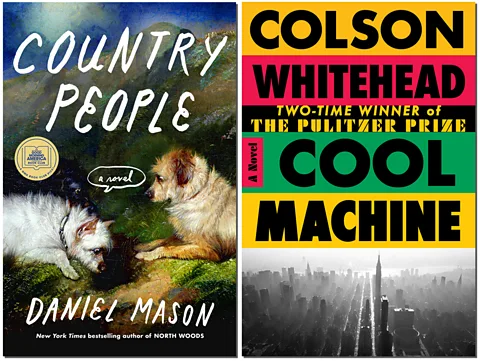
Cool Machine by Colson Whitehead
The third and final novel of Colson Whitehead's Harlem Trilogy – following Harlem Shuffle and Crook Manifesto – is set in the 1980s. Flawed but endearing protagonist Ray Carney signs up to an outrageous mission. The "dizzyingly brilliant" Cool Machine is an "American epic disguised as a heist novel," says the LA Times. It is "a modern masterpiece and an ode to New York, no matter that rats skitter and cockroaches scamper underfoot". The Pulitzer-winning author has delivered another "dazzling" page turner, says the Washington Independent Review of Books. "Cool Machine blends literary, historical, and crime fiction fantastically," it says. (LB)
Country People by Daniel Mason
While Daniel Mason's acclaimed 2023 novel North Woods spanned three centuries, his latest novel Country People is focussed on a single year. It follows 12 months in the life of a present-day family – Kate, Miles, their two children and their dog – who have moved from California to the New England countryside. As the family settles into its new life, Miles meets a band of local eccentrics with some elaborate beliefs who draw him into their world. "The whole thing is delivered in prose so witty and gorgeous that it calls to mind Nabokov's comic masterpiece Pnin," says The Guardian. "This is, put simply, a joyful book – and the deeper you dig, the more joyful it becomes." The Irish Times is similarly effusive. "Mason deftly delivers larks aplenty, poignancy, gentle satire and some top-tier farce. This book dispels gloom; go for it." (LB)
 Penguin
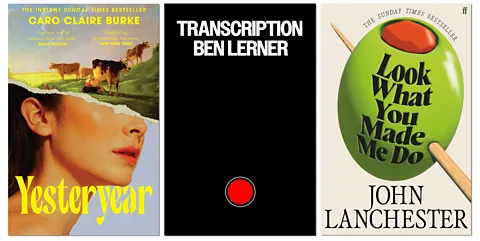
Yesteryear by Caro Claire Burke
"Daring, deranged, cleverly written," is how Vogue describes the buzzy debut by Caro Claire Burke. In this satirical thriller, tradwife influencer Natalie inexplicably wakes up in the year 1855 in a crumbling homestead. The harsh reality of rural existence in the 19th Century soon becomes clear. Yesteryear, says the LA Times, "offers a bitingly funny and occasionally heartbreaking twist on the classic Instagram-versus-reality story". Natalie is "a deliciously unlikable protagonist" who is "objectively off-putting, which makes her bitingly human". The novel is due to be adapted for film, with Anne Hathaway producing and starring. (LB)
Transcription by Ben Lerner
In Transcription, an unnamed middle-aged writer travels from New York to Providence, Rhode Island, to interview Thomas, a 90-year-old former mentor and revered writer and film-maker. The stakes are high – Thomas's recent bout of Covid means this interview could be his last – and the writer breaks his phone just before the interview, rendering him unable to record the esteemed artist's words. What follows is a reflection on technology, storytelling and memory that The Guardian says is "intricate, uncanny, sometimes breathtakingly realistic", while The New Yorker writes: "Nothing in this exquisite, shape-shifting novel is what it seems – words least of all." (RL)
Look What You Made Me Do by John Lanchester
"Gleefully nasty," is how The Times describes John Lanchester's widely acclaimed fifth novel, a black comedy of betrayal, revenge, resentment and entitlement. At its centre are affluent boomer Kate and younger screenwriter Phoebe. A rivalry between them begins when Kate recognises intimate secrets from her 30-year marriage in a hit TV series. The novel "seethes with female animosity and vengeance," says the Literary Review. "Skewed scenarios and retaliatory stratagems are craftily deployed in a novel that's a kaleidoscope of tilting perspectives." Look What you Made Me Do, it concludes, is "a gleamingly accomplished black comedy". (LB)
 Penguin
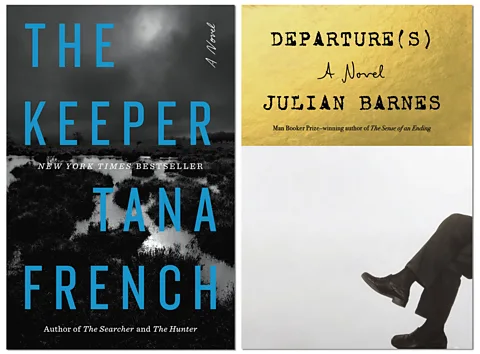
The Keeper by Tana French
French is a bestselling author described by The New York Times as "one of the most consistently exciting mystery writers around". The Keeper is the final instalment in a trilogy that stars retired Chicago cop Cal Hooper, who becomes enmeshed in the intrigue of the fictional Irish village of Ardnakelty. As the body of a young woman is found in a river, Hooper is drawn into investigating the case. Amid the town's bitter feuds and long-standing grudges, he grapples with the future of this rural community. "Dense, compelling and superbly atmospheric," says The Guardian. (RL)
Departure(s) by Julian Barnes
Blending memoir and fiction to explore memory, ageing and love, Julian Barnes's self-declared swansong Departure(s) is brief, and with only a sketchy plot. One of the book's threads is a romance between the narrator's friends Stephen and Jean, who were in love in their university days, then reconnected again in old age. The narrator, meanwhile, reflects on memory, ageing and love. Departure(s) is a "valedictory flourish" says The Atlantic. "The whole package is a culmination of sorts, shimmering with his silky, erudite prose; beneath the suave surface is an earnest investigation into the mysterious ways of the human heart." (LB)
 Graywolf Press/ Picador
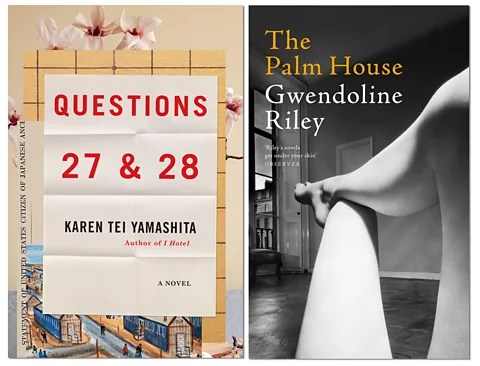
Questions 27 & 28 by Karen Tei Yamashita
Yamashita's first novel in 16 years centres on a dark period of US history – the internment of Japanese immigrants during World War Two. Under the order of President Franklin D Roosevelt, hundreds of thousands of people were taken from their homes on the West Coast and put in camps throughout the US. Questions 27 and 28 were part of a questionnaire prisoners were given to assess their loyalty. Yamashita's historical novel – which blends real and fictional events with composite characters – examines the period and the ensuing internal battles that arose around the loyalty test. "Yamashita is at her best when she zooms out… and meditates on the greater stakes of these scattered lives," writes Hua Hsu in the New Yorker. "We feel the weight of the past, all these accumulated voices and perspectives, within and between Yamashita's novels, as well as the process through which disparate stories, anecdotes, or experiences might coalesce as history." (RL)
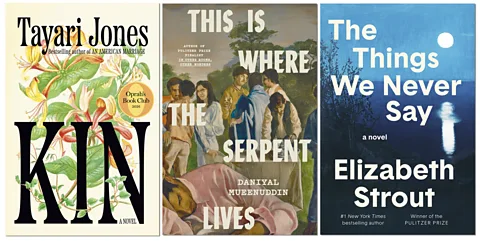
This is Where the Serpent Lives by Daniyal Mueenuddin
Having been a Pulitzer finalist back in 2010 for short story collection In Other Rooms, Other Wonders, Daniyal Mueenuddin now returns with a highly acclaimed novel. Exploring how power, class and the legacy of feudalism shape lives in modern Pakistan, the novel follows overlapping narratives of the landowners and staff of a family-run farm. This is Where the Serpent Lives is "sensitive and powerful" says the New York Times. "Mueenuddin makes the reader care about the romantic relationships, and the pages turn themselves." It is "a serious book that you'll be hearing about again, later in the year, when the shortlists for the big literary prizes are announced". (LB)
 Fourth Estate/ Granta/ Faber
Kin by Tayari Jones
Announcing Kin as one of her Book Club picks, Oprah Winfrey described Tayari Jones's fifth novel as "a masterpiece… that contemplates the meaning [and] complications of friendship". Motherless since they were infants, Vernice and Annie are "cradle friends", who come of age in Honeysuckle, Louisiana in 1950s US. As they grow, the friends drift apart – one goes down the path of college and relationships; the other in pursuit of the mother who abandoned her. "A lush, beautiful novel", writes Radhika Jones in The New York Times. "When reading Kin, I wanted nothing more than to keep reading it." (RL)
The Things We Never Say by Elizabeth Strout
Pulitzer-winning author Elizabeth Strout is known for her series of novels featuring iconic characters Olive Kitteridge and Lucy Barton, and her deft portrayals of small-town life in all its fraught, familial complexity. The Things we Never Say is a stand-alone novel about Artie Dam – a high-school history teacher who is navigating loneliness and a changing world – as he confronts a life-altering secret. "There is so much here to explore, so many endless human mysteries," says The Guardian. "Let's hope that this fine author continues steadily along her path, delivering unto her loyal readers story upon story, gift upon gift." (LB)
The Palm House by Gwendoline Riley
"Full of pathos and humour," according to The Times, The Palm House centres on a pair of spiky middle-aged colleagues, Laura Miller, a writer and the novel's narrator, and Edmund Putnam, an older editor who is leaving his job at a highbrow literary magazine. The friends' conversations in London pubs over drinks and shared packets of crisps are interspersed with often heartbreaking recollections about their pasts. Critics have praised the novel's dialogue, which Riley, writes the LRB, "wields… like a Swiss army knife, now corkscrewed, now serrated, but always coming to a short, sharp point." (RL)
--
If you liked this story, sign up for The Essential List newsletter – a handpicked selection of features, videos and can't-miss news, delivered to your inbox twice a week.
