First osprey egg laid after 'unlucky' seasons

 Forestry England
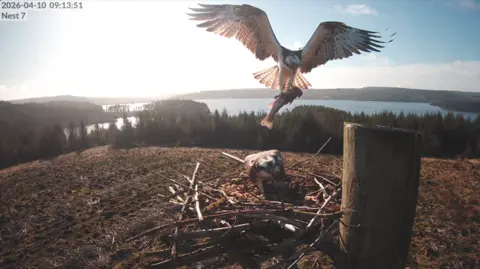
A stronghold for ospreys in England has seen its first egg of the year after two breeding seasons described as "unlucky" by the expert who monitors them.
In 2025, the eight nests in Kielder Forest in Northumberland resulted in just six fledglings, while storms in June 2024 caused the deaths of a number of chicks.
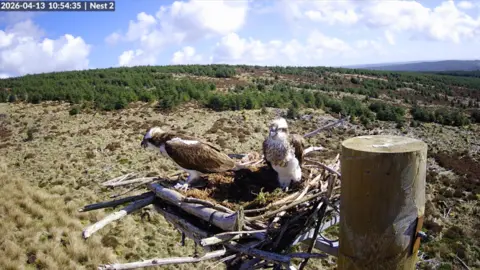
But Forestry England's Joanna Dailey says she is "more hopeful" for 2026 with eight nests occupied, although two only have a single bird on them.
"The males are bringing fish, all that courtship stuff seems to be going okay," she said.
Once found throughout the UK, wild ospreys were persecuted and the species became extinct in England in 1847.
However, in 2009 ospreys were born for the first time in Northumberland in more than 200 years with more than 120 successfully fledging since then.
 Forestry England
The record number of chicks fledging was 16 which happened in 2021.
Dailey said there were a number of reasons why 2025 had been disappointing including stormy weather conditions and two chicks being snatched by goshawks.
In 2023 heavy rain and winds in June meant only 10 of 22 chicks survived.
"I think we've just been unlucky over the last couple of years," she said.
"We had three birds not returning from migration last year and we don't know why that happened or where they died."
She is hopeful that the two single males can still find partners with "birds still returning" and that more eggs will follow.
"So much depends on the weather," she said.
"If it's windy and rainy in June we can lose some but at the moment the signs are we're in for a good season."
