First osprey chicks of the year hatch in forest

 Visit Kielder
Ospreys living in a forest have welcomed their first chicks of the season.
The raptors are currently occupying eight monitored nests Northumberland's Kielder Forest, with eggs in each, which Kielder Water and Forest Park Development Trust director Liz Blair said was "a record".
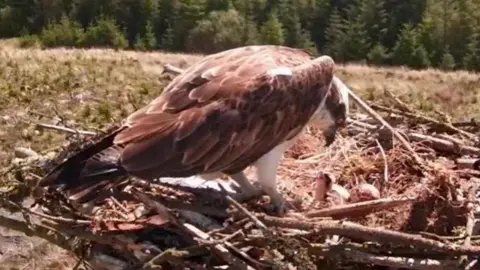
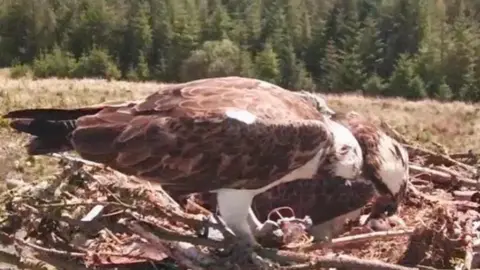
On Sunday, the osprey cam captured the first chick of 2026 and now there are three more.
The life-bonded pair in nest seven are regulars at the forest and were the first "proud parents", now with two chicks. There are two others in another nest.
Last year only six chicks ultimately fledged, which was fewer than in previous years.
Factors including storms and predators can contribute towards a lower success rate.
The heatwave over the bank holiday weekend would have seen the pairs face similar challenges to the cold, with them having to regulate the chicks' temperatures, Blair said.
But still the warmth is preferred.
 Visit Kielder
Blair said they have had eight nests occupied before, but not with eggs and chicks.
"That is absolutely a record," she said.
Blair said she was "cautiously optimistic" about the chicks' chances.
She said: "There are predators around, the weather - I'd love to say that we're going to stay with a lovely and warm summer now until September, but I think we all know don't we?"
Ospreys were once found throughout the UK during the warmer months until they were driven to extinction as a breeding bird in England and Wales in 1847, and in Scotland in 1916.
They returned to the UK in 1954 and there are now close to 300 breeding pairs, according to the Wildlife Trusts.
