Hope for 'record-breaking year' for osprey eggs

 Kielder Osprey Partnership
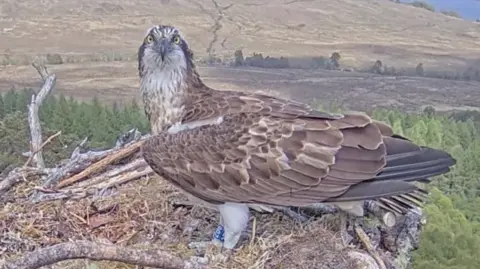
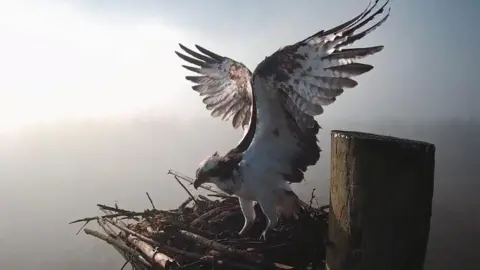
Hopes are high for a record-breaking amount of osprey fledglings in a forest, the director of the trust that looks after it has said.
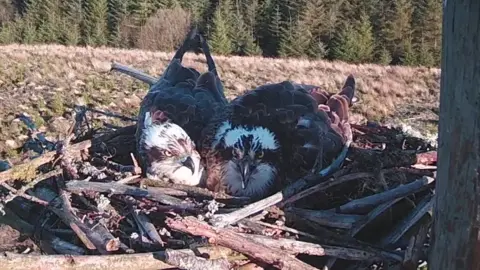
Eight monitored nests in Kielder Forest, Northumberland, are currently being occupied by the raptors, with about 20 eggs believed to have been laid.
Kielder Water and Forest Park Development Trust director Liz Blair said: "We've got a real feeling of optimism this year."
The eggs are expected to hatch within about a week, although Blair warned they were still at risk of predators or the weather, so she did not want to count her chickens - or ospreys, in this case.
"We know nature comes into play, we had problems with goshawks last year and the weather could suddenly change - but this does look like a good year," she said.
Last year, only six chicks ultimately fledged, which was fewer than in previous years.
 Kielder Osprey Partnership
Ospreys are migratory birds and often spend winter in Africa, but were once found throughout the UK during the warmer months - until they were driven to extinction as a breeding bird.
From the Middle Ages to the 20th Century, the birds - which have a fish-based diet - were hunted to protect the livestock of those raising fish to sell and eat.
In the Victorian era, they then became a target for egg collectors and taxidermists.
They disappeared from England and Wales in 1847, then became extinct in Scotland in 1916.
However, they returned to the UK in 1954, and there are now close to 300 breeding pairs, according to the Wildlife Trusts.
 Kielder Osprey Partnership
Blair said they got "an enormous amount of attention" from visitors to the forest.
"They're pretty majestic when you see them and they're a fabulous enhancement to an already beautiful place," she said.
The monitoring and care of the birds is handled by a partnership between local organisations working in the area, including Forestry England, the Northumberland Wildlife Trust and Northumbrian Water.
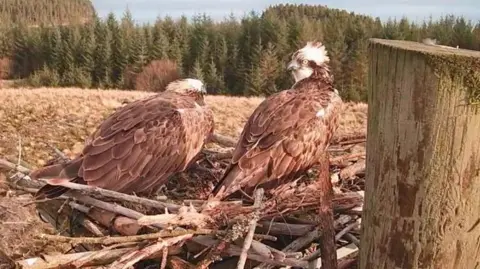
Pairs of ospreys bond for life and return to the same nest each season.
"The joy of when we see them come back again is just fabulous," said Blair.
 Kielder Osprey Partnership