NHS declined to meet attacks victims' families - inquiry

 Supplied
NHS England declined to meet the bereaved families of three people stabbed to death by a mentally ill man in Nottingham, a public inquiry into the killings has heard.
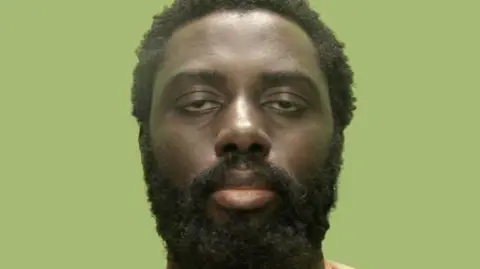
Valdo Calocane - who was diagnosed with paranoid schizophrenia in 2020 - stabbed to death Barnaby Webber, Grace O'Malley-Kumar and Ian Coates, and seriously injured three others on 13 June 2023.
In the aftermath of the attacks, NHS England commissioned an independent review of the killer's mental healthcare leading up to the attacks.
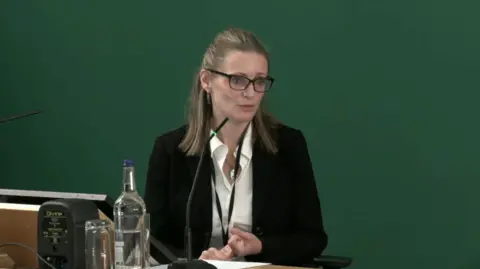
Giving evidence at the Nottingham Inquiry, Dr Jessica Sokolov apologised and admitted NHS England "comprehensively failed" to engage with the families affected.
Calocane - who is currently serving an indefinite hospital order in a high-security facility - was under the care of Nottinghamshire Healthcare NHS Foundation Trust between 2020 and 2022.
He was sectioned under the Mental Health Act four times in that time.
The killer was discharged from mental health services in September 2022 due to a lack of engagement - a decision which has been scrutinised at the inquiry.
In February 2025, NHS England published a report, by Theemis Consulting, which had found and documented a series of failings in Calocane's care.
On Wednesday, the inquiry heard the bereaved families had a number of queries about the report, which had been raised to NHS England.
In September 2025, Grace's father Dr Sanjoy Kumar emailed NHS England on behalf of the bereaved families and asked for a meeting.
In response, NHS England said - in a letter - that it did not hold the information to answer a number of Kumar's questions, but said it was confident the inquiry would address such points and therefore, declined to meet the bereaved families.
 The Nottingham Inquiry
Sokolov said: "That was the decision that was taken. I will reflect that, we have failed.
"When it comes to the engagement with families, we have comprehensively failed. It truthfully isn't for lack of effort."
The medical director said prior to the inquiry, she understood NHS England's relationship with the families had become "frustrating and unhelpful" for them.
She said "repeated attempts" to explain what NHS England could do, were met "understandably, with anger and frustration from the families and repeated questioning".
Addressing the chair of the inquiry - retired senior judge Deborah Taylor KC - Sokolov added: "And I'll reflect, chair, I think one of the things that we need to consider going forward is how we do manage to engage with families going forward, because it's not the responsibility of the bereaved or affected to make this work and we failed to do this in the way that we wanted to."
Sokolov told the inquiry that while NHS England was to be abolished - as part of government plans to overhaul management structure - there would be a "structure" in place to ensure any recommendations from the inquiry were taken forward.
She added: "But on that engagement level, I've already had conversations with the national chief nurse about the fact that we need to work out how to speak to people in these kind circumstances, in a way that reaches and answers, because we didn't, and I am so sorry that we didn't."
 Nottinghamshire Police
In the years leading up to the Nottingham attacks, a number of complaints about mental healthcare raised similar concerns to the failings in Calocane's care, the inquiry heard.
A report by the Health Service Ombudsman in 2018 found a number of themes in complaints about mental health, including inadequate assessments, failure to treat and improper risk assessments.
Sir Robert Behrens CBE was the Parliamentary and Health Service Ombudsman between April 2017 and March 2024.
In his evidence to the inquiry, he said: "One of the key themes about mental health complaints throughout my tenure was these issues in 2018 arose time and again up until 2024 without effectively being addressed - even though we lobbied hard to draw attention to these issues.
"I wouldn't say nothing changed, but nothing radical changed."
The former ombudsman also said it should not be down to families affected by potential healthcare failings to ensure change was implemented.
He said: "Without the campaigning of distressed and vulnerable and traumatised people, we would be a lot further back in addressing the issues that need addressing.
"And unfortunately, too often the successful resolution of these cases has depended upon bereaved families campaigning at a time when they are least well prepared to do that.
"And it is an outstanding public service that they perform."
The inquiry continues.
Listen to BBC Radio Nottingham on Sounds and follow BBC Nottingham on Facebook, on X, or on Instagram. Send your story ideas to eastmidsnews@bbc.co.uk or via WhatsApp on 0808 100 2210.
