Race not a factor in killer's assessment, inquiry told

 Nottinghamshire Police
A psychiatrist has denied that race was a factor in a decision to detain a mentally ill man before he killed three people three years later, a public inquiry has heard.
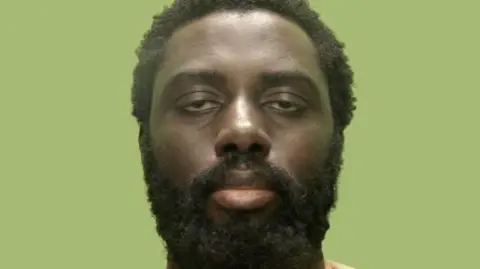
Valdo Calocane stabbed to death Barnaby Webber, Grace O'Malley-Kumar and Ian Coates, and tried to kill three others on 13 June 2023.
After breaking into a neighbour's flat during a psychotic episode in May 2020, it was agreed in an assessment Calocane should be released back home and monitored. But 11 minutes later, he broke into another flat.
Dr Rahul Gandhi, who was involved in that assessment, told the Nottingham Inquiry that research on the over-representation of young black men in detention did not influence his decision.
After the decision not to detain Calocane on 24 May 2020, he broke into the flat of a woman, who in a bid to flee, fell out of her window and fractured her spine.
The woman - who has given evidence to the inquiry anonymously - was left requiring screws and metalwork to be fitted to her spine, and was told she could have been paralysed. She was not known to Calocane.
The inquiry previously heard how the team assessing Calocane that day had considered research into the over-representation of young black men in detention as part of their decision.
The research was highlighted in notes made during an internal interview with Gandhi by the Nottinghamshire Healthcare NHS Foundation Trust in 2025, in response to a complaint.
On Tuesday, Gandhi explained during the 2025 interview, he was attempting to "reflect and hypothesize the situation", and did not have a recollection of the decision at the time.
The inquiry heard there was no mention of race in his notes from the assessment in 2020.
 Supplied
He said: "Basically, during that interview, I was sitting there and reflecting and thinking about what happened that day.
"I was just hypothesizing - were there any things we thought along these lines at the moment in time?"
He added: "In my professional day-to-day practice, demographics don't make any change to my practice.
"Patients are admitted to hospital or discharged based on the severity, risk and needs of the patient.
"The colour doesn't come into the picture at all, I just want to make it quite clear."
Gandhi had also said in that interview he was initially "leaning towards" detaining Calocane.
'Discussion didn't happen'
The inquiry has heard how in the early hours of 24 May 2020, Calocane broke into a flat at Brook Court, in Radford, Nottingham, after hearing screaming and voices telling him his mother was being raped.
He was arrested on suspicion of criminal damage and later that day, referred for a Mental Health Act assessment.
Calocane was experiencing symptoms of psychosis, the inquiry heard, and it was subsequently agreed that he would be released back home to Brook Court and prescribed anti-psychotic medication and monitored by a crisis team who would visit him twice a day.
He was released without the medication and it was planned that he would be taken to his home, by the crisis team, later the same day.
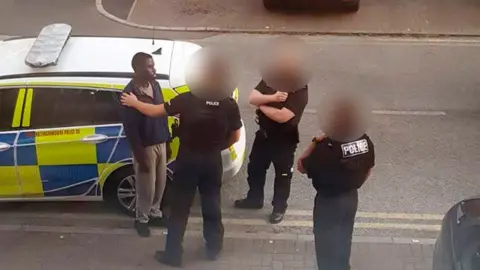
However, minutes after he was released back to Brook Court, Calocane broke into another flat, prompting the woman inside to flee through a first-floor window, breaking her spine.
He was arrested a second time and detained under the Mental Health Act.
 Handout
Dr Khuram Malik, another consultant psychiatrist involved in Calocane's first mental health assessment, told the inquiry no such discussion about race took place.
"When we are making a decision, we do that based on the clinical presentation, so we don't take this into account and as far as I'm aware - looking at the notes - there's no mention of it," he said.
"The discussion didn't happen and it didn't influence the decision."
Both doctors told the inquiry they were not given information about the circumstances of Calocane's arrest or the level of damage to the door of the first flat he broke into.
The inquiry heard when police arrived at Brook Court, he was attempting to get into another flat and had to be handcuffed.
An image of the door to the flat he broke into showed the lock and handle damaged and part of the door splintered.
Malik said that information was "relevant and important".
"I think if we had more information, we would have definitely explored it and we would have challenged him as well," he said.
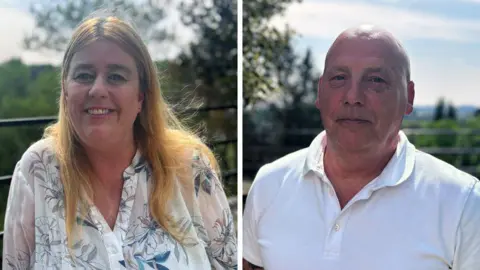
Benjamin Williams, the approved mental health practitioner at the first assessment, said if the group had been given the information about the circumstances of Calocane's arrest, they would have "factored that into our risk assessment".
Williams recorded in his notes that the likelihood of Calocane causing harm to others was "medium", but in his statement, he said on reflection that it should have been classed as "high".
Asked about how appropriate it was to release Calocane back home, Williams said: "It was difficult to predict that was something that would have happened so soon after."
The inquiry heard that second incident could have been reported internally as a serious incident to the mental health trust - which could have triggered an investigation into what went wrong - but this was not done.
The inquiry continues.
Listen to BBC Radio Nottingham on Sounds and follow BBC Nottingham on Facebook, on X, or on Instagram. Send your story ideas to eastmidsnews@bbc.co.uk or via WhatsApp on 0808 100 2210.
