Tube strike usage higher than Tuesday, TfL says

 BBC
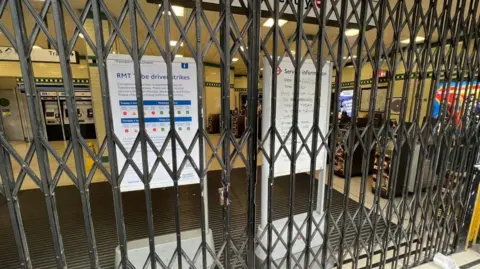
BBCJourneys across London using public transport on Thursday during the latest day of strike action by drivers were at 86% of their usual levels, according to Transport for London (TfL).
Figures based on Oyster and contactless data show mixed trends compared with the same day last year: London Underground travel was down 43%, while use of the London Overground rose 12%, the Elizabeth line increased 18%, and the Docklands Light Railway (DLR) saw a 9% rise.
RMT members walked out over plans for a voluntary 35-hour, four-day week for drivers.
The latest industrial action is set to end at midnight, and TfL is advising customers to finish their journeys before 21:00 BST.
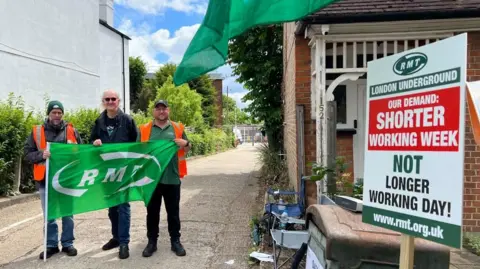
TfL said about 60% of Tube drivers reported for duty on Thursday morning, slightly up on Tuesday.
Staffing levels varied by line, with 91% of Jubilee line drivers at work, along with 80% on the Bakerloo and 75% on the Metropolitan line, it added.
The RMT said its previous strike on Tuesday "was strongly supported by RMT members with well attended picket lines at Tube stations and depots".
The Rail, Maritime and Transport (RMT) Union, which represents the Tube drivers taking part in the industrial action, said it would meet London Underground bosses again next week in an effort to resolve the dispute.
Jared Wood, the RMT's London transport regional organiser, told BBC Radio London the union would "try and make progress".
"We will continue to say to them, 'look, if you can lift the threat of these things being imposed on people, and agree to talk about the terms of the new arrangements you want to bring in, then we can have some constructive discussions' hopefully," he said.
A TfL spokesperson apologised for the disruption, saying services had continued to run on most lines, with the Jubilee line operating a good service for much of the day.
They added that more drivers attended work compared with Tuesday's strike action.
"We have committed - a number of times and in a number of ways, including in writing before this most recent industrial action - to these proposals being voluntary.
"Any suggestion otherwise is misleading the public in order to justify strike action over proposals that would give Tube drivers more time off and create a more modern, efficient Tube service," the spokesperson said.
Listen to the best of BBC Radio London on Sounds and follow BBC London on Facebook, X and Instagram. Send your story ideas to hello.bbclondon@bbc.co.uk
