Five minutes of exercise a day could help millions of people live longer

 Getty Images
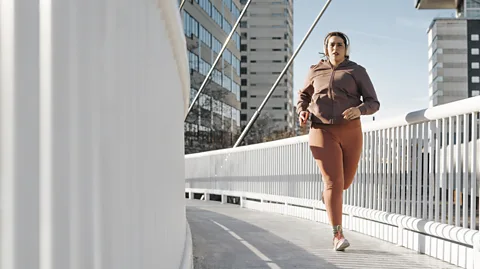
Small increases in physical activity as part of our daily lives can bring long-term benefits to our health.
Some mornings, I really struggle to go out for a jog, but I force myself because I know it will be good for me. The protective effect that exercise can have not only the body, but our brain, memory and general wellbeing is something I've spoken to researchers a lot about recently.
But what has also become clear is that we don't need to be doing intense workouts to see benefits.
New research shows that even small increases in activity can have a powerful impact on health and longevity. Just five minutes of moderate activity each day – such as brisk walking, cycling or climbing stairs – could prevent around one in ten premature deaths, which could help millions of individuals live longer.
While this doesn't mean that just doing five minutes of exercise is enough to ensure you stay healthy, it is an indication that compared to doing nothing, this small increase in physical activity can bring improvements to overall health. For those who are already pretty active or relatively fit, doing five minutes more exercise will have a smaller effect.
But it shows the power of doing even just some very basic forms of exercise.
 Getty Images
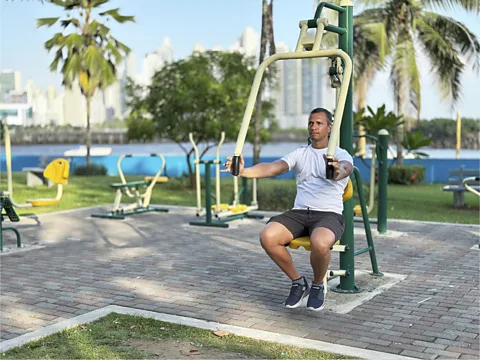
"Physical activity is something that is really beneficial for preventing high stress rates and high burnout rates," says Nicole Logan, an assistant professor of kinesiology from the University of Rhode Island in the US. "We know that physical function, muscle strength, muscle quality, bone strength, these are really good predictors of later life mortality. So living longer and living healthier for longer."
Live well for longer
To get some more simple ways you can have a longer, healthier life, you can sign up to my six-part newsletter course, Live Well for Longer – delivered to your inbox every Saturday.
Increasing lifespan
The new research involved a large-scale analysis of data from 150,000 adults in the UK, US and Scandinavia.
"It was surprising that very small changes in physical activity of five minutes per day have such a large impact on reducing the risk for premature mortality," says Ulf Ekelund, lead author of the research and a professor of physical activity and health at the Norwegian School of Sport. The findings reveal the health benefits of doing five minutes of exercise across the whole population rather than on an individual level, he says.
Adults should still strive for the World Health Organization's recommendation of 150 minutes of moderate-intensity exercise a week, Ekelund says. But the study shows that those who might struggle to go to the gym or join a sports club, can still benefit from adding more movement into their lives.
Reducing inactivity was also found to be beneficial. Cutting daily sitting time by 30 minutes was linked to a 7% reduction of early death across the population. This is especially important because physical inactivity is a leading cause of chronic disease and an earlier death.
Ekelund says that consistency is key. "Start slow and gradually build up the amount," he says. The activity should be tailored to the individual's preferences and ability."
Exercise snacking
The study builds on many others that show how long-term health benefits from exercise do not require us to radically change our lifestyle. Simply adding movement into our daily life can have an outsized effect.
Muscle strengthening activities have also been shown to be beneficial. One US study found that individuals in their 60s and 70s who combined aerobic exercise with muscle-strengthening activities lived longer and had a lower risk of dying compared to those who did no exercise.
Other recent work shows that "exercise snacking" – which consists of short bursts of activity spread throughout the day – can improve heart health. A large authoritative analysis of existing research found that among older adults, it also helped with muscular endurance. Uptake was high too, with over 82% of participants continuing to take part, most likely because exercise snacking is easy to "integrate into daily routines", the authors note. (Read more about how short bursts of activity can help you live for longer.)
 Getty Images
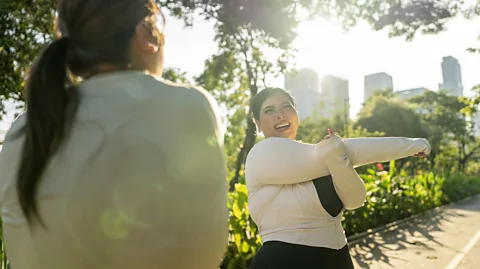
Unlike a gym session, these "snacks" can be spread throughout the day as part of your normal routine. This can include anything that gets your heart rate up – be it vigorous hoovering, dancing to a song in your kitchen or running up and down your stairs faster than normal.
As Marie Murphy, professor of exercise and health at Ulster University in the UK, told the BBC's Just One Thing podcast, smaller chunks of exercise increase how often we are stimulating our metabolism. "When we stop exercising, our metabolism keeps going a little bit quicker while we recover," she said. "You still have that metabolic mill turning."
Benefits of habit
Research shows that people respond positively when they are made more aware of the health benefits of exercise snacking, and that it could help address barriers to exercise.
Simple prompts can make a difference. Signs encouraging people to take the stairs instead of the lift or escalator, for example, can lead to more of them to do so.
According to Amanda Daley, professor of behavioural medicine at Loughborough University in the UK, it's these small shifts that build meaningful change over time. "We just have these unconscious ways of doing things that mean that we're more likely to do it," she says. "You take the stairs because that's you've learned. It's a habit."
Similarly, Daley suggests that a simple way to decrease sedentary behaviour is to park the car at least five minutes from your destination. She calls this type of approach "snacktivity" and in a small study, she and colleagues found that participants were receptive to the idea, finding it easier to implement than longer bouts of exercise.
More like this:
Or take walking. We can benefit from fewer steps in a day than is commonly believed, as the BBC has previously reported. One step-count study found that taking 2,517-2,735 steps per day reduces cardiovascular risk by 11% compared to taking only 2,000 steps.
When it comes to how you exercise, there are numerous options. You could go rock climbing, join a dance class or try some something a little more vigorous like high-intensity interval training, which can improve blood sugar control and blood pressure, as well as reducing body fat.
I've certainly had sore arms when carrying food shopping home instead of taking the car. But it seems that discomfort can be worth it.
So next time you're waiting for your pasta to boil or watching TV, perhaps include a set of squats, leg kicks or press ups. These little "exercise snacks" all add up. They are certainly "snacks" you won't ever need to feel guilty about.
* Melissa Hogenboom is a senior health correspondent at the BBC and author of Breadwinners (2025) and The Motherhood Complex. She is melissa_hogenboom on Instagram.
--
For trusted insights on health and wellbeing, sign up to theHealth Fix newsletter by senior health correspondent Melissa Hogenboom who also writes theLive Well For Longer andSix Steps to Calm courses.
