The unwritten rules of sacred Korean food pairings

 Alamy
AlamyThere's an art to enjoying the sweet, spicy, savoury and fermented flavours of Korean cuisine. Here's a cheat sheet to the iconic ingredient pairings that Koreans always obey.
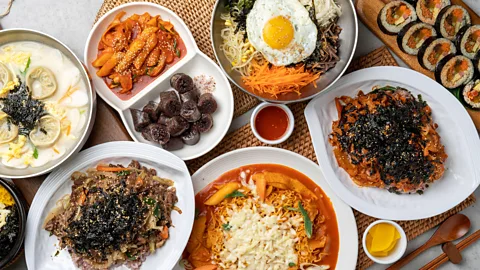
Korean cuisine is famous for its unique flavour profiles, mixing earthy layers of spicy, sweet, fermented and savoury. Its most popular export, Korean barbecue, is a perfect example of how these essences work together. While many diners around the world know that it involves making a ssam (spicy meat, picked vegetables and rice bundled inside a cool, crispy lettuce leaf) this familiar pairing is just one of countless unspoken rules when it comes to eating Korean food.
Get to know your expert
Yun Sun Park is a Seoul-born writer who regularly travels to South Korea. She shares cultural insights and tips to help non-Korean speaking travellers experience South Korea like a local and stay on top of the latest trends.
When you're in South Korea, exploring its street food stands, noodle shops and food markets, you'll likely notice that there's an art to the way Koreans pair their sweet, spicy, savoury and fermented flavours at each meal. Though seemingly subtle, these time-tested combinations are often considered sacred and impossible to break.
Here's a cheat sheet for how to best enjoy some of Korea's most iconic dishes. Ask for them and impress your new Korean friends.
 Alamy
AlamyTteokbokki and soondae
Bunshik – street foods – are a popular, low-cost way to treat yourself in South Korea. You'll find pocha (bunshik stands) near schools, in covered markets or casual restaurants.
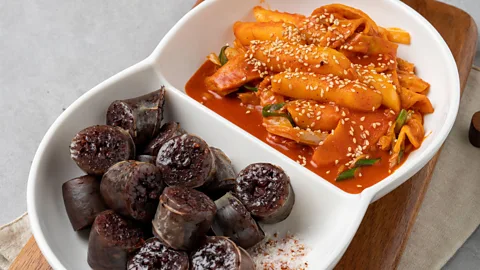
Chewy tteokbokki, cylindrical rice cakes simmered in spicy-sweet gochujang sauce, are a street food staple. While they're enjoyed for their delightful texture and fiery flavour, there are a few bunshik foods that are unexpectedly elevated by a dip in tteokbokki sauce.
Savoury and crunchy foods like gimbap (rice, meat and vegetables rolled in seaweed) or fried dumplings pair perfectly with spicy, chewy tteokbokki. But soondae – blood sausage stuffed with satisfying ingredients like meat and glass noodles – is perhaps the best tteokbokki pairing. This delicacy is often served alongside steamed liver and lung, which are also delicious when dipped into tteokbokki sauce, bringing another level of textures into the savoury-sweet collaboration. The flavours are so compatible that nothing will be left behind on the plate.
 Alamy
AlamyChimaek (fried chicken and beer)
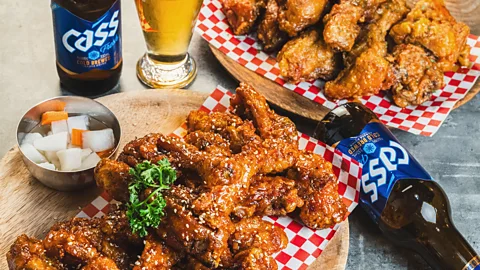
A combo so beloved, it inspired its own name: "chi" stands for chicken, while "maek" is the first half of maekjoo, the Korean word for beer.
Did you know?
Koreans have a term for foods that pair well with alcohol: anju. They're often salty, spicy and fried foods because it is believed alcohol cuts through the grease.
The pairing had been around for years, but exploded in popularity during the 2002 South Korea-Japan Fifa World Cup, and "to chimaek" became a favourite pastime. Drink anything else with your fried chicken and you might raise eyebrows.
In South Korea, fried chicken is always eaten with a side of tangy mu (pickled radish) since the batter can get oily. The beer resets you for more chicken (and beer).
Plain fried chicken is traditional, but banban (half plain and half sauce-covered) is another popular choice. Try a topping, like snow cheese – powdery cheese, offered by major South Korean fried chicken chain Pelicana – or chilli mayo at Puradak.
The classic maekjoo to pair with your Korean fried chicken are Terra or Cass, known for their light taste and often served on draught. In keeping with its sports roots, chimaek is served at baseball games. Fried chicken shops are ubiquitous in South Korea, and pubs serve it too. The combo is a default option on some delivery apps.
 Getty Images
Jeon and makgeolli (and rainy weather)
Should you get rained out during your visit to South Korea, take cover in a pub and ask for this comforting combo.
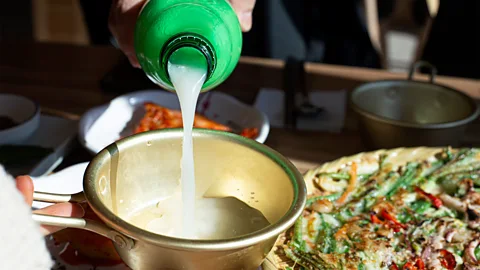
Nothing says cold weather cosiness like the combo of jeon – a savoury pancake – and makgeolli, creamy, fermented rice wine. Koreans crave jeon on rainy days because the noise it makes when it's frying in oil sounds like the rain.
There are several kinds of jeon, including variations made with green onion, kimchi, seafood and potato. Any jeon is dipped in soy sauce before it's enjoyed with makgeolli. Makgeolli's gentle fizz helps cut through the oil.
Once consumed by field workers, makgeolli is still served the traditional way – poured from a kettle into a bowl. The combination is generally served in home-style restaurants; some pubs offering it will pair jeon with unique flavours of makgeolli.
 Alamy
AlamyGalbi and naengmyeon (and summertime)
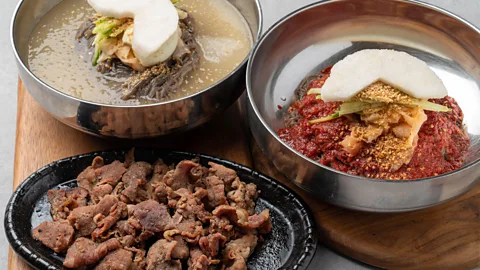
And if you're visiting during South Korea's hot, steamy summer season, do as the Koreans and pair galbi (marinated short ribs) with naengmyeon (cold noodles). Some restaurants specialise in naengmyeon, but the combo is also served at barbecue houses.
Mul naengmyeon is served in cold, sometimes even icy broth, which helps refresh both body and soul (some trendy restaurants even serve the noodles in a bowl made of ice). Naengmyeon can also cool you from the heat given off by grills. While some Koreans enjoy eating naengmyeon with Korean barbecue, others will eat it at the end as a palate cleanser.
Those who crave spice even in sweltering temperatures opt for bibim naengmyeon (cold noodles mixed in gochujang sauce), paired with short rib or pork galbi.
To level up, try the hwe naengmyeon (bibim naengmyeon with raw pollack or skate on top). Trust me: the crunchiness makes it.
 Getty Images
Instant ramyun and gimbap
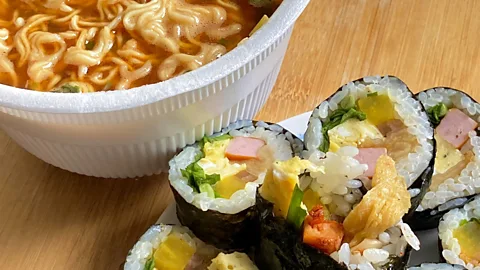
You may have seen this pairing in Korean dramas, when people eat it outside convenience stores by Hangang Park, a picnic area by the Han River in Seoul. It's also portrayed in KPop Demon Hunters, when the Huntrix members excitingly eat it before their opening performance.
It's no accident – in South Korea, instant ramyun (ramen) and gimbap are a pairing as common as salt and pepper. Both components of this classic combo are cheap, portable and filling, but the genius goes deeper: the spiciness of the ramyun complements the refreshing bite of the gimbap. Together, they equal comfort.
Today, there are keto options of gimbap where the rice is replaced by egg. Carbs or no, the combo is a convenience store staple, especially for students and office workers short on time or budget. Easy to grab and eat on the go, it's often paired with instant ramyun right in-store.
 Alamy
AlamyKorean Chinese noodles and tangsuyuk
While visiting, be sure to give joongshik (Korean Chinese food) a try.
Joongshik originated in the late 19th and early 20th Centuries in Incheon, a port city with a large Chinese population, before spreading throughout the country. For South Koreans, joongshik is comfort food.
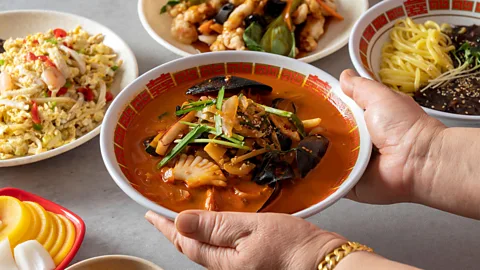
At a Korean Chinese restaurant, you'll find a wealth of noodle dishes like jjajangmyeon (black bean noodles in sweet bean sauce) and jjamppong (spicy noodle soup with vegetables, meat and seafood). But know this: any noodle dish must be paired with tangsuyuk.
Tangsuyuk is pork or beef, fried in glutinous rice flour, served with sweet and sour sauce. In Korean dining culture, dishes are shared, so tangsuyuk is usually ordered for the table. This combo is so beloved that some Korean Chinese restaurants serve lunch sets with half portions of noodles and tangsuyuk.
Then you can join the eternal Korean debate: pour the sauce onto the tangsuyuk or dip tangsuyuk into the sauce?
 Alamy
AlamySeolleongtang and kkakdugi
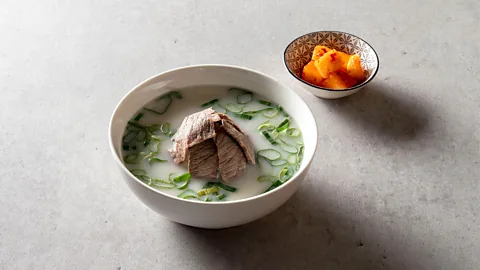
Should you find yourself on the wrong end of a hangover in South Korea, look no further than the combo of seolleongtang and kkakdugi. Seolleongtang, creamy ox bone soup packed with hearty brisket and somyeon (white noodles), is intentionally bland, so you can add salt, diced green onions and as much black pepper as you need to revive. But it's the kkadugi (diced radish kimchi) that gives this dish its real power.
More like this:
Some restaurants specialise in seolleongtang, often found near colleges and open late. Traditional Korean restaurants also serve it, where you can enjoy it with various banchan.
Eaten alongside seolleongtang, kkakdugi's sweet, acidic nature balances out the creaminess of the broth. Insider trick: add some of the kkakdugi broth into the soup itself.
 Alamy
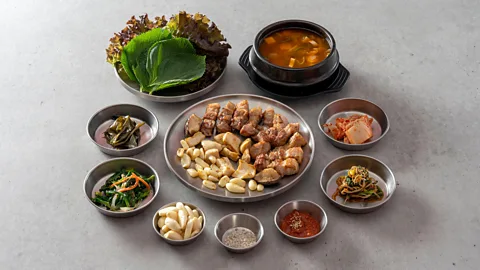
AlamyKorean barbecue and soup
Korean barbecue is an endless feast for the eyes and the palate. Sizzling meat is surrounded by plates piled with lettuce and perilla leaves, plus bowls of rice, green onion salad, banchan (side dishes), steamed eggs… and piping bowls of soup?
Yes; South Koreans don't consider any meal complete without it, so Korean barbecue will usually come with a complimentary doenjang jjigae (bean paste soup) or kimchi jjigae (kimchi stew). Don't ignore this integral part of your K-barbecue feast; or any meal you have in Korea.
Drink the soup when it comes out steaming hot. You can also mix the rice in at the end to finish your meal, and get an approving nod from your fellow diners.
--
If you liked this story, sign up for The Essential List newsletter – a handpicked selection of features, videos and can't-miss news, delivered to your inbox twice a week.
