How reusable products 'could save the NHS millions'

 University of Southampton
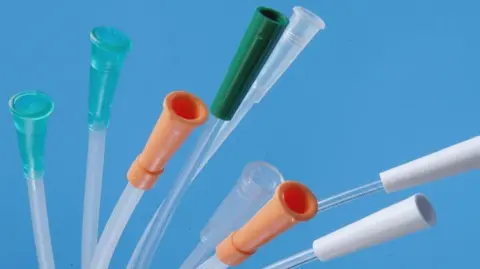
Using reusable catheters is safe and could save the NHS millions of pounds, a Southampton-based study has found.
It is estimated that 100m disposable catheters are prescribed by the NHS every year, at an estimated annual cost of £200m. They all end up in the bin.
Researchers at the University of Southampton found that patients who tested reusable versions used 35% fewer antibiotics to combat infections.
Jan Trevorah, 72, from Portsmouth who took part in the study, said she had "yet to find a down side" to reusable catheters but was frustrated they were not available on the NHS.
 University of Southampton
For decades, patients in the UK have been strictly advised by healthcare professionals to use single-use catheters to prevent urinary tract infections (UTIs), leaving no choice for those wanting to use the more environmentally sustainable reusable options.
The Southampton study followed 578 participants across a 12-month period, split into two groups – one of which stuck to single-use tubes.
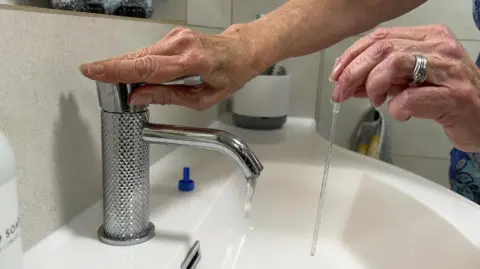
The other group used both the reusable and single-use catheters, and were given a kit to wash them in soap and water, followed by a soak in chlorine solution.
Scientists found 29% of those in the mixed-use group had at least one UTI during the year, compared to about 34% of those who used a fresh one each time.
Lead author Prof Mandy Fader, of the university's School of Health Sciences, said: "Until now, there has been a real lack of high-quality evidence to support the reuse of catheters.
"But, with our study, we can say for the first time that it is a safe option to switch to reusable catheters."
According to the research team, a box of 30 single-use catheters can cost about £50. Reusable catheters in the trial cost less than 10p per use and can be reused for a month.
They claimed that if just 25% of patients made the switch, the NHS could save millions of pounds.
The landmark study, published in the International Journal of Nursing Studies, was funded by the National Institute for Health and Care Research.

Jan Trevorah, from Portsmouth, has relied on single-use tubes to treat a serious bladder condition for the last five years, using them to empty her bladder at least five times a day.
She has now moved to reusables which cuts down on the medical equipment she carries.
"They use a softer silicon, are easy to clean and, when you're out, you can still have a just-in-case wee without feeling you're wasting another catheter," she said.
Trevorah added that she felt she was "saving the planet bit by bit" by reducing the amount of plastic she is disposing of.
However as reuasable tubes are not yet licenced by the NHS, she has decided to buy them herself.
"It's just ridiculous.
"If the NHS changes their mind and start offering people the choice, it's going to save them an awful lot of money and our landfill a lot of waste," she said.
It is hoped the evidence gathered in the study will lead to reusable catheters becoming available on the NHS.
In 2024, the government identified that disposable medical devices contribute to the 156,000 tonnes of clinical waste that the NHS produces every year in England alone.
Its Design for Life strategy included encouraging "innovation to safely remanufacture a wider range of products and drive costs down".
It also promised to change procurement rules "to incentivise reusable products and rolling out examples where hospitals are already leading the way on cutting wasteful spending and practices."
You can follow BBC Hampshire & Isle of Wight on Facebook, X (Twitter), or Instagram.
