Rude names, railways and a mass trespass - how the Peak District became a tourist attraction

 Getty Images
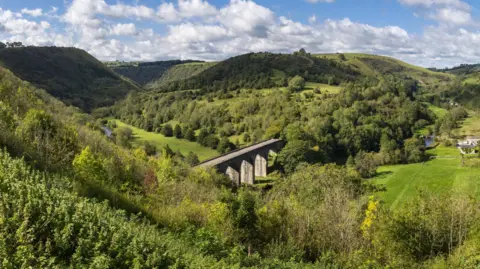
The Peak District became the UK's first national park 75 years ago, but the area has been attracting visitors for much longer.
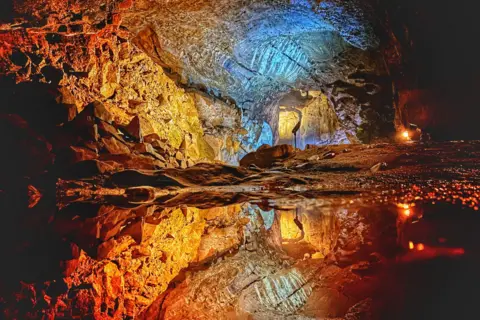
One of the oldest tourist attractions is the Devil's Arse - one of four caves in Castleton that are accessible to the public.
"It makes a huge farting noise basically," says John Harrison, director of the site, as he explains where its name originates.
"It was always known as the Devil's Arse and then in Victorian times, with their sort of prudish outlook on life, it became offensive.
"They changed it to the Devil's Hole - which is probably worse - and then Peak's Hole and then Peak Cavern.
"When we took it on it was Peak Cavern and we changed it back to the Devil's Arse."
 John Harrison
When the cave floods, the rising and falling of the water sucks through air and makes a sound uncannily similar to flatulence.
"It can flood two or three times a year - sometimes more, it depends on the weather - but it's happening more often at the minute, so it's being heard more regularly," says John.
The Devil's Arse was named as one of Seven Wonders of the Peak back in 1636, in a book by philosopher Thomas Hobbes, which shows people have been visiting the cave and the wider Peak District for centuries.
"They tended to be very well-heeled gentry who'd come and stay at the likes of places like Chatsworth and be taken on a tour of the Peak District," says John.
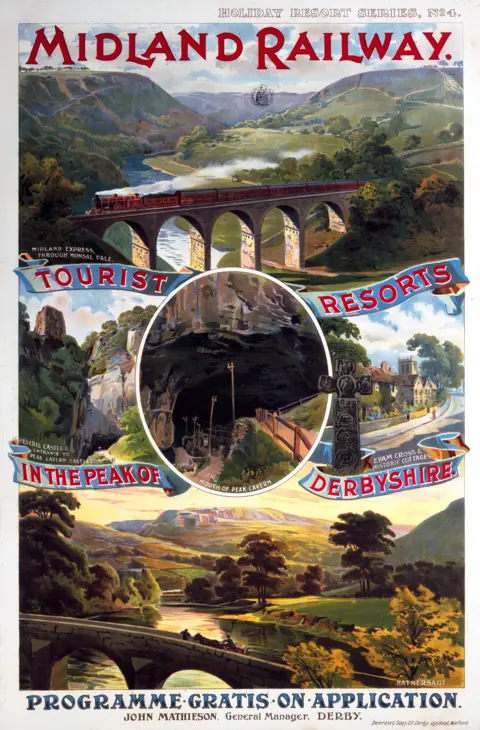
But then railways came along in the 19th Century - including the line that connects Manchester and Sheffield, which opened in 1894 and is still known for its incredible scenery.
"That opened up the Hope Valley to mass tourism," says John.
"People could come out of the cities, out of Sheffield, out of Manchester, and have a day out in the Peak District and get home all in good time."
 Getty Images
Railway companies promoted the idea of visiting the Peak District for leisure, but people could not access as much of the area as they can today.
This was because much of it was privately owned, and many landowners did not want people rambling through.
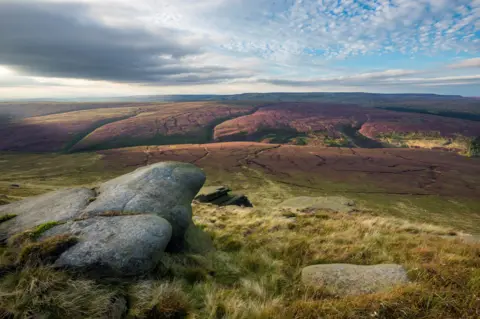
Tensions were highlighted in 1932 by the mass trespass of Kinder Scout, moorland kept exclusively for grouse shooting by its owner, the Duke of Devonshire.
Organised by the British Workers' Sports Federation, the aim of the mass trespass was to fight against "the finest stretches of Moorlands being closed to us", according to a notice encouraging people to join.
Hundreds of people took part, and five were imprisoned for between two and six months after being charged with unlawful assembly and breach of the peace.
 Getty Images
The protest is often cited as being pivotal in the fight for roaming rights and the eventual creation of national parks, while some say its impact has been overstated.
In reality, many people and groups were campaigning for greater access to the countryside around the same time.
"Even if you go back to the beginning of the 20th Century, there were a lot of people who were outdoor enthusiasts and wanted access to the countryside," says Debbie Stockwell, executive director of National Parks England, which is the collective voice of 10 national parks.
"But it really got some momentum behind it in the late 1930s and into the 1940s.
"So basically there was a group that came together in the mid-1930s to campaign for national parks in the UK. They had seen national parks being created in the US and they wanted something similar here."
This group included the Ramblers' Association, the Youth Hostels Association, and the Campaign to Protect Rural England.
 Getty Images
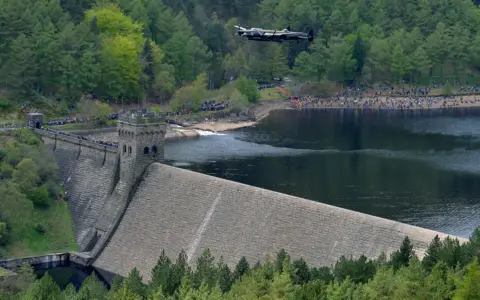
World War Two then began in 1939, and the end of the war in 1945 provided significant impetus.
"Coming out of the war there was a whole programme of activity around recovery and regeneration of the nation, and in that package of things, that led to the creation of the NHS as well, there was the proposal for national parks to be created," says Debbie.
"It was described at the time as the Natural Health Service."
The National Parks and Access to the Countryside Act was introduced in 1949, and this led to the creation of national parks.
The first was the Peak District on 17 April 1951, followed by the Lake District on 9 May that same year, Eryri (Snowdonia) months later on 18 October and Dartmoor on 30 October.
This legislation set out two key purposes for national parks:
- to conserve and enhance the natural beauty, wildlife and cultural heritage of the area
- to promote opportunities for the understanding and enjoyment of the special qualities of the national park by the public
 Getty Images
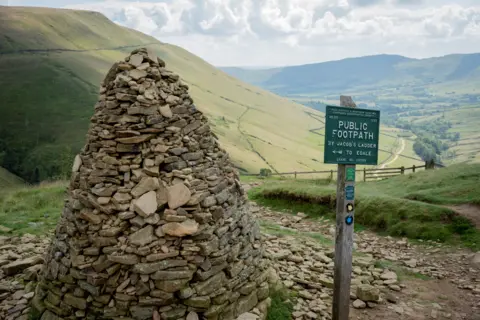
However, people did not suddenly have the right to roam wherever they liked, as is sometimes assumed.
"The 1949 act didn't actually open up any land," says Kate Conto, policy and public affairs manager at the Ramblers, formerly known as the Ramblers' Association.
"It gave a mechanism for the national parks to try and get agreements with landowners to open up land.
"And the Peak District National Park tried that and they got a small amount, but the 1949 act didn't really do what the people who introduced it had hoped."
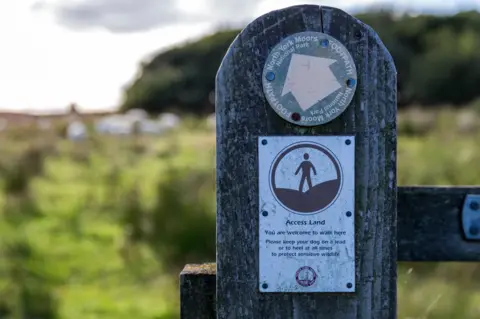
The 1949 act did, however, create the "definitive map" of the public rights of way network in England and Wales.
These are the footpaths, bridleways and byways that people are legally entitled to use, even if it means wandering across a farmer's field or other private land.
The map made it clearer for people to understand where they were legally allowed to walk in the Peak District, and other national parks.
 Getty Images
But the Ramblers continued campaigning.
"The 1949 act was really helpful and foundational but there was more to be done after that," says Kate.
As a result, the Countryside and Rights of Way Act was eventually created in 2000, giving people the legal right to roam over much more countryside, including in the Peak District.
"You can see it today on OS maps in a yellow wash," says Kate.
"It gave people the right of access to mapped areas of mountain, moor, heath, down and common land in England and Wales.
"So in Derbyshire around 525 sq km of land was opened up for access, and that's an area two times the size of Birmingham."
 Getty Images
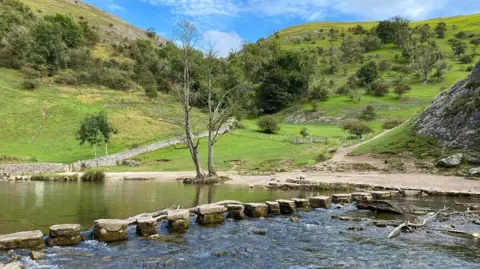
The National Trust - the heritage and conservation charity founded in 1895 - has also been key in opening up much of the Peak District to the public.
It is now the biggest landowner in the national park, and looks after sites including Mam Tor, Kinder Scout, Dovedale, Thorpe Cloud and Winnats Pass.
The man in charge is Craig Best, general manager for the National Trust in the Peak District.
"Over the years we've acquired land to protect it for the nation," he says.
"Currently we own and look after 13% of the national park, which amounts to about 20,000 hectares."
Among the charity's sites is the Longshaw Estate, which was once threatened with development but saved by the campaigner Ethel Haythornthwaite.
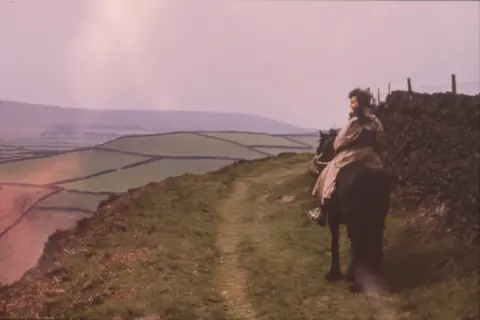 Campaign to Protect Rural England
Ethel was widowed at the age of 23 when her husband was killed in combat during World War One.
The story goes that Ethel's family encouraged her to take restorative walks, and she became passionate about the countryside.
She founded a group that later became the Peak District and South Yorkshire branch of the Campaign to Protect Rural England (CPRE), which helped raise funds to buy the Longshaw Estate. It was gifted to the National Trust in 1931.
"Ethel was instrumental in securing Longshaw for the nation," says Craig.
Ethel was also part of the campaign to establish the Peak District as a national park, and a hill walking challenge called the Ethels was created in her honour in 2021.
 Getty Images
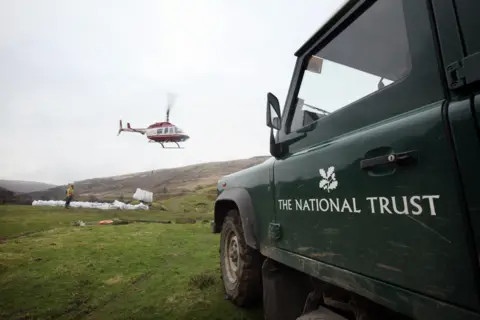
As well as improving access to the Peak District, the National Trust does lots of work to improve it for nature.
Kinder Scout - once the battleground for roamers' rights - is one example.
"We've been looking after it since 1982, and we've been investing a lot of resource to restore the peat there," says Craig.
"That investment has resulted in transformational change for Kinder Scout. You're more likely to see more wildlife.
"Bats are returning to that landscape simply because there's more vegetation. There's more insects for them to feed on."
While the National Trust encourages access to the Peak District, Craig says some visitors can have a negative impact.
"We would ask people not to have barbecues or fires, because that presents a huge fire risk to this landscape, and also take your litter home with you," he says.
"Another issue we're tackling at the moment is dogs off leads. Not only do they disturb ground nesting birds but they also have an impact on livestock, particularly during lambing season."
 Getty Images
Transport has also been highlighted as an issue in recent years.
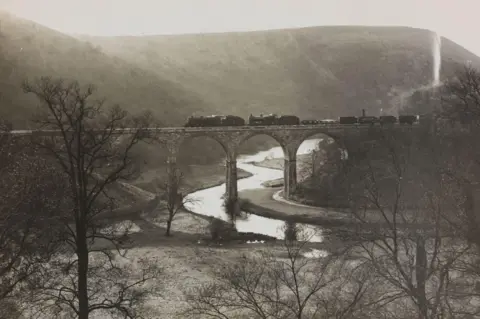
Many of the railway lines that once brought visitors to the Peak District are long-since closed, and some are now walking trails - the Monsal Trail, the Tissington Trail and the High Peak Trail.
But people who live in the Peak District say cars are causing chaos, particularly in areas like Castleton, which has attracted a growing number of visitors in recent years.
Now, as part of the 75th anniversary celebrations, the Peak District National Park Authority has launched a Tube-style map style to promote the use of public transport.
The authority - the public body which looks after the park in a similar way to a local council - has also warned about financial challenges and suggested raising taxes.
But Craig believes the 75th anniversary of the national park, which now welcomes about 13 million visitors a year, is something to be celebrated.
"As an organisation, the National Trust are really advocating for people to enjoy these open spaces across the whole of the Peak District," he says.
"National parks were formed to enable people from towns and cities to get out and explore these amazing places."
Listen to BBC Radio Derby on Sounds and follow BBC Derby on Facebook, on X, or on Instagram. Send your story ideas to eastmidsnews@bbc.co.uk or via WhatsApp on 0808 100 2210.
