Tony Wilson: 'The man who put Manchester on the map'

 Paul Wolfgang Webster
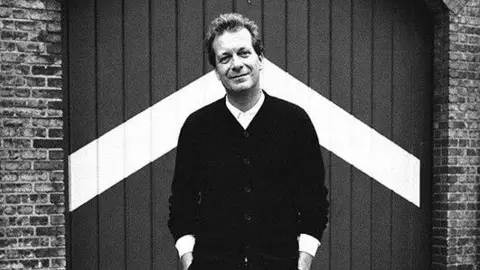
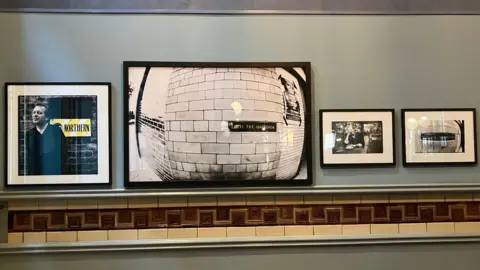
A rare exhibition showing never-before-seen photographs of one of Manchester's most iconic music pioneers has come to a city centre.
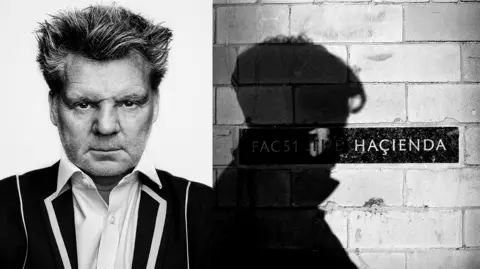
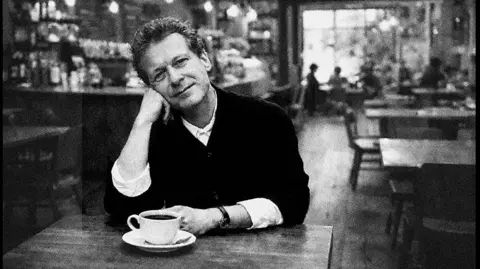
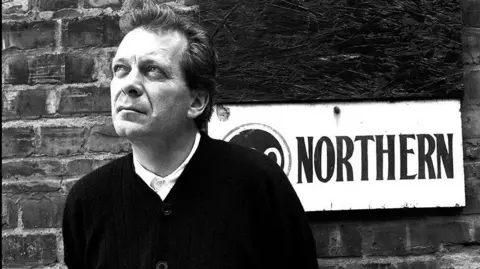
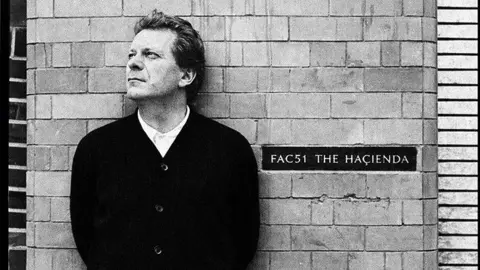
The free exhibition has been unveiled at Kimpton Clocktower Hotel, revealing unseen portraits of Tony Wilson - the man behind the world famous Hacienda club, Factory Records, and Joy Division.
The photographs were taken 30 years ago by Paul Wolfgang Webster, from Manchester. "In the media he was the man who signed the contracts in blood but I got to actually meet and see the real person behind that," Webster said.
Ahead of the exhibition, Webster told the BBC about the man behind the lens - and Wilson's lasting imprint on Manchester's cultural identity.
 Robert Kicka
"Tony Wilson was someone who put Manchester on a global sort of footing," Webster continued. "Madonna came to the Hacienda - it was a world famous club that this guy had just thought of.
"And as a producer he's responsible for so many of Manchester's most iconic artists - different managers come along, but he was definitely the one that just put Manchester on the global map.
"To see the real person that's behind all that and talk to them and be truthful with each other is quite rare sometimes - but that's what I got with Tony Wilson."
The rise of Wilson
Tony Wilson is most famed for his influence on the Manchester music and nightlife scene from the late 1970s to 90s.
Wilson was born in Salford's Hope Hospital on 20 February 1950. After growing up in the North West and attending the De La Salle Christian Brothers' school in Salford, Wilson went on to read English at the University of Cambridge in 1968.
He returned to the North West where he began working with Granada Television in the 1970s - fronting programmes including music show So It Goes and current affairs magazine show World In Action and going on to become the long-time host of the broadcaster's early evening show, Granada Reports.
Though he continued in broadcasting, in the late 1970s Wilson co-founded Factory Records, the label behind some of Manchester's most iconic musical influences of the era - Joy Division, New Order and The Happy Mondays.
The Manchester label grew out of a club night, which started in 1978, and went on to find global success.
The Hacienda and beyond
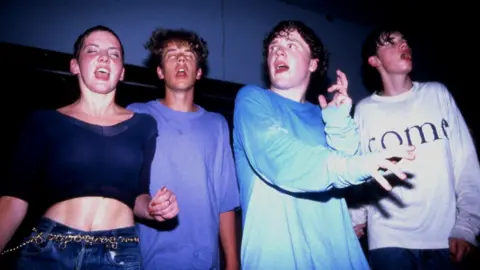
In 1982, Wilson set up The Hacienda nightclub, which has been credited as the most famous club in the world in the late 1980s and early 1990s.
As the heart of the "Madchester" scene, the Hacienda was famous for its dance nights - particularly house music nights where DJs Mike Pickering, Sasha and Dave Haslam were regulars.
Wilson could often by found at the Whitworth Street club - which he opened with the band New Order, as a "cathedral" for Manchester's youth.
The Smiths, The Stone Roses and Oasis also played gigs at the venue - and even Madonna played her first UK gig there in February 1983.
 Getty Images
But in the early 1990s the club struggled with cash flow problems and closed its doors in 1997, before being demolished in 2002.
The legacy of which continues to be celebrated and reminisced upon as one of Manchester's cultural turning points - almost five decades since opening.
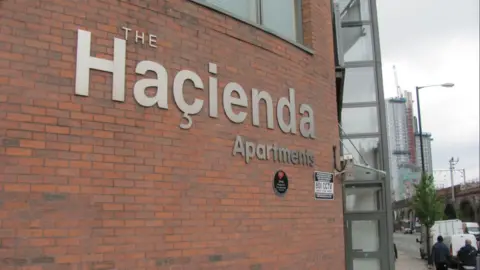
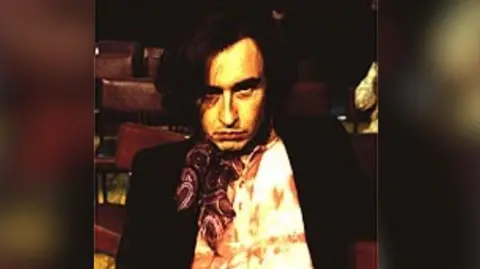
The semi-fictional story of the club, the music and Wilson's life was then later documented in Michael Winterbottom's 2002 film, 24 Hour Party People.
 BBC archive
Wilson later got involved in local politics, supporting a campaign for a regional assembly for the North West.
He also presented radio shows - and worked with BBC Radio Manchester and became the main presenter of the BBC's Politics Show North West.
But in 2006, the Manchester icon fell ill and was diagnosed with cancer. Despite emergency surgery and chemotherapy at Manchester's Christie Hospital, Wilson died in August 2007 - aged 57.
 Paul Wolfgang Webster
Webster met Tony for the shoot at the height of his fame in 1996 - he was a young student photographer at the time, putting together a project on Northern icons.
"Tony Wilson was very much you know in your face and all of that - but I tried showing a private sort of moment as well with him.
"When Tony very sadly passed away in 2007, one of the pallbearers at his funeral brought along one of the photos from my shoot - and he said to me 'That is Tony Wilson - that is unassuming Mr Tony Wilson that a lot of people don't see'.
"That was a real compliment."
 Paul Wolfgang Webster
Webster said he arrived to Wilson's house for the shoot, getting a rare glimpse into the private life of the man behind so much of Manchester's cultural revival of the era.
The pair then went for coffee in the city, before taking to the streets for the shoot.
"Rockstars and people in the media do show a face that everybody sees, but to be alone with somebody, you talk about life itself, and people, what drives them and how they started and most of the time they just drop the cards and can be quite sincere," Webster said.
"I was able to shoot him in Manchester, where he belonged.
"So these pictures now should belong in Manchester."
 Paul Wolfgang Webster
Reflecting on the launch of the exhibition, Webster said: "It was a lifetime ago, when I was just a young person, doing photography.
"I would've been astounded to know I'm still exhibiting my work from that time. And obviously, especially this one of Tony Wilson."
Reflecting on the memory of the era, Webster's view felt not too dissimilar to Wilson's own take on nostalgia.
"It's just, it's a moment in time that it's gone," Webster said. "And unfortunately, Tony Wilson is not here with us anymore.
"But that vibe of Manchester with Oasis, Joy Division - and everything else that was born through the Hacienda and Tony Wilson - that lives on."
"And these pictures will just show that moment."
'Tony Wilson: A Portrait of Manchester' runs 9 April to 20 May.
Listen to the best of BBC Radio Manchester on Sounds and follow BBC Manchester on Facebook, X, and Instagram. You can also send story ideas via Whatsapp to 0808 100 2230.
