What do Burnham's tax cuts mean for London?

 Getty Images
Since Andy Burnham became prime minister on Monday, he has made several changes in policy designed to help households and businesses.
There have been three announcements so far: a cap on bus fares, the removal of 5% VAT on domestic energy bills and a 20% cut in business rates for most pubs, clubs and live music venues.
But will his plans make much difference to Londoners and the capital's businesses?
Let's look at the details.
Electricity bills
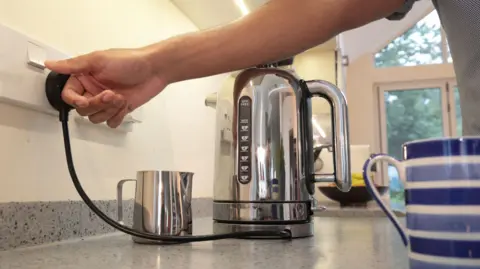
The reduction from 5% VAT to zero is estimated to save a typical household about £45 a year, which works out at just over 86p a week.
The average annual electricity bill in London for a typical household is roughly £875 - around £73 per month - according to EDF Energy. That includes charges such as the supplier's markup and green energy subsidies which energy companies are required to pay to the government.
The cut will apply to electricity bills, so households with dual gas and electricity bills will only see the reduction on the electricity they use.
While any reduction in bills is welcomed, it will provide little respite for many Londoners struggling with the costs of electricity and gas.
The cut will come into effect on 1 October, and is funded until March 2027.
 Getty Images
'Breathing space'
The VAT cut will help reduce bills but will not reduce the wholesale cost of electricity, the green levies or the supplier's markup.
The mayor of London estimated in 2024 that 471,000 or 13.2% of London's population were classed as living in fuel poverty.
MoneySavingExpert's Martin Lewis said on social media that the VAT cut was "a good totemic step and very welcomed" although "in practice people won't feel much benefit".
Dame Clare Moriarty, chief executive of Citizens Advice, said cutting VAT on domestic electricity bills would "provide welcome breathing space" but "further action would be needed to tackle the root causes of unaffordable bills and deliver lasting security".
She added: "To permanently cut bills the government should move more of the policy costs that are currently added onto our electricity bills into general taxation."
Those costs include what Citizens Advice termed "government-mandated levies added to household bills to fund environmental, social, and energy-efficiency programmes".
The removal of VAT on energy bills is not means tested, so those who use the most electricity and gas will see the biggest reductions in their bills.
Pubs rate relief
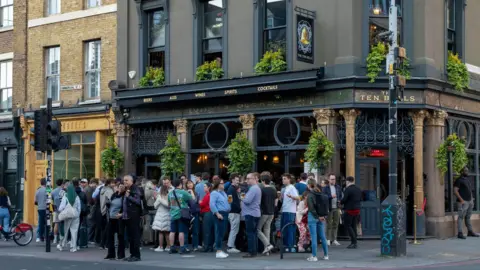
According to a report issued in January 2026, London's night-time economy contributes more than £139bn to the capital each year and supports more than a million night-time workers.
Karim Fatehi, CEO of the London Chamber of Commerce and Industry, welcomed the business rates cut of 20% for pubs, clubs and live music venues as "a welcome step for many of London's hospitality firms".
The government said an average pub or venue would save about £1,100 a year.
But Fatehi also pointed out the wider pressures on these businesses: "Firms across the capital, particularly SMEs (small businesses), continue to grapple with high employment costs, inflationary pressures and an outdated business rates system that discourages investment in physical premises."
Chef and publican Tom Kerridge, who operates two restaurants in London, told the BBC the planned cut "didn't go far enough".
Kerridge has been leading a campaign to cut hospitality VAT to 10%.
"It will come as welcome news," he said. "But £1,000 on a yearly revenue doesn't really make a difference."
Pubs 'ground down'
Emma McClarkin, CEO of the British Beer and Pub Association, said pubs had paid disproportionately higher business rates for "years and years", which had "ground down" their ability to keep doors open.
In May, the BBPA reported that 161 pubs closed across Britain in the first three months of the year - an equivalent of almost two a day - with five per month closing in London.
McClarkin has highlighted the "disproportionate tax burden" and "sheer weight of taxes and regulatory costs" pubs face.
Michael Kill, CEO of the Night Time Industries Association, called the policy "a positive outcome from genuine engagement with the sector".
"The inclusion of clubs alongside pubs and live-music venues is particularly important and demonstrates a broader recognition of the vital economic, cultural and social contribution made by the night-time economy," he added.
 Getty Images
Increases in National Insurance employer contributions and the national minimum wage, which were introduced in April 2025, as well as rising energy bills and the cost of food and beer have put pressure on businesses.
UK Hospitality pointed out that pubs, clubs and live music venues only account for about a fifth of hospitality jobs - restaurants, cafés and hotels are not included in the cut in business rates.
CEO Allan Simpson said: "Restaurants are struggling just as much as pubs, while hotels are due to see their business rates bills increase by an average of 110%, the highest in the sector.
"After years of rising costs and tax increases that have hit investment and employment, the industry now needs a meaningful, sector-wide solution."
The government's other cost of living announcement was a £2 cap on single bus fares.
This does not apply to London, as Transport for London charges £1.75 per single journey, and multiple buses can be taken within one hour at no extra charge.
Buses are one of the few costs of living that are cheaper in London than the rest of the country.
Listen to the best of BBC Radio London on Sounds and follow BBC London on Facebook, X and Instagram. Send your story ideas to hello.bbclondon@bbc.co.uk
