'If I can go to university, anyone can'

 BBC
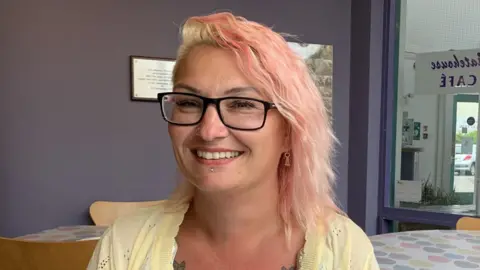
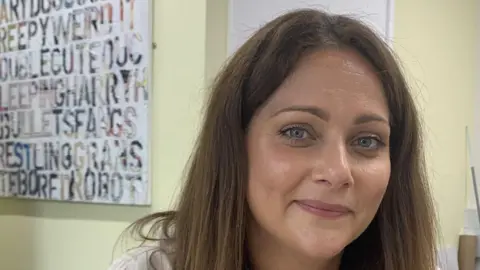
BBCCharlotte never imagined she would be a student at the University of Bristol.
At 42, the single mother of five, including a disabled son who needs round‑the‑clock care, says higher education once felt completely out of reach.
"It is achievable, it is something you can do, to make you feel good about yourself," she says.
Now she is one of 14 women studying for a new micro‑qualification on entrepreneurship - delivered by the university not on campus, but in her own community.
"I'm proud that I'm doing it," she says. "I talk to my children about it. They laughed when I said I was going to university.
"But this fits around my home life and my responsibilities.
"It is challenging - but I can do it. And it feels good to be pushing myself too."
Charlotte wants to go on do more part-time short courses after completing her qualification.
A university course on the doorstep
The micro-qualification Charlotte and the others are working towards is called 'Skills for a changing world: Entrepreneurship and professional studies'.
Lessons take place every week at a centre in Hartcliffe, an area which traditionally has long had a low number of students entering further education and was recently classed as "overlooked" for government funding.
The project is being run in conjunction with Hartcliffe and Withywood Ventures, a local organisation that has worked in the area for 30 years to widen opportunities.
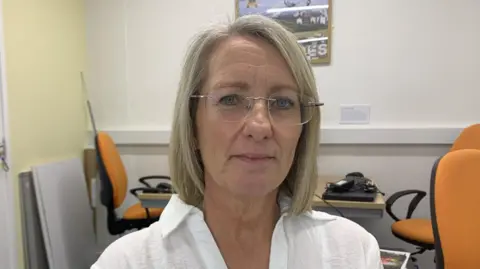
"We get a lot of things coming into the area and then leaving after a year," says HWV's Jane Hewer.
"Lots of people were sceptical that this could be similar. But coming on board with HWV and knowing that they're here to stay is really important to us."
The initiative is backed by £178,000 from the Office for Students' Equality in Higher Education Innovation Fund, and Hartcliffe is the university's second "micro‑campus" after a similar site opened in Barton Hill in 2020.
Lawrence Hill (where the Barton Hill Micro-Campus is based) and Hartcliffe and Withywood are two of the three wards in Bristol which have among the lowest participation rates in higher education in England.
'I didn't have the confidence before'
For many students, studying locally has made all the difference.
Stacy, 43, left work several years ago to care for her daughter. Returning to learning felt daunting.
"If it wasn't for the fact that we have it here, this micro‑campus, I don't think I would have had the confidence to do this," she says.
"It's made it much more accessible to people in the local area. I was very anxious when I first started, but I feel like I can do this now."
Once completed Stacy wants to go into a career working with children.
The qualification is worth 40 credits at Level 4 - equivalent to a third of a first year at university.
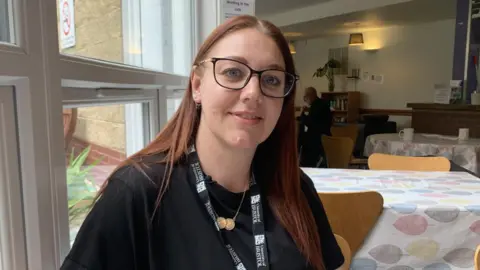
For 36‑year‑old Mak, it has been transformative.
"It's let me know that I'm not stupid. I can do things that are way beyond my normal capacity," she says.
"I'd recommend it to others too. Break the generational cycle, step out of your boundaries -if you want to go do something with your life, then go do it."
After the course, Mak wants to pursue a career working in SEND services for adults and children and eventually open an inclusive SEND support centre of her own.
Changing perceptions
The project's leaders hope it will shift long‑held attitudes about who university is for.
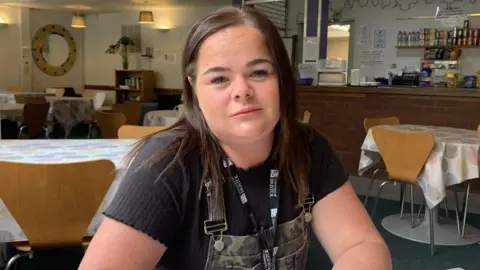
Michelle Graffagnino, who leads the micro‑qualification, grew up nearby and says she once ruled out applying to Bristol herself.
"I grew up in BS13 and didn't apply to the University of Bristol because, from a working‑class family, my people just didn't go there," she says.
"I think the university coming south of the river is a big thing.
"We're here not just to bring students into the university - we're here to engage with the community and bridge that relationship."
This course will run until October and applications will then open in the autumn for anyone interested in being one of the next generation of micro-campus students.
For Charlotte, the message is simple:
"If I can do this - anyone can."
Follow BBC Bristol on Facebook, X and Instagram. Send your story ideas to us on email or via WhatsApp on 0800 313 4630.
