'Mental health unit left me with trauma and PTSD'

 Mark Norman BBC
A woman has said her time in children's mental health units left her with trauma and PTSD.
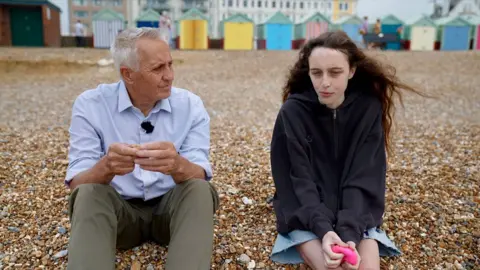
Dulcie, 20, said hospital-related harm could be avoided and has lent her support to a new scheme in which dozens of young people in mental health crisis have avoided hospital admission after the introduction of an intensive home treatment service in Sussex.
The crisis outreach acute support team (Coast) is run by Sussex Partnership NHS Foundation Trust (SPFT) and offers a community-based alternative to inpatient care.
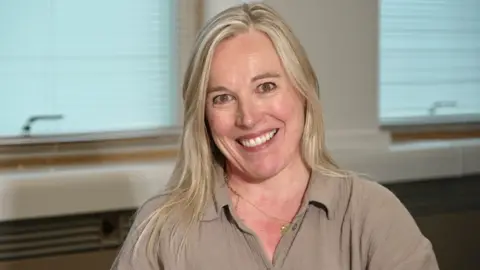
Kate Stammers, director of nursing for specialist mental health services at SPFT, described hospital as a "last resort" and said the new service "had allowed patients to stay in Sussex".
'So many restrictions'
Dulcie, who did not spend time in hospital in Sussex, said being in mental health hospitals was "rubbish".
"You can't control the temperature, you can't control the noise, you can't control what bedding you have, what clothes you have, there's so many restrictions because of your own safety and other people's safety," she said.
She believes young people who spend time as an inpatient in a mental health unit miss out on a lot of things.
"You come out and nothing's as it was and you kind of feel a bit separated from it all," she said.
"It just adds another hurdle into the whole recovery because not only are you having to sort of learn to be better at home after getting better in hospital, you have to then learn how to go to school again, how to speak to people, so it just adds another thing to the pile which you probably don't already need."
 Mark Norman BBC
Currently young people under the age of 18 in Sussex requiring a stay in a mental health unit have to be sent out of the county after the trust temporarily closed its only inpatients beds last year.
The CQC reported a number of safety issues including high levels of incidents leading to harm, poor staff training and competence, low staffing numbers, ineffective observations of young people and poor leadership and support.
Stammers said admitting a young person to hospital was a last resort as it could be "quite restrictive and they're away from their familiar environment and their parents and carers".
She believes that the intensive home treatment service enabled young people to address their problems in the environment where the problems had often started.
The service includes crisis intervention, an intensive home treatment service, and support for young people as they leave hospital.
Stammers said if a child needed 24-hour support and their base was not stable enough, then a hospital stay might be needed.
"But we always think, what's the least restrictive thing we can do?" she said.
"And if somebody has to come into hospital, we're always thinking, how can we get you discharged and back into the home environment?"
'You get to sleep in your own bed'
Dulcie has been advising the trust on the changes it has made.
"If you're at home you still get to go to sleep in your own bed, you get to be with your parents, you don't have to watch other people be ill," she said.
"You're more likely to succeed in getting better when you've got your own comforts around you, even things like using your own shower, hospital showers are rubbish, the food is rubbish."
The trust said that since opening the Coast service, 40 young people have been treated through the intensive home treatment service.
Overall, 220 people have been supported during an acute mental health crisis.
