Multiple stillbirths at troubled hospital trust

 Getty Images
Multiple full-term stillbirths have been registered at a hospital trust in the space of a year.
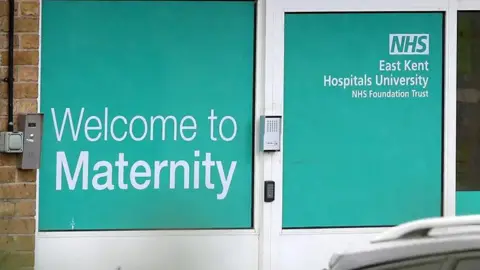
East Kent Hospitals NHS Trust registered 27 stillbirths in a 12-month period, including 13 full-term stillbirths, which triggered a national alert. Term stillbirths are regarded as particularly serious because they are more often potentially preventable.
Three years ago, the Kirkup report found 45 babies might have survived at the trust if they had received better care.
East Kent said it did not know what caused the deaths but its acting chief executive Des Holden said it had commissioned an independent review "to identify any common themes, learning and further improvements".
 PA Media
The issues were discussed at a meeting of the trust's board of directors on Thursday and papers show that while some improvements had been made, the maternity service remained under significant pressure and subject to ongoing scrutiny.
The trust recorded a stillbirth rate above expected levels, including an increase in deaths at full-term.
This triggered a national maternity outcomes signal system (Moss) alert at the Queen Elizabeth the Queen Mother Hospital in Margate, prompting further investigation.
Moss is described by the NHS as a near-real time safety signal system that supports early detection and rapid responses to potential safety issues in intrapartum care.
Speaking last year, Dr Kirkup said that "[in] any pregnancy where the child was well at 37 weeks, the parent should be going home with a fit and healthy baby".
Referring to the recent stillbirth deaths, one member of staff told the BBC: "It's bad, very bad. The worst part is the toxic culture between midwives and obstetricians."
'Especially concerning'
Helen Gittos, who lost her baby Harriett in 2014, said: "I don't believe the trust ever meaningfully engaged in responding to the Kirkup report.
"Its key message was that sustained change comes from tackling a few fundamental issues, not checklists and action plans, and yet that is what we've seen.
"The high numbers of term stillbirths are especially concerning."
Figures show a number of serious incidents over several months.
In April, there were 10 significant incidents, including major haemorrhage, surgical interventions, and unplanned hysterectomy
The board papers showed the overall perinatal mortality rate had also risen above national thresholds, although neonatal mortality remained below expected levels.
Board papers described the workforce as a "key risk", with particular attention on midwifery staffing and engagement with community teams.
Holden said: "The stillbirth of a baby is devastating for every family and our thoughts are with all the families affected by the loss of their baby.
"We review every individual stillbirth. We have seen an increase in stillbirths over the past 12 months and we are looking very closely at whether there may have been any common factors, including factors during pregnancy.
"To help maintain the safety of our services, we have commissioned an independent expert review to identify any common themes, learning, and further improvements.
"We are working hard within the community to increase support for women throughout their pregnancy."
Nicola Wise, the CQC's director of hospitals for the South, said: "We are aware of the increase in stillbirth rates and have been in direct contact with the trust to discuss these concerns and the actions taken to maintain patient safety.
"We will continue to liaise closely with the trust in relation to this and await the findings of the independent expert review to determine whether any further action is required on our part."
