Dig begins to uncover town's 13th-century origins

 Context One
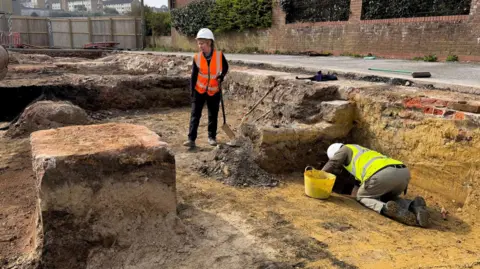
Archaeologists and volunteers have begun an eight-week dig to unearth the 13th-century origins of a seaside town.
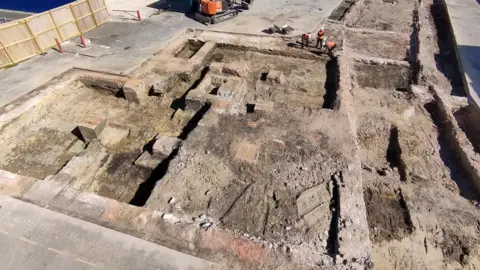
The former bowling alley site in Weymouth, Dorset, is known to contain the remains of three Medieval houses and plots.
Context One Archaeology, which is carrying out the investigation for Dorset Council, said it also hoped to uncover Anglo-Saxon evidence related to another settlement nearby.
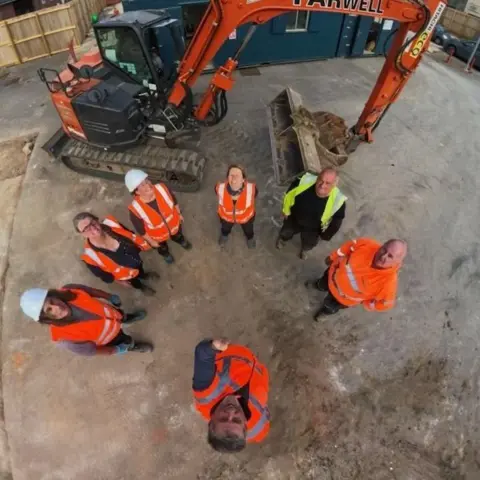
Dig the Street, which is coordinating the volunteers, said more than 200 people applied to take part but it could only accommodate about half.
 Context One
Dig the Street founder Mark Vine said: "It was a truly awesome response.
"There will be 15 volunteer excavators each day and four finds washers."
The dig is focusing on the car park area in St Nicholas Street in Melcombe Regis where mechanical diggers have spent two weeks removing concrete and tarmac before the start of hand excavations on Tuesday.
Context One said trial investigations in 2022 uncovered the remains of a 13th or 14th-century building and a stone well, along with foundations of an early 19th-century chapel that had been converted into a theatre during the Victorian period.
It said the chapel site had previously been occupied by cottages that were used in the 17th Century as a dissenter's meeting house for clandestine worship.
 Context One
Context One director Richard McConnell said: "The medieval remains appear to date to the very foundation of Melcombe Regis in the late 13th Century - one of two settlements that became modern Weymouth.
"We hope to expose further buildings to help us understand this pivotal period in its history as a thriving port.
"The site also lies very close to the suspected location of an earlier Anglo-Saxon settlement near the harbour. Uncovering evidence from this era would be highly significant."
McConnell said the original foreshore was also believed to lay beneath the chapel and cottages, "offering the exciting potential to discover evidence of medieval and early post-medieval harbourside activity".
An open day on 9 May will offer site tours, finds displays and living history.
Context One will also host a weekday drop-in called the Finds Station in West Street, starting on Wednesday, where visitors can see artefacts being processed, read about the site's history and watch video diaries by volunteers.
