Ancient royal 'power base' uncovered near tiny village

 Duncan McGlynn
A tiny Aberdeenshire community was once a royal Pictish power base with trade links to continental Europe, according to the results of a 10-year archaeology project.
Rhynie, near Huntly, has a population of about 500 people today but 1,400 years ago was likely to have been home to thousands.
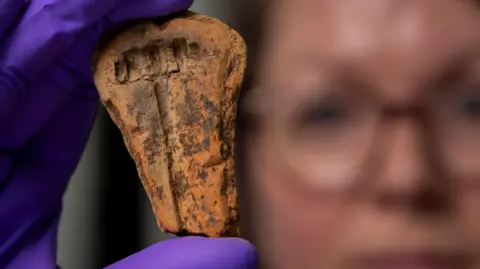
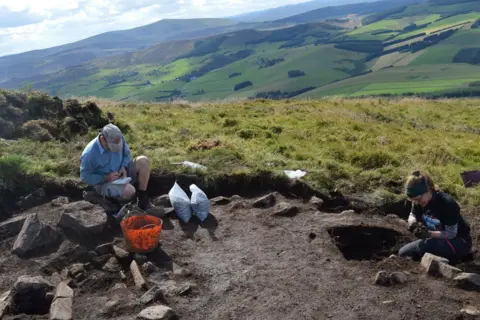
Excavations led by the University of Aberdeen have revealed tools for making jewellery and other intricate metalwork, as well as glass vessels - containers - imported from western France.
On Tap o' Noth, a hill overlooking Rhynie, archaeologists identified one of the largest ancient settlements ever discovered in Scotland, with evidence of up to 800 huts.
The Picts, the descendants of Iron Age tribes, are known for decorating standing stones with intricate carvings and constructing impressive hillforts.
They ruled northern and eastern Scotland for hundreds of years before vanishing from written records about 1,100 years ago, the name of their kingdom disappearing with them.
 University of Aberdeen
The University of Aberdeen's Northern Picts Project said stone containers for refining silver, along with other finds, suggested the area had "elite status".
The archaeologists said the place-name Rhynie - which comes from the early Celtic word for king - further supported the idea the area was once a significant royal seat of Pictish power.
Prof Gordon Noble, who has led the research, said: "When we began work at Rhynie, we knew it was significant but we had no idea just how important it would turn out to be.
"What we've uncovered is the footprint of a major royal centre, a place that played a pivotal role in the formation of the Pictish kingdoms."
He added: "For decades, people assumed early medieval northern Scotland was sparsely populated and politically fragmented.
"Rhynie shows us something very different – a powerful, organised place with large settlements and sophisticated connections with the wider world."
The project's discoveries have been detailed in a new book "Rhynie, A Powerful Place of Pictland".
