New homes rejected to protect rare bat colony

 Getty Images
Plans to build new houses have been rejected because of the presence of rare bats on the site.
Wiltshire Council has refused planning permission to Stone Developments which applied to build up to nine detached and semi-detached houses at Five Farthings on the edge of Dilton Marsh.
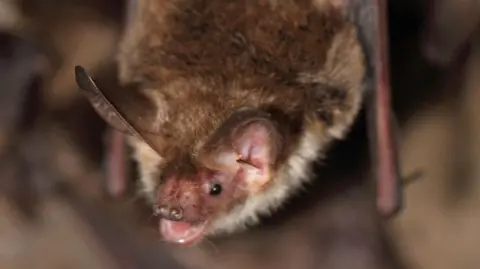
The council ruled the half-hectare site was important for Bechstein's bats, which are one of the rarest of the species in the UK.
Stone Developments appealed the decision and argued that other developments had been permitted within the Bath and Bradford-on-Avon Special Area of Conservation (SAC).
There are only a handful of known breeding populations of the bats, according to the Local Democracy Reporting Service.
The council refused the application and said "insufficient information" had been submitted to "enable the appropriate assessment" to be carried out on the site.
"In addition, no financial contributions toward council-led strategic habitat mitigation have been secured, and the council is unable to conclude that there would be no adverse effects on the integrity of the Bath and Bradford-on-Avon Bat SAC," they added.
The Planning Inspectorate said the SAC was designated for greater horseshoe, lesser horse and Bechstein's bats and its conservation objectives required the "essential" maintenance and restoration of habitats for the species.
They added the proposals carried a "heightened risk of undermining the SAC's ecological integrity" and there was no guarantee the development "would not adversely affect the integrity" of the site.
"Where any uncertainty remains, permission must be refused," they said.
Follow BBC Wiltshire on Facebook, X and Instagram. Send your story ideas to us on email or via WhatsApp on 0800 313 4630.
