Chris Mason: Iran war has trapped Labour in a vicious circle

 HM Treasury
The government is simultaneously confronting the economic consequences of the war in Iran, as spelt out starkly by the International Monetary Fund and the sharpening of arguments from some, including former Nato secretary general Lord Robertson, that the war is evidence defence spending needs to go up more and more quickly.
The thing is, spending more on defence is harder when the economy is continuing to struggle – as it has done for years and years already.
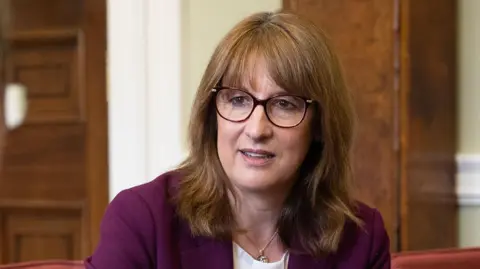
The chancellor's exasperation is palpable in an interview with The Mirror, saying it was "folly" to start the conflict without being clear about the objectives.
"This is a war that we did not start. It was a war that we did not want. I feel very frustrated and angry that the US went into this war without a clear exit plan, without a clear idea of what they were trying to achieve," Rachel Reeves said.
Little wonder she is angry. Reeves was already confronted by towering challenges and now this. And just at the moment she and other senior ministers, from Prime Minister Sir Keir Starmer down, were beginning to tentatively make the case that things were slowly improving.
At the turn of the year, the prime minister said "we are turning a corner". Ministers privately and publicly would point to at least some economic indicators that were looking more promising.
Then the missiles and fighter jets took to the skies and everything changed.
It means the vicious circle tightens and darkens. A subdued economy leads to a subdued, restless, perhaps cantankerous electorate. A subdued economy makes the trade-offs and choices over public spending more difficult. And the wars – as well as Iran there is Ukraine – led Lord Robertson to lash out at the chancellor, accusing "non military experts in the Treasury", as he put it, of "vandalism".
But the Treasury's job is to keep a keen eye on public spending and you don't have to talk to many folk in Westminster before accusations are made of wastage by the Ministry of Defence over the years.
Lord Robertson also chose to punch a Labour bruise when he claimed that the "cold reality of today's dangerous world is that we can't defend Britain with our ever-expanding welfare Budget".
Last summer, the prime minister lost a battle with his own backbenchers to slow the rate of increase in the benefits bill. There is talk from people in government that they will, in time, have another go at shaking up the system. But it is politically very difficult, for the Labour Party in particular.
The long promised Defence Investment Plan, which is meant to spell out how the Ministry of Defence will pay for what it needs, was due in the autumn of last year.
Winter has since come and gone and the clocks have changed again, and there is still no sign of it.
Perhaps little wonder with all the political, fiscal and international strains the government is attempting to absorb.
As and when the plan does see the light of day, the debate will then widen. How will this government and its successors, and society at large, confront the choices a more muscular defence posture will demand?
Can health, benefits and defence budgets continue to all go up at the same time, when the tax burden, the proportion of the country's income going to the government, is already set to rise to a historic high of 38% by 2031? What can give and when?
These will be recurring questions in the years and perhaps decades to come.

Sign up for our Politics Essential newsletter to keep up with the inner workings of Westminster and beyond.
