Trial of 'fast' MRI helps spot breast cancer

 BBC
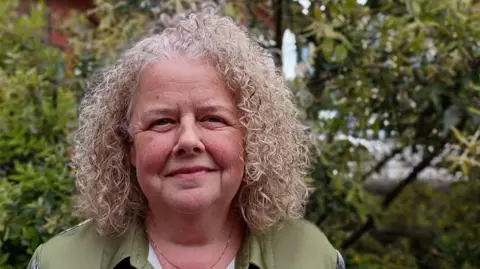
BBCA 53-year-old woman who opted to have a so-called 'fast' MRI scan said it showed a cancer tumour that hadn't been spotted during her routine mammogram.
Clare Down said: "I saw a poster and thought, 'that looks interesting'. I was curious about what an MRI would be like …so I went in and did it."
The scan was part of a trial being run by North Bristol NHS Trust involving volunteers from Bristol, Gloucestershire, Wiltshire, Cornwall and south London.
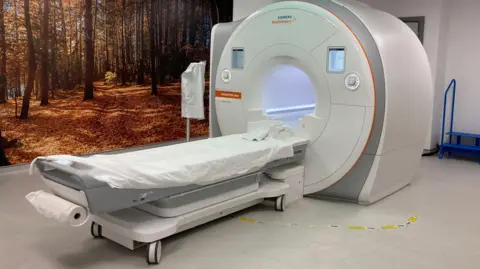
It is able to be carried out because of an extra scanner bought with fundraising by the charity BUST.
Down, from Kingswood, had a lump removed from her breast and some radiotherapy after the MRI, and has been told she is clear of the cancer.
"I'm incredibly grateful because if it had been another three years [until the next mammogram] and I had not had any changes in my breast, I don't know how advanced [the cancer] would have been by that point."
Researchers in Bristol are trying to find out if the use of a rapid MRI, which takes three to five minutes, will pick up smaller - and at times more aggressive - tumours that can't always be seen by mammograms.
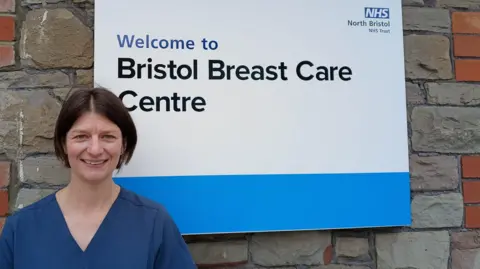
"This is the first UK trial that's looking at women with average breast density," said Dr Rebecca Geach, Consultant Radiologist in North Bristol.
Fatty tissues appears darker on mammograms, while dense tissue and potential cancers appear as solid white, meaning dense tissue can hide small masses and make cancer more difficult to detect.
Previous trials have focused on women with dense breasts and this is the first for women with average breast density, aged between 50 and 52 who have just been invited for their first routine mammogram.
The researchers have so far recruited more than 300 women and would like to scan 1,000 by April 2027 before releasing the results by the end of 2028.
Dr Geach said with that information, there could be a broader NHS trial throughout the country: "Despite the ….(routine) UK breast screening programme, women still continue to be diagnosed with breast cancer between their mammograms.
"This early detection means we can offer more effective treatments , possibly less invasive treatments and we want to save more lives."
While the trial continues, Dr Geach reiterated the importance of going to routine mammograms for women aged between 50 and 70. The national screening programme is estimated to save 1,300 lives a year in the UK.
"If you receive an invitation, please do attend, but a certain proportion of those women may be offered this additional screening test," she added.
