The special friendship that formed during end-of-life care

 BBC
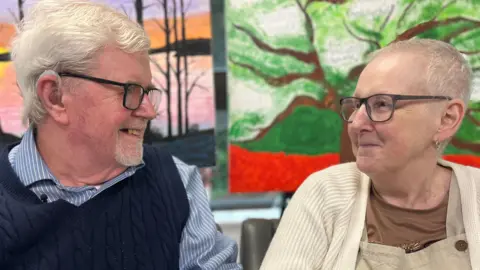
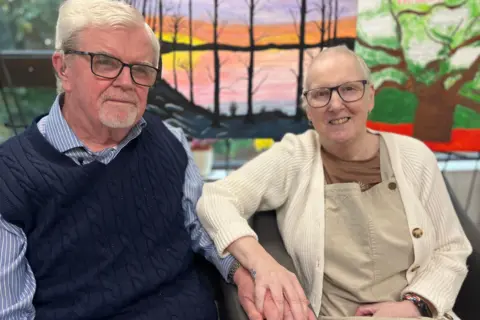
BBCSally and Kevin's friendship grew out of the most difficult of circumstances.
Both have incurable cancer and met at a craft group run by the hospice where they are receiving palliative care.
"It's a special friendship, nothing like I've ever experienced before, we understand each other," said Sally, 62.
"We give each other support," added Kevin, 79.
They are sharing their experiences of planning for end of life to encourage others to talk about death and access the support they need.
According to charity Marie Curie, almost one in three adults in Wales are left without enough support at the end of life.
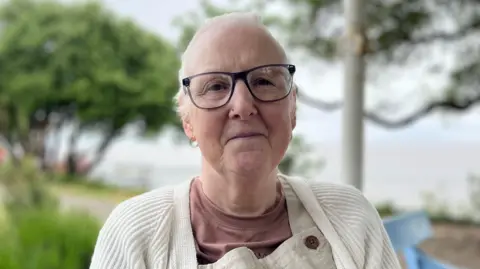
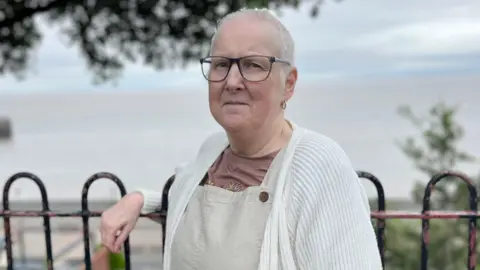
Sally Sarl, from Barry, Vale of Glamorgan, was 49 when she was diagnosed with bilateral breast cancer - meaning it is in both breasts - after finding a lump while in the shower in 2013.
"I was numb," she said.
"I couldn't quite believe it but I never said 'why me?', I just thought 'all right, I've got this so let's fight it', and that from that day onwards that's what I've done."
Following eight months of treatment, which included chemotherapy, radiotherapy, surgery and cancer drug Herceptin, she was told she was cancer free.
For six years normal life resumed, but over Christmas 2019 she became unwell with sickness and a tender stomach.
Tests revealed a mass in her stomach and cancer in her neck, shoulder, spine and hips.
"They said 'we'll do everything we can for you, if you're willing to fight, we're willing to fight with you'. And I said 'too right I am'."
Sally was on tablet-form chemotherapy for years "jogging along nicely" but in April 2025 she was told it had stopped working.
In August 2025 she was told it was incurable and offered palliative care.
 Sally Sarl
Sally is married to Mike and has two adult sons, Ross and Alex, and a grandson, Thomas.
"It was hard to tell my children that it's palliative care and it'll be end of life," she said.
"But I said 'I'm here and now so let's just make the most of the time that we've got and do things'."
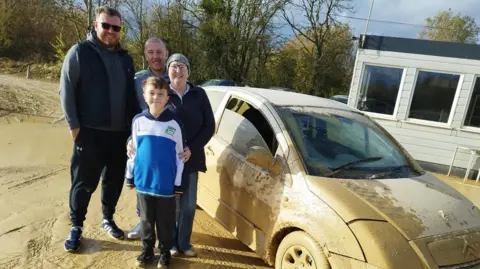
She decided to draw up a bucket list and has been rally driving with her sons and grandson, riding the UK's longest alpine coaster in Betws-y-Coed and feeding tigers at Bristol Zoo.
She and Mike have also bought a camper van to go on adventures together.
 Sally Sarl
Sally has also been making some tough decisions about how she wants to die.
"I want to be at home," she said.
"I just think I want to be close to family."
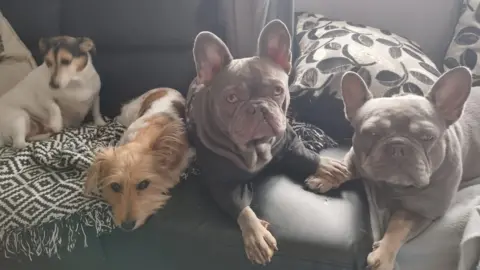
Sally has four dogs - her "fur babies" - and it's important to her to have them with her too.
Sharing her wishes with loved ones has not been easy.
"It was a difficult conversation but it needs to be talked about, you need to discuss it," she said.
Sally has been visiting Marie Curie's hospice in Penarth, Vale of Glamorgan, since January and has found comfort in speaking to others facing similar choices.
There's one particular friend who she has become very fond of.
"I've met up with a chap called Kevin and we just seemed to get on so well," she said.
"We have a good chat and we've got a lovely rapport.
"He's just a lovely, lovely person who's helped me and I hope that I've helped him as well."
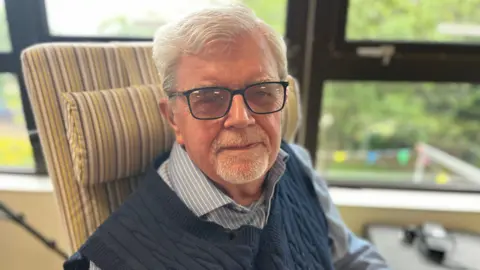
Like Sally, Kevin Pletts has also been making decisions about his end of life.
The 79-year-old from Llantwit Major, Vale of Glamorgan, has terminal lung cancer and has chosen to die at the hospice.
"I know the end will be whenever but I know I'm going to get as much out of the life that I have left," he said.
Kevin lost his wife in February and is planning to mark his upcoming 80th birthday by taking a hot air balloon ride with Sally.
"We get on really well... she's going through the same type of thing that I am so we gelled, and we enjoy ourselves together," he said.
"If we needed something and if we needed to share, either of us would do that for each other which is nice."
"We understand each other," agreed Sally.
Marie Curie said figures suggested there are more than 10,000 adults across Wales with unmet palliative care needs.
It said one in five hospital beds in Wales were occupied by people in the last year of their lives and "bold, radical" action was needed for services which were at "breaking point".
Gaps in care means "too many people are spending their final days isolated, in pain and struggling to make ends meet", it said.
The Welsh government said good palliative and end-of-life care could make a "huge difference" to helping people die with dignity.
It said it provided more than £16m a year to make sure people had access to the best possible end-of-life care, including setting national standards and boosting community services.
Sally hopes that by talking about her end of life it will help break the taboo and encourage others to talk too.
"It's such a touchy subject," she said.
"It's a delicate subject and it shouldn't be."
Sally died on Thursday 9 July but it was her family's wish that we share her story
