Heatwave sparks record number of ambulance callouts

 Getty Images
An ambulance service is urging people to protect themselves during the heatwave after it experienced its busiest day on record.
The South Western Ambulance Service NHS Foundation Trust responded to 3,941 callouts on Tuesday – the highest figure since records began in 2013.
Amid high temperatures across the region, members of the public are being reminded to choose the right healthcare service for their needs and call 999 only in an emergency.
Chief executive of the trust, Dr John Martin, said: "Every less urgent 999 call reduces our ability to respond quickly to patients facing life-threatening emergencies."
The south-west of England, like much of the country, has experienced exceptionally warm weather for this time of year.
Temperatures in the region have risen to 33C (91F) but typical highs range from 15C to 18C (59F to 64F) in May.
Suggested precautions in the heat include staying hydrated, wearing sunscreen and protective clothing, and checking in on elderly relatives.
The ambulance service trust also advised staying in the shade and avoiding strenuous activity between 11:00 and 15:00 BST.
Over the bank holiday weekend, the trust attended 18,206 incidents, compared with 14,684 during the same period last year – an increase of more than 24%.
The most common incidents included falls, breathing difficulties, and patients who were unconscious or fainting.
However, Martin said the service was also receiving calls for minor issues such as sunburn or "feeling hot" – symptoms that could be managed through self-care, pharmacies or 111.
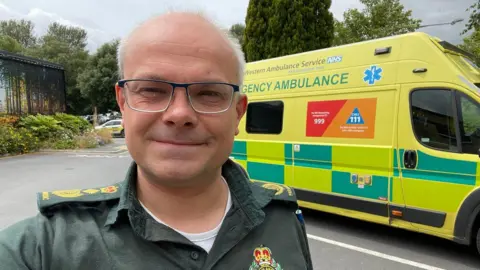
"We want to be there for everyone that needs us in a life-threatening emergency," he said.
"To do this, we need to have our ambulances free to respond to those most in need.
"If you call us and we're not the right service for you, we will direct you to another part of the NHS.
"Please do listen to this advice, as it could mean that you get the help you need more quickly."
He emphasised that 999 should be used for life-threatening emergencies including cardiac arrest, chest pain, breathing difficulties, suspected stroke, loss of consciousness, choking, severe allergic reactions or catastrophic bleeding.
Follow BBC Bristol on Facebook, X and Instagram. Send your story ideas to us on email or via WhatsApp on 0800 313 4630.
