Facial recognition deployed in town for first time

 Getty Images
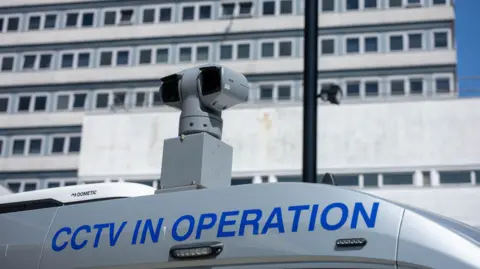
Police will deploy facial recognition technology in Bournemouth for the first time.
Live Facial Recognition (LFR) scans faces in crowds and checks them against a watchlist of wanted people.
Dorset Police, which will have cameras in place near the pier on Wednesday morning, said its watchlist would include sex offenders, perpetrators of domestic abuse, people subject to court orders and missing people.
The rollout follows a survey of 1,068 Dorset residents commissioned by police and crime commissioner David Sidwick that found 74% supported the use of LFR, compared with 23% opposed.
The technology works by analysing key facial features from a live camera feed and comparing them against a database of wanted individuals to flag possible matches.
Sidwick said the survey results "broadly mirror national research commissioned by the Home Office", though support was stronger in Dorset.
He said backing was lower among younger people and residents from ethnic minority backgrounds, and that he had recommended further "targeted engagement" with those groups.
Sidwick said he would continue to scrutinise the technology's use by Dorset Police.
But civil liberties group Big Brother Watch criticised the rollout, accusing the force of "writing its own rules" for the technology instead of waiting for facial recognition legislation promised by the government.
Jasleen Chaggar, the group's senior legal and policy officer, said residents "should not be subjected to invasive biometric face scans, often without their knowledge or consent".
"People should be able to go about their daily lives without being treated as suspects by default," she said.
Ch Insp Jamie Halford, of Dorset Police, said: "We are following national guidance and learning from other forces in our use of LFR technology.
"Those who walk through an LFR zone do so having passed signage alerting them to the technology being used in the area.
"Members of the public are not treated as suspects and this tool simply highlights people who may be of interest to police such as being wanted, suspected of a crime or subject to a court order for issues such as sex offending.
"Images are deleted immediately after if there is no match to a face on the LFR watchlist.
"The public rightly expect us to tackle crimes that matter to communities and this tool helps us bring offenders to justice and protect victims."
