The group helping young people connect in person

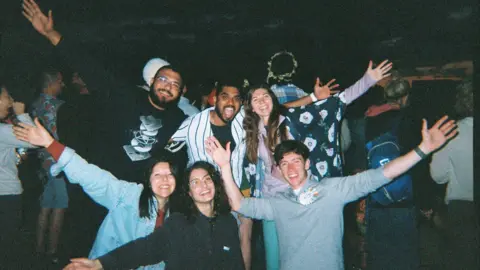 CircleUp
Loneliness is felt by a third of 16 to 29-year-olds who report feeling lonely "often, always or some of the time" - the highest of all age groups, according to the Office for National Statistics (ONS). One community group with branches in Bristol and Bath is working hard to do something about it.
CircleUp aims to help young people meet friends in real life in order to combat the social isolation often felt by those living in cities.
It runs weekly in-person events across several UK cities, including Bath, Bristol, London and Cardiff.
"Young people are so cut off and isolated now," said 30-year-old George Webster, who lives in Bristol. He joined CircleUp after losing touch with long-distance friends from university.
He said it takes "a huge amount of courage" to get out and meet new people.
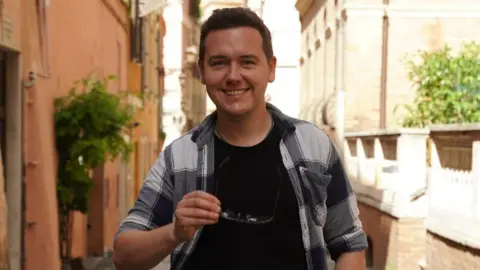 George Webster
CircleUp launched in January 2025 after its founder struggled to build a social life in a new city.
Webster is one of more than 800 people subscribed to the group's app, which connects people and offers opportunities to attend weekly events in person.
"You still have to put the work in... but it gives you the environment where it's safe to do so," Webster said.
"I'm a social person but even I wouldn't approach someone out of the blue."
He said structured events offered a way around the awkwardness many people feel initiating conversations with strangers.
'Persistent issue'
Webster, who grew up in Taunton, said he had joined CircleUp to "build up a more active social life".
He said he would feel uncomfortable if he was approached by a stranger "out of the blue", but he wanted to meet new people.
"It's what our grandparents did and that was fine back then, but it's not really how things are now," he said.
"Fundamentally, we are social beings and there is a desire for people to be connected with one another.
"What people - and especially young people - are looking for now more than ever is a chance to have those in-person reasons to link up."
Webster works with young people as an apprenticeship manager so he has experience of seeing others who are lonely or disconnected.
He said it was a "persistent issue".
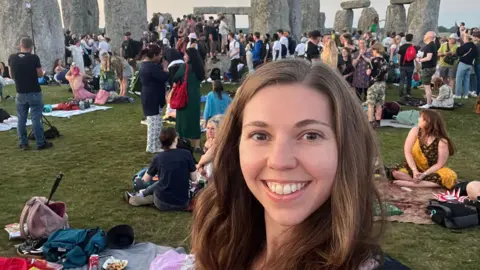 Alicia Moseley
Researchers say shift work, more time spent online and fewer informal social spaces have all made meeting friends naturally much harder.
Prof Andrea Wigfield, director of the Centre for Loneliness Studies at Sheffield Hallam University, described technology as a "double‑edged sword".
She said: "On the one hand, we can instantaneously connect in a way that we've never been able to in the past, but at the same time that can lead to us feeling more lonely.
"To remedy loneliness… it's about having those face‑to‑face contacts because that's how more meaningful relationships develop."
'Joy and space'
Alicia Mosley, 31, from Bristol, said she had built new friendships after joining the app.
"It seems really silly... it's just an app where people go to events together, but in a world where there's a lot of horrible things happening I think it's just amazing to have a bit of joy and space to exist and enjoy being a human being and doing things that you like with other people," she said.
"I've been able to do stuff that I would want to do, but wouldn't do by myself."
She said the option of regular events had helped break up the routine of working, commuting and spending evenings at home alone.
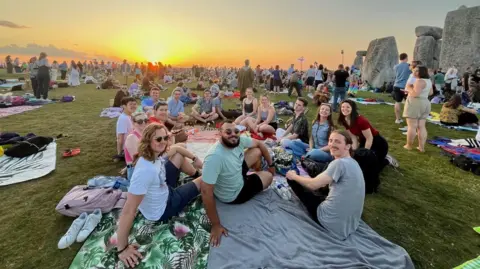 CircleUp
CircleUp was created by James Telfer, an architecture graduate who lives in Bath.
He came up with the idea in 2024 while travelling in South America.
The 27-year-old said he had struggled to build friendships after moving to Bath, but found it easier to connect with people while abroad.
For a subscription fee, the app lists a range of events including pub nights out, sporting events, coffee mornings, board game nights and day trips.
Telfer said he had been "very worried" the scheme - which launched with a pub night in Bath - would not work.
"I had no idea what would happen or whether it would just be a one-off and people would disappear and you wouldn't see them again, but I think it kind of struck a chord with people," he said.
"It's so hard to build up a great social life from scratch. The big insight of CircleUp is that it is providing social infrastructure."
'Meaningful relationships'
According to ONS research published in November 2025, some 33% of Britons aged 16 to 29 reported feeling lonely "often, always or some of the time".
With adults in the UK spending an average of four hours and 30 minutes online every day in 2025 and with changed working patterns for many people prompted by the Covid-19 pandemic, many interactions have turned virtual.
Wigfield said while social media could be helpful, it "is not a replacement" for face‑to‑face contact.
"More in‑depth, more meaningful relationships" still developed most easily when people met in person, she said.
Follow BBC Somerset on Facebook and X. Send your story ideas to us on email or via WhatsApp on 0800 313 4630.
