Has the new Devil Wears Prada lost its bite?

 20th Century Fox
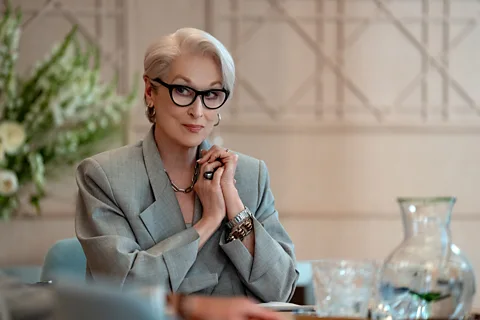
The Devil Wears Prada 2 is the most anticipated film of 2026 so far. But the publicity campaign suggests the original's satire has been softened – along with Meryl Streep's toxic boss villain.
Last autumn, when Meryl Streep and Stanley Tucci popped up at the Dolce & Gabbana show in Milan costumed as Miranda Priestley and Nigel Kipling to shoot a scene for The Devil Wears Prada 2, the event served as an amusing tease for the new film, a follow-up to the 2006 hit.
At that same show, Streep-as-Miranda posed for photos with Anna Wintour – a sly acknowledgement that the long-time Vogue editor was, indeed, the inspiration for the character, the imperious, icy editor of a fashion magazine that Streep turned into an instantly recognisable icon.
But that was just the start of an over-the-top publicity campaign that has conflated on-screen and off-screen personalities and leant heavily on Wintour. By now the PR, clever and fun at the start, has grown into something more annoying, and so inescapable it threatens to overwhelm the film itself. And it's also left question marks around whether the sequel will turn out to be a shadow of the original, without its bite.
 Annie Leibovitz/ Vogue
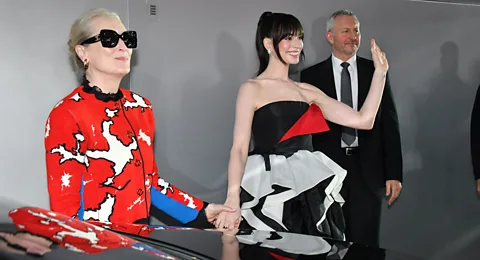
Last month Wintour presented at the Oscars with Anne Hathaway, who plays heroine Andy, Miranda's lowly assistant in the first film. In a lame comic bit, Wintour called Hathaway "Emily", the name of Emily Blunt's fellow assistant character, getting her name wrong just the way Miranda did.
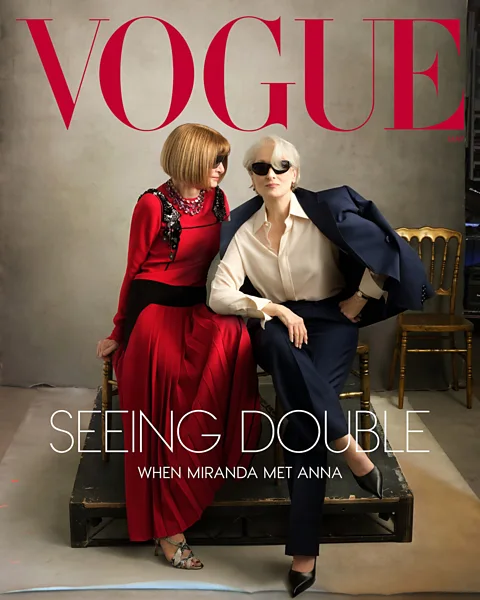
And last week the internet exploded when Vogue dropped a cover photo of Streep as Miranda next to Wintour; inside, there was a joint interview with Streep (out of character) and Wintour. Reactions to the cover on social media were mixed, ranging from an Instagram comment that reads "It's a cultural overlap people have been waiting to see," to derisive responses including one on X that says simply "This is so embarrassing".
This is not the only recent film publicity tour to blur the lines between actors and fictional characters, an approach that suits this cultural and political moment, when fiction and reality often seem similarly blurred. Timothée Chalamet's stunts for the Oscar-nominated Marty Supreme, in which he played an arrogant opportunist, included a viral video in which he pretended to be an egotistical version of himself taking over a marketing meeting. Ariana Grande and Cynthia Erivo's weepy declarations of friendship on the first Wicked tour, mirroring their characters' bond, were widely joked about.
A 'defanged' character
But nothing has matched the Devil Wears Prada tour for sheer meta-ness – and critically, Wintour's omnipresence suggests that the story's satire has been defanged. In the original, Streep made Miranda a droll and hilarious toxic boss. "Details of your incompetence do not interest me," she cooly tells Emily, blaming her for a scheduling change beyond her control.
But having a hit film changes a lot. It seems that Wintour has made the calculation that it's better to be inside the tent than out. And, sadly for fans, the campaign is already signalling that the sequel will showcase a softer version of Miranda. If the trailers tell us anything, these suggest a focus on Andy's return to Miranda's orbit and on nostalgic callbacks to the original. In one of them, Nigel's voiceover calls Runway "a winding road that brings us together again".
In the joint interview Wintour – no longer the Vogue editor, but Chief Content Officer at its publisher Condé Nast – says that when she got wind of a sequel she called Streep, who reassured her: "It's going to be all right." Now Vogue can't stop covering the film. The magazine has rounded up fashions from the press tour's red carpets. Its Book Club is reading the novel that inspired the first film. Its podcast featured three of Wintour's former assistants.
By contrast, when the original film arrived, Wintour and most fashion designers kept their distance. Streep recalls in the Vogue interview, "Everybody was afraid of Anna on the first one, so we couldn't find any clothes." Molly Rogers, the costume designer who wrangled the fashions this time, has said designers recognised the film would give them "best in the world placement". As Vogue does, the film constitutes promotion for lines like Dolce & Gabbana, Balenciaga, Dior and Phoebe Philo, whose clothes all appear on screen.
Appearing on The Late Show with Stephen Colbert to promote the sequel, Streep defended Miranda, saying she "knows what she's saying is snide, but she knows it's kind of funny too. That little way of doing things, people take [it] as mean but it's funny." Colbert's audience actually laughed at the absurdity of that – after all, it's not funny if you're the cowering assistant.
 Alamy
AlamyAll this character-spin may successfully alter our perception of both Miranda and her real-life counterpart. Wintour has shrewdly positioned herself not as the terrifying boss but as someone game enough to embrace a caricature of herself. And the caricature is likely to be kinder now. Aline Brosh McKenna, who wrote the original and the sequel, told Vogue – of course – that when she was working on the first screenplay David Frankel, who directed both, often reminded her, "The movie is called The Devil Wears Prada, not, you know, The Not-So-Nice Lady Wears Prada." But that indelible character may not be so devilish anymore.
--
If you liked this story, sign up for The Essential List newsletter – a handpicked selection of features, videos and can't-miss news, delivered to your inbox twice a week.
