'Paella is just for lunch' and other unwritten rules for visiting Spain

 Getty Images
Spain is famous for its laid-back lifestyle, but beneath the long lunches and late nights are social codes that shape everyday life. Our expert explains how to read them.
While Spain is beloved for its beautiful beaches, romantic architecture and delicious food culture, one of its strongest draws is its famously relaxed pace. No hay prisa ("no rush") and tranquilo ("relax") are oft-uttered phrases here; meals are drawn out and nightlife lasts until morning. Even non-Spanish speakers know the meaning of siesta.
Get to know your expert
Jill Petzinger is a British journalist and professional travel advisor who specialises in Spain and Southern Europe. Based in Valencia since 2021, she has travelled extensively throughout Spain to explore the many regional cuisines and cultural traditions.
But "relaxed" doesn't mean there's no order. Beneath Spain's easy-going surface are silent social codes that shape everything from how people queue to how they structure their days. Instinctive rather than explicitly stated, Spain's unwritten social rules are often based on respect for regional identity, a belief that life is best lived sociably in public and a historical need to work with, not against, the searing Sun. Locals might not say them out loud, but that doesn't make them any less important to learn.
From relinquishing your personal space to skipping paella at dinner, here are five unwritten rules that will help you understand Spain from the inside.
1. Trust the invisible queue
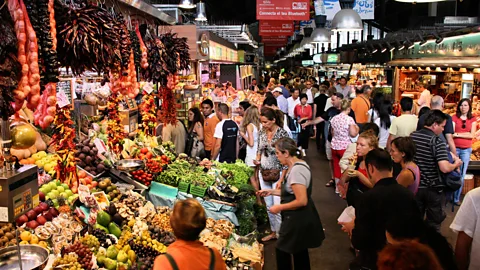
Try to order at a covered market, pharmacy, bakery, bar or local shop in Spain and you'll typically find people standing around randomly, no clear line in sight.
 Getty Images
It may seem confusing to the outsider, but there's a deeply ingrained system at play, rooted in a cultural preference for interaction, informality and social trust. "Queues" in Spain do indeed exist, but they are typically spread-out crowds rather than prim lines because of space constraints in small premises or market aisles; standing where it's most convenient solves the issue. But how do you know when it's your turn?
What to do: When you arrive, approach the closest person and ask "¿Quién es el último?" (Who's last?) or simply "¿El último?" They will point to whomever is. Once you know who's last, you're free to walk along the displays and peruse what to buy without losing your place. But stay alert: you will get asked "¿El último?", too.
2. Don't assume the meal is over when it's over
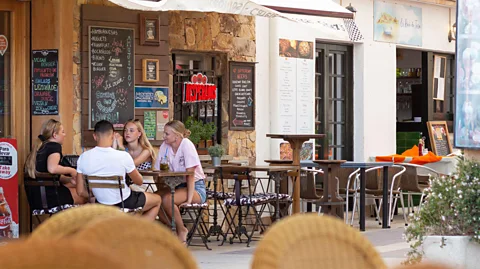
You've just had the last bites of Spanish tortilla and the last drops of Rioja. But before you ask for the bill, look around. The tables next to you, strewn with empty glasses and crumpled napkins, may look like they've finished too, but they're just entering another phase: the ritual known as la sobremesa.
Literally translated as "over the table", la sobremesa is the hour (or hours) after the meal when everyone settles in for a long conversation. It may involve another round of coffee or drinks, but there's no pressure: la sobremesa is all about enjoying each other's company.
 Alamy
AlamyThe tradition is thought to stretch back to the agricultural past, when families sat around the table after lunch as it was still too hot return to the fields immediately. Most Spaniards may no longer till the fields, but the sobremesa continues its role in maintaining relationships. The joy of enjoying each meal for as long as possible has never gone out of style.
What to do: Simply relax, put away your phone and keep chatting away. Waiters are used to letting people enjoy their conversations, so just raise a hand to ask for the bill when you're (really) ready to leave. And feel free to linger even longer.
3. Follow the Sun
Spain's famously late rhythm can bewilder visitors, with dinners that last until midnight and shops that close for hours after lunch. But there's a logic behind the seemingly languorous rhythm. In Spain, people work with, not against, the Sun.
Historically, Spanish farmers started the day early to get their work done before the Sun grew too hot, saving lunch until they were through. Then, in the 1940s, General Franco moved the clocks forward to align with Nazi Germany. Though the country now found itself in the Central European time zone, many stuck to the traditional solar schedule: lunch at 13:00 became lunch at 14:00 as the sun reached its zenith an hour later than before, and dinner happened later, too, as the light now lasted longer.
More like this:
In Spain, the workday is also slightly longer than the EU average: 36.3 hours per week versus 35.9 hours. Perhaps that's why Spain's famous "siesta" is increasingly less the norm, since 80% of its population now lives in cities. Unable to head home at lunchtime and have a nap, workers now often return to the office or use the post-lunch time to tackle chores.
What to do: Shape your day around avoiding the worst of the afternoon Sun between 13:00 and 18:00 – a light breakfast. Check shop hours to avoid slogging through the heat to a shuttered destination, and keep in mind that only tourist restaurants open at 19:00. If you can hold off until 20:30 or 21:00 you'll be able to eat at better establishments. Consider a strategic siesta to help you stave off the hunger, or prepare for a long night.
 Alamy
Alamy4. Make room for the crowd
Spain is a tactile nation, where touching an arm for emphasis, greeting with hugs and (lots of) kisses, bumping shoulders in a bar and standing close to strangers in a line are all everyday aspects of social behaviour – though they can surprise visitors from places with stricter norms around personal proximity.
Furthermore, whether you find yourself in the city or the village, Spanish social life has traditionally been lived in public places like plazas, bars and streets. These shared spaces can get quite closely packed, meaning you end up very close to your neighbours by default.
What to do: Don't automatically read physical closeness as rudeness. Stake out your own (little) space but accept that you'll still catch accidental bumps and jostles in busy areas. If you need to squeeze past someone, a simple "perdón" (sorry) suffices, and almost always elicits "no pasa nada" (no problem) from the other person.
5. Don't order paella for dinner or sangria at a bar
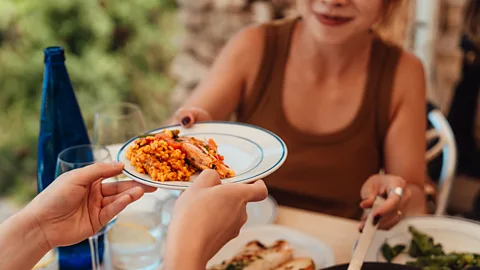
Thanks to Spain's thriving tourist industry, you'll find the same supposed Spanish staples – sangria, paella and tapas – wherever you go.
 Getty Images
But Spain is a huge country, with 17 autonomous communities on the mainland, and an equal number of regional cuisines. Traditionally, people ate what was produced locally, and that love for and loyalty towards regional identity when it comes to food is still strong today.
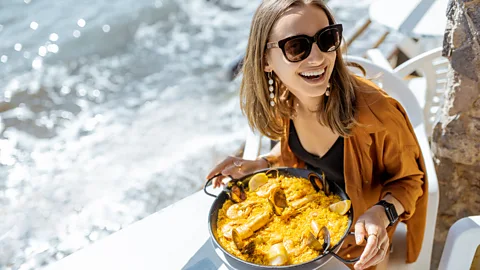
Embrace the opportunity to enjoy the beloved dishes of the city you're visiting. Paella is revered as a native dish of Valencia and Catalonia, but wherever you try it, do it like the Spanish and order it just at lunchtime, as it is considered a heavy meal to digest. Tapas bars will serve regional specialties depending on the city, but the sheer creative variety of pintxos is best enjoyed in their Basque homeland.
If you're in Madrid in the colder months, don't miss the famous meaty chickpea cocido stew; enjoy gazpacho in Andalusia and most of Spain in the summer. Year-round, consider swerving the sangria. Locals do drink it, but it's not regarded a bar drink: it's more commonly consumed as a punch at parties.
What to do: If a restaurant has a photo menu, it will likely be a tourist trap. To explore regional dishes, try a three-course menú del dia in local restaurants during weekdays. These menus are dying out in Spain partly because of shorter lunch breaks and the rise of new, trendier eateries, so look out for places full of locals with daily chalkboard menus, generally indicating fresh, seasonal food.
To drink at the bar like a local, order the nationally adored tinto de verano, a mix of red wine and lemonade that contains no hard liquor, or tiny caña draft beers, which stay colder longer.
--
If you liked this story, sign up for The Essential List newsletter – a handpicked selection of features, videos and can't-miss news, delivered to your inbox twice a week.
