Route 66 at 100: The Native American story behind the US's most famous highway

 First Americans Museum/ Serenity Strull/ BBC
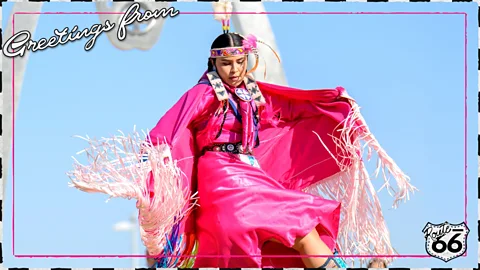
Stretching from Chicago to Santa Monica, the road passes through Native lands for much of its length – yet Indigenous voices have long been overlooked. Now, First Nation communities are reclaiming their place along the Mother Road, reshaping how travellers understand and experience the legendary highway.
In a low-rise strip mall in suburban Tulsa, the scent of sizzling bison drifts from the kitchen each time the door swings open. Inside Nātv – a quietly radical restaurant that opened in 2022 – sprigs of native grass from the Great Plains, juniper berries and sunchokes line the slate-grey walls. Across the table from me, chef Jacque Siegfried, who is of Shawnee descent, reflects on the culinary gap she's trying to bridge. "It's still really hard to find Native American restaurants around here," she says, her navy-and-purple hair swept into a high topknot.
We're just a couple of miles from Route 66, the most iconic of American roads, which turns 100 this year. But instead of searching for vintage diners and neon signs, I've come to follow the route west from Oklahoma to New Mexico and see it through a different lens – one shaped by the Indigenous communities that have long existed alongside it.
More than half of Route 66 passes through or runs alongside self-governed Native American lands, sometimes called Indian Country. Yet Indigenous-owned businesses remain strikingly rare along the route.
That gap is what led Siegfried to open Nātv. Drawing on her classical French culinary training and her Shawnee heritage, she crafts refined dishes that "bring Indigenous food and local ingredients to the forefront", she says, as the low hum of the traffic carries in from the nearby highway.
 Serenity Strull/ BBC
She sets down a steaming bowl of stew, paired with a round of pillowy fry bread. The dish features ingredients from the "Three Sisters" planting method – an Indigenous approach in which corn, beans and squash are grown together in a system that sustains the soil as well as the people who rely on it.
"This kind of growing is a big part of our culinary history," she says. "We lost a lot of our foodways, and it takes work to reclaim them."
A different journey along Route 66
Historically, the potential for Indigenous tourism along Route 66 has been overlooked. But that's beginning to change. With a James Beard nomination to her name, Siegfried is helping bring her ancestral cuisine into the spotlight – and onto road-trip itineraries.
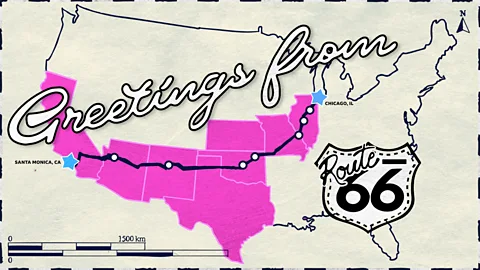
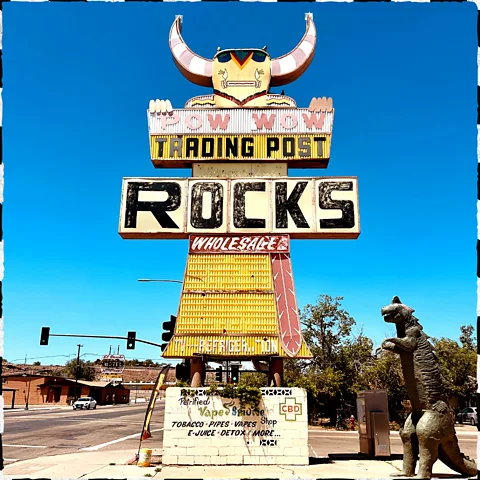
Drive the 2,448-mile (3940 km) route from the skyscrapers of Chicago to the Santa Monica Pier near Los Angeles, and you'll soon encounter nods to Indigenous culture: a tepee-shaped curio shop; soaring concrete totem poles; carved wooden chief statues waving to passing cars.
But while these kitschy mid-century landmarks reference Indigenous imagery, they rarely centre the voices of the 25 tribal nations the route passes through. In response, a growing movement is seeking to correct these stereotypes and offer more authentic cultural experiences for travellers.
 Zoey Goto
At the forefront is the American Indigenous Tourism Association (AIT), whose free-to-download American Indians & Route 66 guide highlights the vibrant diversity of Native cultures along and near the route. Highlights include the Hopi Arts Trail in Arizona, home to craft studios producing traditional pottery and basketry, and the annual Oklahoma Indian Nations Powwow that features singing, gourd dancing and drumming contests.
According to AIT's CEO, Sherry L Rupert, a broader interest in Indigenous-led tourism has sparked a rise in travellers seeking to visit Native American sites more respectfully, often with questions about appropriate conduct. "We often got questions about correct terms and acceptable behaviours," she explains. "So we came up with 15 protocols to help." Among them: filming ceremonies in the Pueblos of New Mexico and Arizona is strictly prohibited. "If a tourist didn't know this, they'd be surprised if their phone were taken off them," Rupert adds.
Beyond roadside stereotypes
On Rupert's advice, I continue driving west to the First Americans Museum in Oklahoma City, passing looming 20ft (6m) Muffler Man statues and rainbow-painted motels along the way. The museum finally opened in 2021 after a 15-year construction journey. Built on the site of a former oil field, the striking structure – with a sloped roof designed to resemble a soaring bird – chronicles the histories and cultures of Oklahoma's 39 federally recognised tribal nations.
Waiting to greet me at the entrance is Summer Mitchell, an associate at the museum, wearing a denim jacket pinned with a badge that reads: "Columbus didn't discover anything". She guides me through the sleek, high-tech galleries, where immersive exhibits explore the intersection between Route 66 and the Trail of Tears, in which thousands of Indigenous people were forcibly displaced between 1830 and 1850. In some places, their route overlaps with the later-built highway, now travelled by tourists in RVs.
More like this:
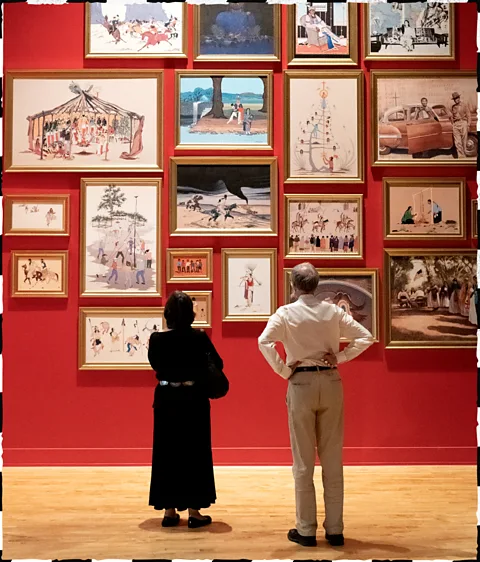
We pause at a cabinet filled with caricatures: Pocahontas Halloween costumes; dime-store trinkets of cartoonish chiefs; even a toy monkey wearing a feathered headdress and mechanically banging a drum. "A lot of this misrepresentation makes fun of us. In the past we couldn't always speak up for ourselves, but we can now," she says, gesturing with a hand across to the opposite wall. There, contemporary works – like the cover of Arigon Starr's Super Indian comic and a photo by Reservation Dogs writer Ryan RedCorn – reclaim the narrative.
 First Americans Museum
"It's about challenging commonly held beliefs, so that our guests walk away feeling enriched and with more respect for the tribes," Mitchell concludes, before I return to the road.
Reclaiming the narrative
Further west, rugged red hills give way to ruler-flat grassy plains as I cross Texas to reach my final stop in Albuquerque, New Mexico. The crescent-shaped Indian Pueblo Cultural Center, founded in 1976, celebrates the culture of the 19 Pueblo tribes who call this region home.
I refuel at the museum's Indian Pueblo Kitchen with a steaming bowl of green chile stew, a brothy New Mexican staple made with chiles harvested by Pueblo communities for generations and traditionally served on feast days. Revived, I venture on to explore the galleries, where exhibits trace a rich cultural arc of the Pueblo peoples: spiritual practices, dry farming, adobe architecture and the 1680 Pueblo Revolt against Spanish colonisers.
Anthony Tekala, the centre's cultural events coordinator, explains how Route 66 reshaped Indigenous economies. "Pottery was once made to store water or seeds," he says. "But after introducing the railroad and then Route 66, Pueblo artists were encouraged to craft smaller, travel-sized items." Miniature figurines and teacup-sized vessels became not just souvenirs, but cultural ambassadors; portable art shared across the country. "If someone took a piece home and told a friend, it was like word-of-mouth advertising," he adds.
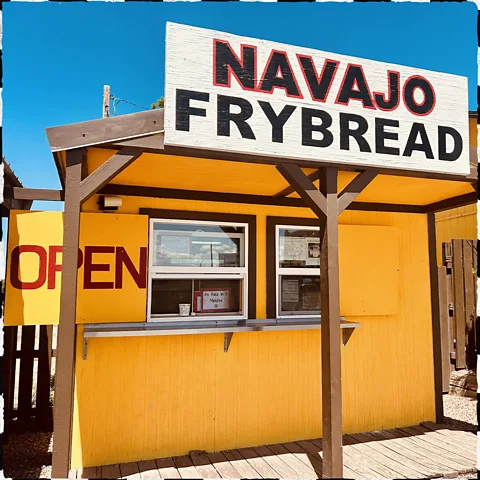 Zoey Goto
Outside, drums echo through the courtyard as a youth group moves in rhythmic unison to the Buffalo Dance. "The buffalo gave itself for the people to thrive," Tekala explains. "The dance is about respect and acknowledging that we're part of a wider ecosystem."
As the sun sinks behind the Sandia Mountains, I return to the open highway with Rupert's words echoing in my mind: "Route 66 isn't just crazy road signs and nostalgia. It's where Indigenous people are now telling our own stories."
--
If you liked this story, sign up for The Essential List newsletter – a handpicked selection of features, videos and can't-miss news, delivered to your inbox twice a week.
