'Extraordinary' tunnel found at Alfred the Great's resting place

 Hyde900
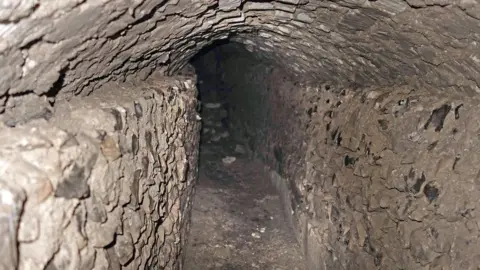
A water tunnel has been discovered in back gardens near Hyde Abbey, the final resting place of Alfred the Great.
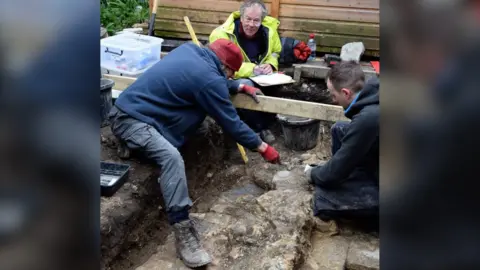
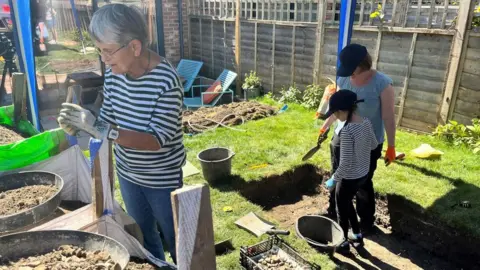
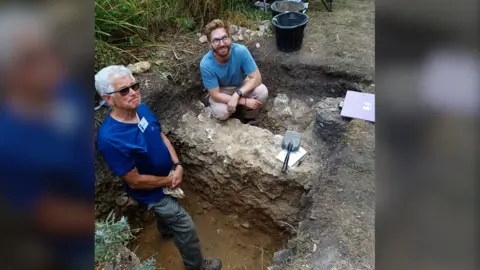
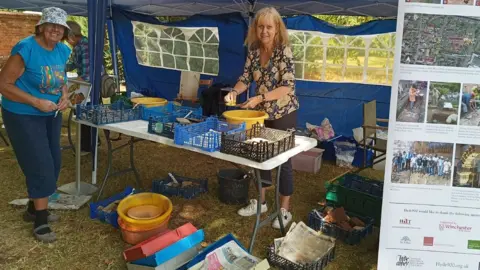
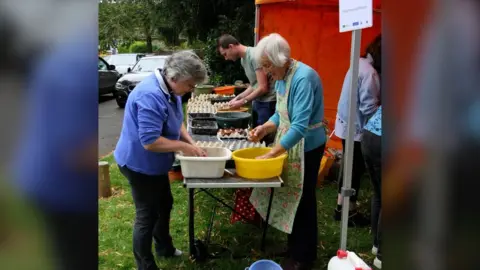
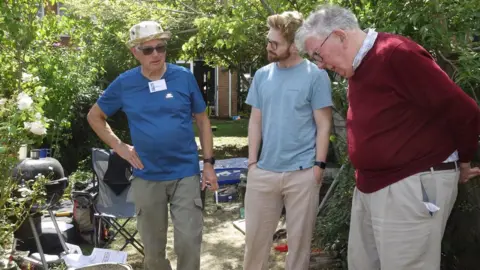
More than 140 people joined the Hyde900 charity for a series of digs to uncover the site's history.
They have taken place in King Alfred Terrace, which was once home to the cloisters and abbots lodging of Hyde Abbey in Winchester, Hampshire.
Archaeologists described the discovery, likely used for medieval water supply, as "extraordinary."
 Hyde900
Until its discovery, the cavern's existence was just a rumour, with it believed to lie below one of three gardens where the excavations have taken place.
David Spurling has led digs at the site for six years and said being able to invite the community to get involved has kept the group "motivated".
 Hyde900
Mr Spurling said: "We always thought there would be a stream to provide water to the cloisters but it's the first time we've found proof.
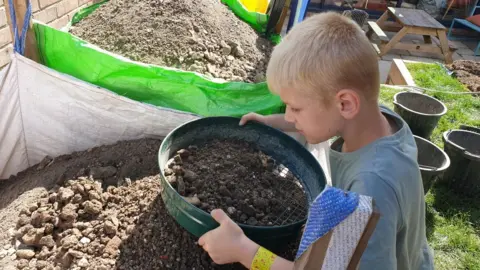
"In doing these digs we've come across a lot of fantastic finds and the great thing is as a community group we can get children involved - the feedback we get is fantastic."
 Hyde900
It is believed the tunnel would have been used to supply water to the refectory, kitchens and infirmary of the abbey, as well as the latrines associated with the monks' dormitory.
 Hyde900
 Hyde900
As well as the the discovery of the tunnel, the dig also returned to a garden where uncovered remains of a two-storey building were found in 2020.
Medieval window glass was found in the remains of that building and was being evaluated by Historic England.
 Hyde900
 Hyde900
 Hyde900
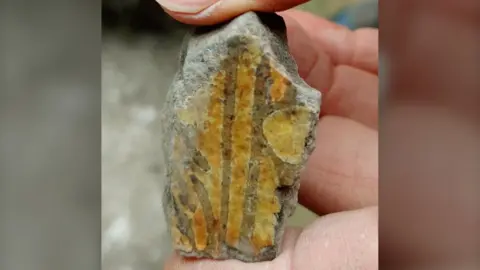
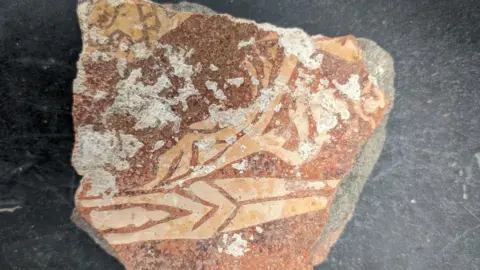
Excavation work in all three gardens also found large numbers of Roman pottery, medieval tiles and other building materials as well as oyster shells and bones.
 Hyde900
Archaeologist Professor Martin Biddle, who has been tracking the Hyde900 digs, said: "The discovery of a sophisticated example of a vaulted channel, probably late medieval, is extraordinary."

Follow BBC South on Facebook, Twitter, or Instagram. Send your story ideas to south.newsonline@bbc.co.uk.
