'Veterans walk in here and instantly feel at home'

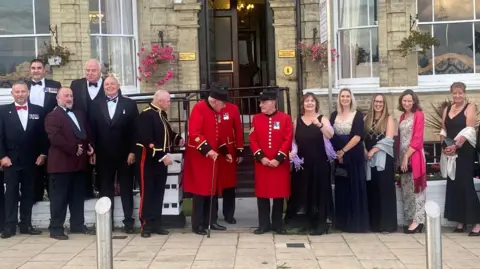 Kitchener's Guest House
"Most veterans walk in here for the first time and instantly feel at home," says Duane Ashworth.
He is the general manager of an unusual guest house in Lowestoft, Suffolk, originally set up to offer respite holidays for ex-servicemen after World War One.
A former Grenadier Guard who lost his son L/Cpl James Ashworth VC in Afghanistan - Ashworth and his wife Caroline took over Kitchener's Guest House in 2019.
"There's not many places where veterans can go that they feel safe in an environment where they are with like-minded people," he said.
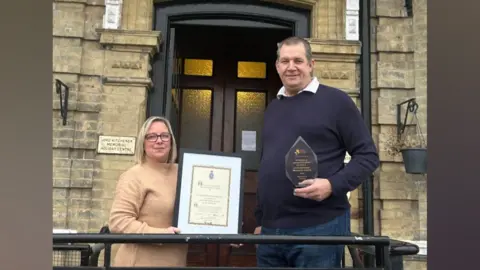 Kitchener's Guest House
The charity offers subsidised holidays to serving and veteran enlisted members of the Armed Forces, Merchant Navy, and emergency service workers.
It also hosts twice-monthly breakfast clubs for veterans, attracting 40 to 50 people.
"Through that, we've identified other needs of veterans in the local area, which we've now hopefully tried to help with," said Ashworth, 58.
"We have a mental health and welfare drop in once a month, as well, and our doors are open 24 hours for anybody if they just want to come and have a chat, a coffee.
"We're not professionals and we don't claim to be, but what we are very good at is putting people in the right place and getting them their help."
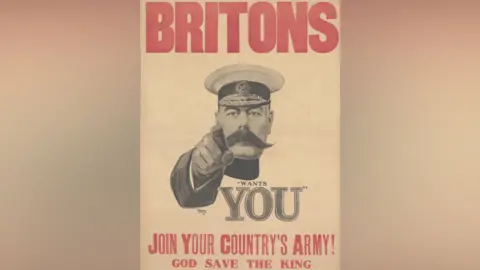 Getty Images
Today, Kitchener's offers en suite rooms, but when it first opened in 1919, conditions were "a bit like being in barracks again", said Ashworth.
"There were five floors with approximately 70 soldiers on each floor; they were in bunk beds, three high," he explained.
"They were managed by a matron on each floor and she made sure all the men were abluted, dressed appropriately with shirts and ties, and they would be taken down to breakfast in their bunks."
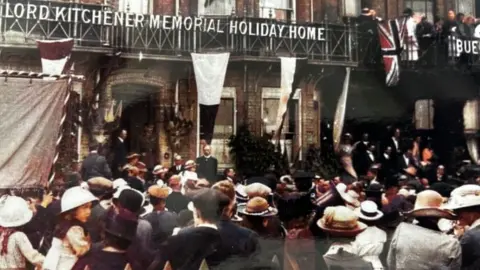 Kitchener's Guest House
Most came from one of the country's many Old Contemptibles Associations, men who had served in the British Expeditionary Force before 22 November 1914, although former Navy men were also welcomed.
Their nickname was derived from an order given by the German Kaiser, Wilhelm II, that his forces should "walk over General French's contemptible little army", according to the Imperial War Museum.
"They were fed four meals a day - starting with kippers and scrambled eggs for breakfast, sandwiches for lunch, evening meals were proper dinners with puddings and at supper there'd be beef dripping sandwiches - this was only costing them 10 pennies a week," said Ashworth.
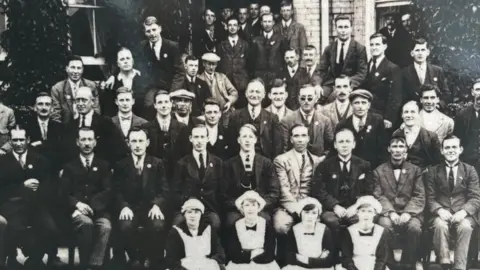 Kitchener's Guest Home
The guest house is named after Secretary of State for War Field Marshal Kitchener, whose face became synonymous with World War One due to its appearance on a recruiting poster.
A local vicar raised the funds to buy the large Victorian building on Kirkley Cliff as a holiday home in Kitchener's name for convalescent servicemen.
The Rev F W Emms purchased the building for £16,500, which Ashworth reckoned is about £1m in today's money.
During World War Two, the hotel was requisitioned as a base for the Women's Royal Naval Service (Wrens), but once the conflict ended, it resumed its previous purpose, including RAF personnel for the first time.
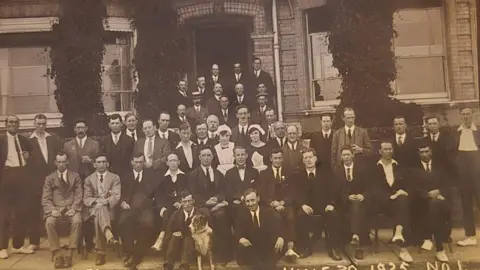 Kitchener's Guest House
"Again, it was a very male - well, it was all males apart from the staff - and they would continue their respite holidays right up until the 1970s," he said.
"It was to get away from your normal day-to-day life and have a welfare holiday with like-minded people, often the people you were at war, so it was also a reunion."
When the Ashworths took the guest house over, they decided to include emergency service workers.
He said: "Some of our volunteers were emergency service workers, but also veterans of the armed forces... it got to the point where we had to start their own breakfast club.
"We combine it all now into one Veterans and Blue Light Service Breakfast Club."
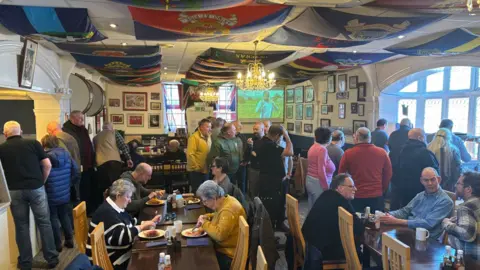 Kitchener's Guest Home
Kitchener's now opens all year round, except for a fortnight over Christmas, and runs at between 65 and 70% capacity, he added.
Last year, the trustees launched a £1m campaign for essential repairs to the Grade II listed building - at least 50% of its wooden windows need replacing.
Ashworth also wants to replace the 1969 lift with a modern one, capable of fitting a wheelchair, and develop the top floor into a fully accessible suite to allow injured veterans to enjoy a holiday with their family and a carer.
"One of our trustees, Lt Col Terry Byrne, came up with one in a million - we just want one million people to give £1," he said.
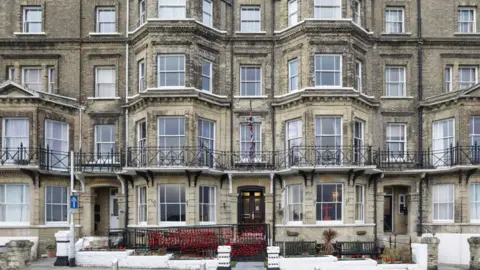 Kitchener's Guest House
Do you have a story suggestion for Suffolk? Contact us below.
Follow Suffolk news on BBC Sounds, Facebook, Instagram and X.
