What is happening to UK prices?

 Getty Images
Inflation in the UK rose to 3.1% in the year to August, the highest rate in five months and above the Bank of England's 2% target.
The rise was in line with what economists had predicted, driven by higher petrol and diesel prices.
Inflation is widely expected to rise again in the coming months.
What is inflation?
Inflation is the increase in the price of something over time.
For example, if a bottle of milk costs £1 but is £1.05 a year later, then annual milk inflation is 5%.
How is the UK's inflation rate measured and what does it mean for UK interest rates?
The prices of hundreds of everyday items, including food and fuel, are tracked by the Office for National Statistics (ONS).
This virtual "basket of goods" is regularly updated to reflect shopping trends, with alcohol-free beer, dashboard cameras, and pet grooming equipment among items added in 2026, while premium bottled lager and sheets of wrapping paper were removed.
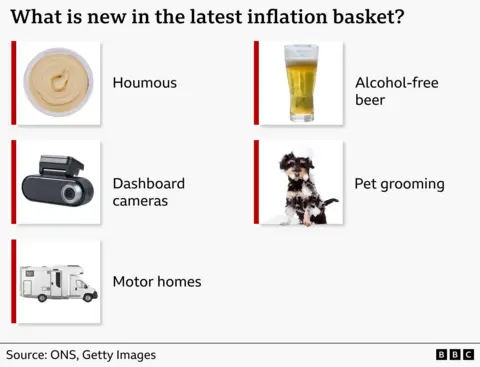
The ONS uses price changes in the basket of goods over the previous 12 months to calculate inflation.
The main inflation measure is called the Consumer Prices Index (CPI), and the latest figure is published every month.
The Bank of England looks closely at the inflation figures when deciding whether to increase, lower or hold its base interest rate, which is currently 3.75%.
Putting rates up makes borrowing more expensive, giving people and businesses less money to spend, reducing demand for goods and slowing price rises.
But it is a careful balancing act – increasing borrowing costs also risks harming the economy.
For example, homeowners face higher mortgage repayments, which can outweigh better savings deals.
Businesses also borrow less, making them less likely to create jobs. Some may cut staff and reduce investment.
What is happening to UK inflation?
Although CPI inflation of 3.1% remains above the Bank of England's 2% target, it is well below the 11.1% figure reached in October 2022 as gas and oil prices soared in the wake of Russia's full-scale invasion of Ukraine.
That was the highest rate for 40 years.
While inflation has fallen significantly since then, prices have not. They have just risen less quickly.

The higher figure for August was mostly caused by higher prices for motor fuel, which rose by 23% compared to August last year.
Food price inflation remained at 1.3%.
But it can take a year for changes in the cost of food to filter through to the shop floor because of the way supply chains work, so prices could still rise as a result of the widespread disruption caused by the war in Iran.
How do energy prices affect UK inflation?
Inflation soared in 2022 because oil and gas were in greater demand after the Covid pandemic, and energy prices surged again when Russia invaded Ukraine.
Before the war in the Middle East broke out, UK inflation had been expected to be at or around the target level of 2% over the next five years, according to the official forecasts published in March 2026.
But in April, the Bank of England warned that disruption to global energy markets could push UK inflation as high as 6% in the worst-case scenario.
When the latest ceasefire took effect, analysts said it could limit further inflation hikes. Oil prices initially fell sharply after the deal was announced, but have risen again since the US and Iran resumed attacks in the Strait of Hormuz in July.
As a result, UK petrol prices are likely to climb back up. This - coupled with the increase in household energy bills from 1 July when the new Ofgem price cap took effect - is expected to push UK inflation higher.
The new Prime Minister Andy Burnham has announced that VAT on household electricity bills will be scrapped, but that will not take effect until October. It is predicted to have a small downward impact on inflation.
Precisely because food and energy prices can be very volatile, the Bank of England also considers other economic measures such as "core inflation", which excludes these costs.
Core CPI was 2.6% in the 12 months to August 2026, unchanged from the 12 months to July.
What is happening to UK interest rates and will they fall again?
The Bank cut interest rates six times between August 2024 and June 2026, which brought rates down to 3.75%, the lowest level since early 2023.
In April, the Bank's Monetary Policy Committee indicated it would act "forcefully" if oil prices did not start to fall, with up to six rate hikes in a worst-case scenario.
At its June meeting, just after a tentative agreement to re-open the Strait of Hormuz, the Bank held interest rates, but oil prices have since risen.
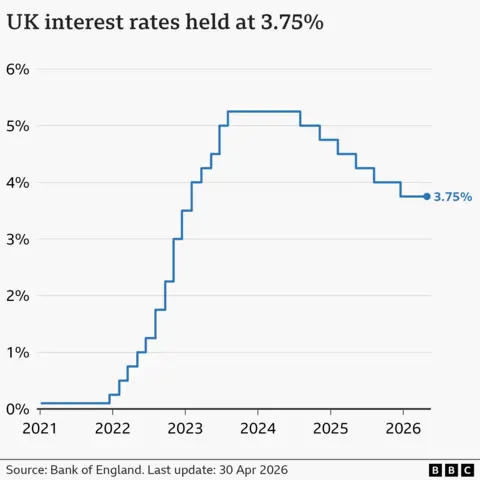
The Bank held rates again in July and is expected to do the same in September, but it has indicated it could raise them if the Iran war escalates.
Are wages keeping up with inflation?
The Bank also looks closely at what is happening to wages and unemployment.
The latest official figures show that regular pay in the UK grew ahead of inflation in the three months to July.
Average annual growth in pay, excluding bonuses, during the three-month period was 3.5%. The ONS said this had been relatively stable in recent months, after a year of slowing growth.
After taking inflation into account, it means regular pay grew by 0.6% between May and July.
What is happening to inflation and interest rates in Europe and the US?
The US and eurozone countries have also been trying to limit price increases, but also face challenges with inflation.
The inflation rate for countries using the euro was 3.3% in August, according to EU data - up from 2.9% in July.
The European Central Bank (ECB) has raised interest rates twice in recent months to 2.5%.
US inflation was in 3.4% in August, the same as in July, with prices there also affected by higher fuel costs.
The Federal Reserve is set to make its latest announcement on interest rates later on Wednesday.
President Donald Trump has made it clear he expects new Fed chair Kevin Warsh to cut rates more aggressively than his predecessor Jerome Powell.
However, the central bank is widely expected to raise them for the first time in more than three years.
