Kebab firm fined £500k for selling lamb that was mostly skin and fat

 Media Wales
A company which makes kebabs for takeaways and restaurants has been fined £500,000 for selling "lamb" that was "mostly skin and fat".
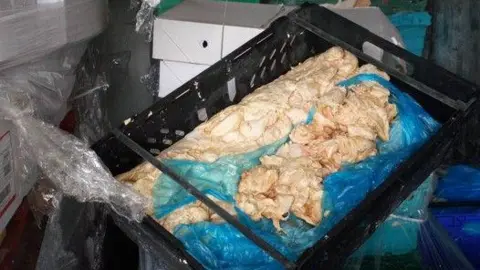
Swansea Crown Court heard the lamb products of Kismet Kebabs Ltd, based in Essex, contained little actual lamb, but a mix of fat, skin, assorted meats and mechanically reclaimed meat products.
Kismet was also ordered to pay £259,298 in costs, with a judge saying the company had engaged in "considerable dishonesty" over a prolonged period of time.
Lee Reynolds, prosecuting on behalf of Swansea Council, told the court on Friday that the firm had "misled wholesalers, retailers and consumers".
 Swansea Council
Reynolds said Kismet had manufactured and supplied kebabs to takeaways and restaurants with labels that indicated a specific quantity of specified meat, which the firm knew to be incorrect, thereby fraudulently misleading customers.
"Much of what was being described as lamb was in fact skin and fat," he said.
"The company routinely and knowingly purchased goat, lamb fat, skin, mutton, and ovine [sheep meat], and once processed through their factory sold it as lamb.
"In addition, other products were sold as specific meat products when the item contained meat of a different species," he added.
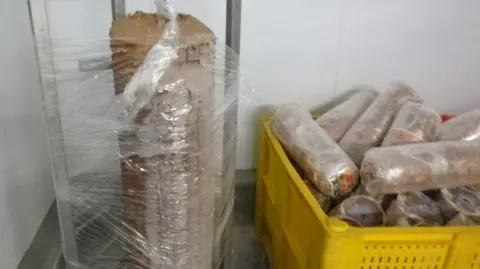
The court heard in late 2020 and early 2021 Swansea Council's trading standards team took part in a regional sampling exercise to check the meat species and descriptions applied to kebab meat at local kebab houses and restaurants.
 Swansea Council
A number of samples were taken across the city and county, with results indicating kebabs from Kismet did not match the declared meat content on product labels.
Lab tests of further samples from wholesalers found meat content "differed significantly" from what was on the labels.
The council then made enquiries with the National Food Crime Unit and Food Standards Agency.
Reynolds said it emerged Essex council had had a "long history" of involvement with Kismet via what is known as a Primary Authority Partnership.
As part of its dealings with the firm, the local authority had been receiving complaints from councils around England about issues relating to labelling and meat content.
In one example a lamb doner which claimed to contain 87% lamb was found to contain only 51% meat and 40% fat.
The court heard the council terminated its agreement with Kismet due to a "lack of operation" and "serious labelling and potential public health issues" found in a factory audit.
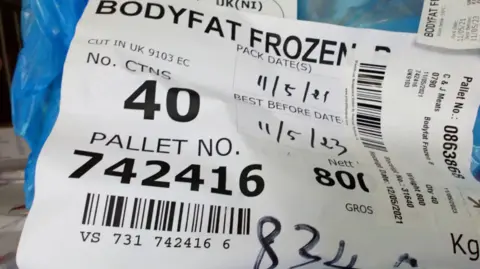
Reynolds said on 20 May 2021, a team led by Swansea council trading standards visited Kismet's factory in Chelmsford and "multiple concerns" were raised about production, packaging and labelling.
 Swansea Council
He said invoices showed very little lamb was being bought by the company, which was instead buying a "large volume of skin, fat, goat" as well as "lower-grade 'meat' products that cannot be called meat as per the legal definition".
The company was also producing mechanically derived meat made up predominantly of "neck trim, mutton trim, water and ice" which was then being counted to their product's actual meat content declaration.
He said the company engaged in "organised, planned, unlawful activity" and "misled wholesalers, retailers and consumers".
Reynolds added the sentencing guidelines for offences involving a firm the size of Kismet provided a range of fines between £15m and £24m, which he called "wholly unrealistic".
Kismet Kebabs Ltd, of Chelmsford, had previously pleaded guilty to one count of fraud by false representation when the case returned to court for sentencing.
Stuart Jessop, representing the firm, said Kismet had been established in 2008 and had run successfully for many years without issue, providing good products to customers throughout the country.
 Swansea Council
He said it was accepted at the time of the offending the firm had "taken its eye off the ball" but said since then significant changes had been made.
He added the company had made "little financial gain" and it would "benefit nobody" to impose a fine which led to the firm going out of business.
Judge Huw Rees said at the time of the offending, fraudulent activity had been "endemic" at the firm and he said it had engaged in "considerable dishonesty" over a prolonged period.
He noted the significant steps the firm had taken in the years since the offending, and he said it was a case where harm was difficult to determine.
The company was given four years to pay.
