Human trafficking 'hidden in plain sight' online

 Getty Images
Human trafficking is a "catastrophic" problem that is being "hidden in plain sight online", a Stormont inquiry has found.
The investigation into "pimping websites" in Northern Ireland was prompted by growing concerns about the exploitation of trafficked and vulnerable women on online platforms.
The All-Party Group (APG) on Human Trafficking and Commercial Sexual Exploitation is due to release its inquiry report on Tuesday.
The report said such sites allowed criminal gangs to manage multiple profiles and conceal abuse behind the pretence of the women being independent.
It said 95% of women and girls trafficked were "brought for the purpose of sexual exploitation".
The APG inquiry looked at four main websites that advertise women for sexual services across Northern Ireland - Locanto, Adult Works, Viva Street and Escort Ireland.
The websites are publicly available and people will select women and make contact usually through the website, WhatsApp or Telegram.
The women are listed as "independent escorts" offering an extensive list of services. However, the reality is much different, the report found.
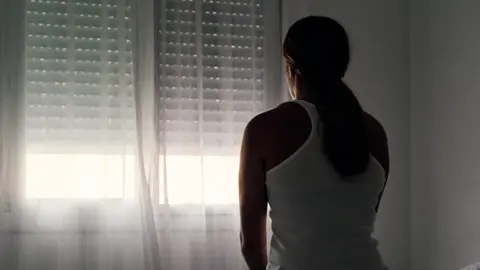
Victim A was forced into prostitution at 19 and advertised online. She said the sites were not neutral platforms.
"They provide the infrastructure through which sexual exploitation can be organised, marketed and monetised," she said.
"You have the websites but they bring the people from online actively looking for girls, our customer base knew that we were either being drugged before the appointment so that we were completely incoherent, you could not say yes or no, your body is paralysed, that's not said online."
Another survivor was managed by a man who controlled the profiles of multiple women trafficked from Brazil.
"None of us had access to the emails from buyers. They came directly through him, he answered as if he was us."
The report also states the National Crime Agency has identified websites advertising prostitution as "significant enablers of trafficking and sexual exploitation".
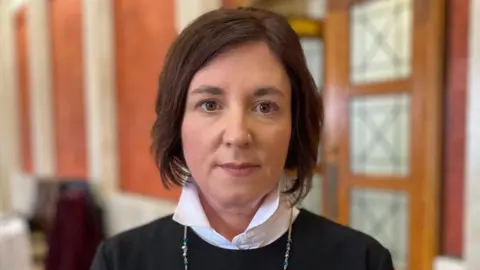
BBC NI has spent months looking through these websites and, on average, there are more than 500 women advertising sexual services daily in Northern Ireland.
Many of the women are moved around, from city to city. For example, "Chloe" was advertised as being in Belfast for 24 hours.
The following day she was being advertised in Dublin with the same line "in the city for 24 hours". Over the next week, she was advertised across the island of Ireland in six different cities, always for 24 hours only.
Ruth Breslin, from the Sexual Exploitation Research and Policy Institute, said there were many cases before courts, "both in the Republic and in the north of Ireland where these sites have played a key role in the sexual exploitation and in the human trafficking of women in the sex trade".
"We know that women who have been exploited and trafficked are being advertised on these sites," she said.
"Banning these sites is the right way to go. Regulation just won't be strong enough in this space. Even if we regulate this space tightly, the exploitation would still continue."
The BBC contacted Escort Ireland for comment, but it did not respond.
It is the biggest site on the island of Ireland and has been in operation for 30 years.
It carries a disclaimer that "the charges are for time and companionship only", adding that "anything that occurs is a matter of coincidence and choice between consenting adults".
Can the sites be regulated?
The report rejected the idea that the platforms can be safely regulated. It stressed that criminal networks would "continue to exploit regulated environments unless the digital infrastructure itself is dismantled".
It outlines some recommendations, including criminalising website operators, improving cross-border operational cooperation with the Republic of Ireland and targeted interventions for men.
 Alliance Party
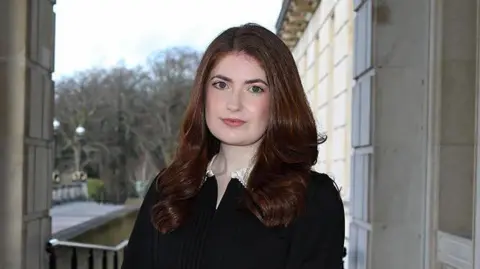
Connie Egan is the deputy chair of Stormont's all party group on human trafficking and commercial sexual exploitation.
"We now owe it to every woman who is advertised in Belfast today and every girl trafficked across this island against her will to ensure this report is not just read, noted and shelved," she said.
"Hidden in plain sight across our country is the reality of sexual exploitation and all its associated harms and websites advertising prostitution are undeniably driving this.
"I hope survivors and those still trapped in prostitution will hear and read of our recommendations and recognise that they do have a voice."
What is the law in Northern Ireland?
The exchange of sexual services for money is legal in England, Scotland and Wales.
But legislation introduced in 2015 makes it a criminal offence in Northern Ireland to pay for sex, either directly or indirectly.
However, selling sexual services is not illegal, nor is loitering or soliciting to do so, but running a brothel or controlling prostitution for profit remains a criminal offence.

Since the legislation was introduced on 1 June 2015 to 28 February, there were 134 arrests for the offence for sexual services; of those arrests, 105 were referred to the PPS; five led to conviction.
Det Ch Supt Emma Neill, who heads the Police Service of Northern Ireland's organised crime branch, said: "Our clear focus is on identifying and safeguarding victims who have been exploited, while identifying and gathering evidence against members of organised crime groups involved in that exploitation.
"Our huge challenge is that sexual exploitation is often an unseen crime. It can happen in plain sight. It's a challenging issue, which cannot be solved by policing along and which requires collective efforts."
