PHD student using sounds to track small mammals

 Tristan Whipps
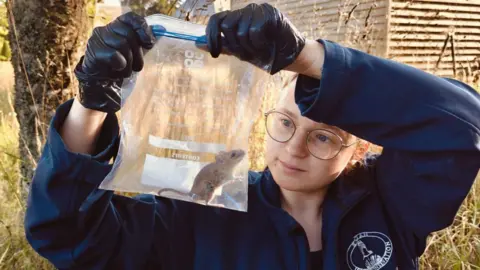
A PHD student is trying to discover more about the small mammal populations in Jersey.
Hannah Le Morvan, a researcher at the University of Exeter, is trying to find better ways to track the mammals - such as shrews, voles, and mice - by using the sounds they make.
She said the mammals had been studied less in Jersey compared to the UK, but hoped the group of ecologists from her university could change that.
Le Morvan said using acoustic techniques, such as bat detectors, could be a way forward rather than more traditional techniques such as live trapping.
She said: "We've known for a few decades now that shrews in particular make these kind of twittering noises, which can be a behavioural adaptation; sometimes for communication, sometimes for foraging.
"Only recently has it been identified that it goes into the ultrasonic range which means that they are capable of being recorded with bat detectors."
 Tristan Whipps
Le Morvan said the current way of researching mammals was "not often the best way".
She said: "Monitoring for their populations and kind of understanding them on an annual cycle can be really, really difficult.
"A lot of the way that small mammal research is done is through live trapping - it takes a lot of time, it takes a lot of effort, it is costly... and it can be very exhausting."
Le Morvan said she hoped to continue tracking small mammals through an app she had set up - the Acoustic Mammal Jersey Project.
She said: "I am very ambitiously wanting to do complete island-wide coverage.
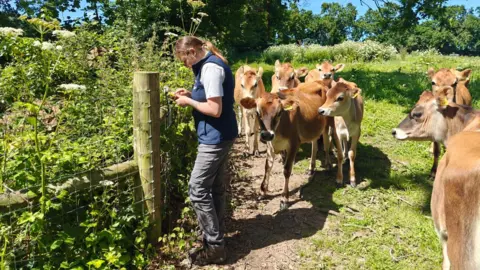
"I've gridded up the island and people can get into the app and they can book out a square, give me their contact details and I'll be able to put out a detector on their land.
"I'll be deploying my static out for seven days, twice at two points - so I'll do one deployment early summer, one deployment late summer, and then we'll be interesting to see what we find there."
The student said she had already received "pretty fantastic engagement with it" and hoped to encourage more to get involved.
"It's just been lovely - people get excited about finding out more about what is there in their own land."
Follow BBC Jersey on X and Facebook. Send your story ideas to channel.islands@bbc.co.uk.
