Hosepipe ban possible without 'small changes'

 Danny Lawson
A water company has said a hosepipe ban is possible if customers do not make small changes to their water usage.
Wessex Water said its reservoirs were at about 58% of capacity. Most of its supply comes from underground but it warned that a 30% rise in water usage in drought conditions was creating challenges for supply.
The company supplies water to most of Wiltshire, Somerset and Dorset as well as parts of Gloucestershire and Hampshire.
Director of Water Supply at Wessex Water Will Willoughby urged people to limit their water usage to ensure that supplies remained stable.
"A ban can have a significant impact on our customers and we have got a 50-year record without a hosepipe ban, which we are extremely proud of, but we understand that may change going forward if we can't make these small changes," he said.
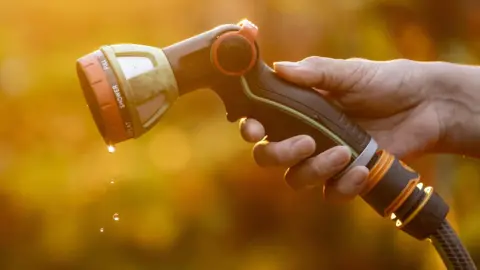
"Things like a hosepipe or sprinkler can use up to 1,000 litres of water per hour."
Two water companies in the West, Thames Water and South West Water, have already introduced hosepipe bans.
Thames Water covers large parts of the south east of England and also supplies parts of Gloucestershire and the northern part of Wiltshire.
Its ban began on 23 July with the company citing a lack of rainfall, coupled with higher customer demand.
The firm's reservoir data from July is not yet available but will soon be posted on its website.
South West Water, which covers parts of Somerset and Dorset as well as Devon, Cornwall and the Isles of Scilly, said its ban was "an important step in helping to protect our rivers and essential water supplies for homes, businesses and critical services across the region".
The company's reservoirs are still at 61% of capacity.
This is slightly lower than 2025 but still higher than some years, owing to heavier rain earlier in the year.
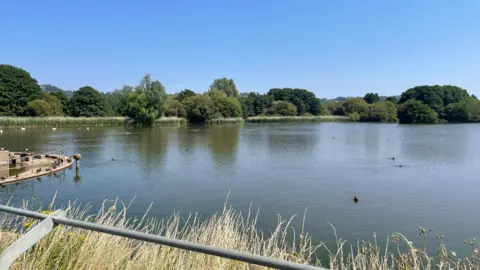
Severn Trent Water, which covers most of Gloucestershire and large parts of the Midlands, does not have a hose pipe ban in place and said, on 3 August, that its reservoirs were at about 68% capacity.
The company said record water demand this summer meant it was now "fixing leaks at record levels".
A spokesperson said: "This is why we are also asking customers to think about their water usage and use it wisely."
Bristol Water, which does not have a hosepipe ban, has also been asking people to conserve water but it said its reservoirs were at 61% - considerably higher than at this time last year when they were at 47% on average.
Chew Valley Lake, which is a popular recreation spot, is still at 68%.
Follow BBC Somerset on Facebook and X. Send your story ideas to us on email or via WhatsApp on 0800 313 4630.
