'I have alopecia but someone asked if I was dressed as Pitbull'

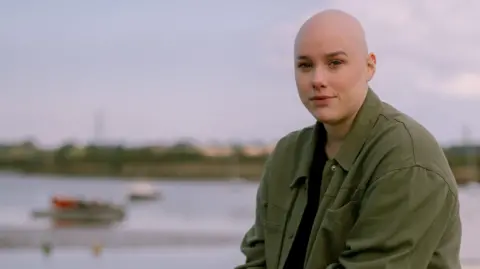 Isaac Qureshi
When Laura Mathias opened her door to a charity fundraiser, she did not expect what happened next.
The man standing on her doorstep asked Mathias, 35, who has alopecia, if she was "going to a Pitbull concert".
Fans of the rapper attend his shows dressed as him – in sunglasses, suits and bald caps.
"What I want people to understand is that visible difference should not be an invitation for commentary, assumptions or questions," says Mathias, of Manningtree, Essex.
The charity Changing Faces has started a campaign called Think Before You Speak after research showed nine in 10 people with visible differences lack self-esteem due to "hostile reactions from society".
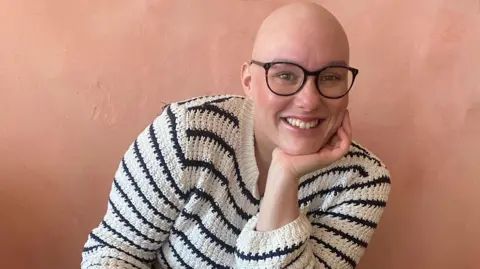 Laura Mathias
Mathias was diagnosed with the autoimmune condition aged 13, when she started losing her hair.
For the next 17 years she kept her hair loss secret, using a series of wigs that irritated her scalp and often made her head bleed.
During the Covid-19 pandemic, she found the confidence to leave home without her wig and began posting about her condition on Instagram.
"For years, I believed the best thing I could do to have a happy life was hide my hair loss," she says.
"I spent a long time avoiding being seen without my wig, even keeping the curtains closed at home because I was worried about people seeing me without hair.
"I'm in a very different place now and more confident living openly with alopecia. But I think people often misunderstand confidence.
"It doesn't make you immune to comments or reactions. People's commentary on my appearance can still make or break my day."
She says the interaction with the fundraiser "completely threw" her, as he commented "nice trim" and started making more jokes about her appearance.
"People often explain these interactions away as curiosity or banter, without recognising how exhausting they can become for the person on the receiving end who hears this time and time again," she says.
"If people simply paused to think before they speak, it could stop so many moments that chip away at someone's confidence."
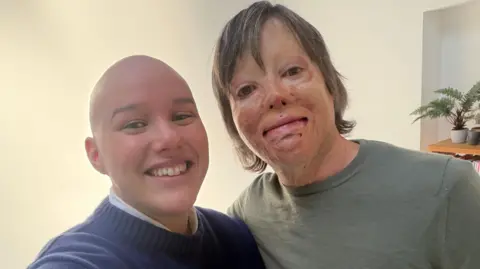 Laura Mathias
What is alopecia?
- Alopecia areata is an autoimmune condition that causes sudden, patchy hair loss
- It happens when certain immune cells mistakenly attack the hair follicles, stopping them from producing new hair, and in severe cases, hair is lost from across the body
- It affects approximately one in every 1,000 people worldwide at any given time.
- Living with alopecia can also be profoundly challenging, causing anxiety and stress
- People may experience difficulty at school and in the workplace, and it can lead to social isolation
Source: Alopecia UK
'Hostile comments and stares can devastate lives'
Most people do not realise the impact of their comments and "unwanted questions and conversations", according to Changing Faces.
One campaigner was asked 'What happened to your face?' during their weekly shop, while others reported being filmed, called names and even being spat at, the charity says.
Louise Wright, its chief executive, says: "Hostile comments and stares can devastate lives. It can affect every aspect of daily life, stopping people from doing the things they enjoy, or accessing opportunities at work and other parts of life.
"Our campaigners tell us these instances are becoming more common. Nobody should feel worried about stepping outside of their home because of the comments they might receive.
"Such comments are dehumanising, insensitive and need to be called out. We are urging the public to think before you speak."
Do you have a story suggestion for Essex? Contact us below.
Follow Essex news on BBC Sounds, Facebook, Instagram and X.
