Rethink on exercise for heart surgery patients

 BBC
BBCUntil now patients waiting for heart surgery have been told to avoid exercise.
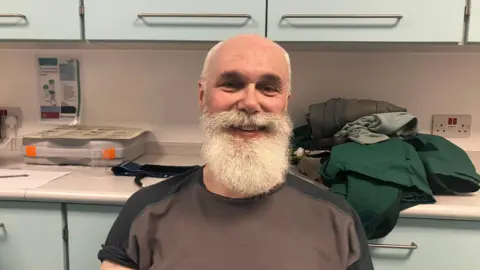
But Graeme Harrison is part of a new study in Southampton testing whether exercise before surgery can actually help patients recover faster.
He has a condition called aortic stenosis which means his heart does not pump enough blood around his body. This leads to fatigue and breathlessness, he is waiting for an operation to give him an artificial aortic valve.
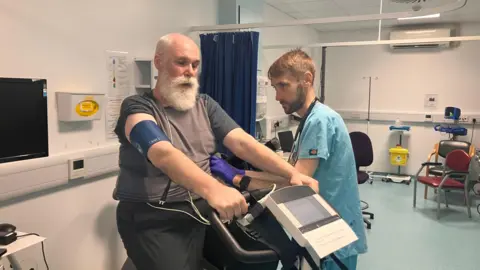
Every week he comes to University Hospital Southampton and gets on an exercise bike.
Everyday things make Graeme exhausted.
"When I go to bed and I walk upstairs to clean my teeth, I have to have a sit down for five minutes before I have sufficient energy to stand at the sink and clean my teeth," he said.
While wearing electrodes he is taking part in monitored exercise – something heart patients have until now been told to avoid.
The CardioFit trial is delivered through the National Institute for Health and Care Research (NIHR), Southampton Biomedical Research Centre (BRC) and supported by the Heartbeat charity.
Patients with cancer are already routinely offered what is called "prehabilitation" as part of a UK-first NHS service at University Hospital Southampton.
Its success has led the hospital to now investigate the impact of exercise on patients with heart conditions.
The charity Heartbeat has part funded the Cardiofit trial, alongside NIHR Southampton Biomedical Research Centre, chief executive Mark Ind says.
"Despite the portent of undergoing very serious often life saving, life changing surgery, there is hope not despair.
"And it's the hope that can create a level of positivity that means that post surgery they can see an afterlife and a future that maybe they thought they would never have."
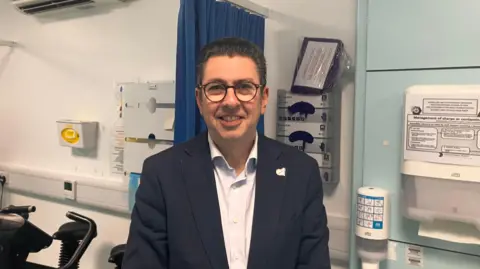
"This is one of the first times prehabilitation - preparing for surgery through supervised exercise - has been applied to patients with heart valve disease," says Sandy Jack, a professor of prehabilitation medicine at the University of Southampton.
"We know from our earlier work that being fitter before surgery can make a real difference to how quickly patients recover, and we want to bring those benefits to people undergoing cardiac surgery.
"Prehabilitation has also been shown to reduce the number of cancellations on the day of surgery, leading to important cost savings for the NHS."
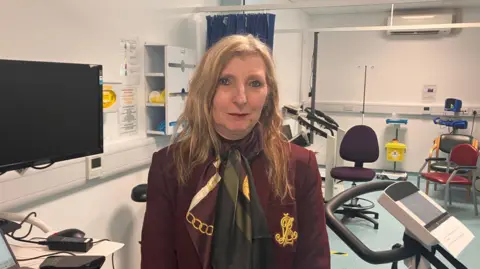
Severe aortic stenosis occurs when the aortic valve thickens or stiffens and fails to open properly. About 300,000 people are believed to be living with this heart condition in the UK.
Participants on the trial complete up to six weeks of exercise at the hospital's National Institute for Health and Care Research (NIHR) Southampton Clinical Research Facility, guided by clinicians and tailored to their individual fitness levels.
Each session is carefully monitored with heart and oxygen sensors to ensure safety and assess each individual's response.
Four patients have taken part so far and reported no safety issues.
Graeme added: "After the first session I was surprised, I thought it was going to be really difficult. It is challenging but actually it doesn't leave me physically exhausted in the same was as just walking around town or walking upstairs at home does."
He will attend these sessions for a few more weeks to improve his fitness further before his operation. Many more patients like him are expected to follow.
You can follow BBC Hampshire & Isle of Wight on Facebook, X (Twitter), or Instagram.
