Student film raises awareness of dual diagnosis

 Karina Whelan
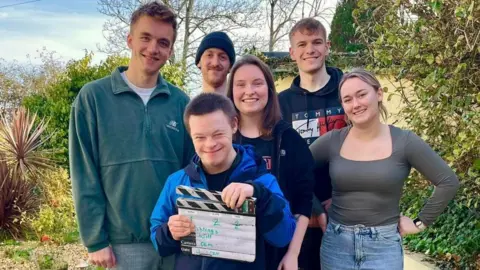
Student film-makers have drawn on their own personal experiences to create a documentary to raise awareness of Down's syndrome and autism dual diagnosis.
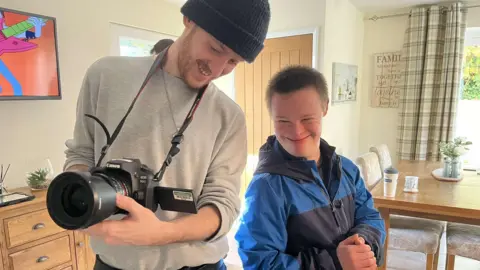
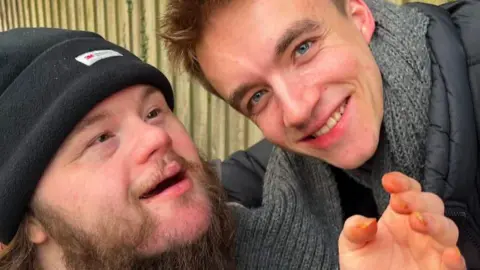
Siblings is a short film about Alex and Ben who are the brothers of film producer Karina Whelan and director William Hessey.
William said the process of making the film had "definitely brought our families together and helped expand our knowledge of what they have gone through".
The pair said they hoped the film would highlight the "challenges and strengths that come with having a family member who has additional needs".
The short film is currently on a festival run and William and Karina said they hoped it would be used for educational purposes in the future.
The pair came up with the idea for the documentary when they discovered their brothers had both been dual-diagnosed.
"Once we realised how much we had in common, we knew that this documentary had to be made," said Karina.
Karina described her brother Alex, 28, as "the life and soul of the party".
She said: "He's just such a loving, affectionate, caring individual."
 Karina Whelan
Alex was diagnosed with autism at the age of six.
"My mum worked very hard to make sure that he got that diagnosis and support that he needed," said Karina.
She said he was non-verbal but he was still able to "fulfil so many parts of his education that now he's able to use in his adult life".
William described his brother Ben, 31, as an "absolutely fabulous, beautiful person".
He was diagnosed with autism at the age of 15.
"He is more on the severe end of the autism spectrum," said William.
"It means that his life consists of various routines that he has to stick with to avoid becoming stressed or overstimulated."
He is also non-verbal.
William said the autism affected his brother's day-to-day life "more than his Down's syndrome".
 William Hessey
Down's syndrome is usually diagnosed at birth but it can often take a lot longer to get an autism diagnosis.
"It's so important that it's recognised within the education and health sectors because there are significant sensory, behavioural and social issues that do come with a dual diagnosis," said Karina.
The pair worked alongside fellow University of Gloucestershire film production students Cameron Blackmore, Mike Shaw and Cerys Roberts to make the film which was shot in Devon and Cardiff.
Karina said they were hoping to share it with the Downs Syndrome Association and the National Autistic Society so that it could be used for educational purposes in the future.
Follow BBC Gloucestershire on Facebook, X and Instagram. Send your story ideas to us on email or via WhatsApp on 0800 313 4630.
