Campaigning mum's 'living nightmare' over child's death as scrambler ban introduced

 BBC
BBCThe mother of a 16-year-old girl who was killed by a scrambler bike has said life since her death has been a "living nightmare".
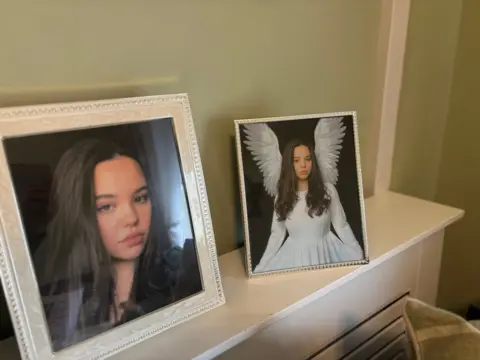
Grace Lynch died in January after being hit in Finglas, County Dublin. Since then, her family has been campaigning for stronger laws in her name.
Grace's Law, which came into effect on Friday, bans scramblers from all public spaces in the Republic of Ireland.
The move makes the law stricter compared to the UK, where scramblers are mostly illegal on public roads and spaces, but are not subject to a blanket ban.
Siobhan Lynch said she hopes the law will be replicated in Northern Ireland and the rest of the UK, calling it a "victory" for Ireland.
"I'm happy that the law is being passed," she said. "I'm not happy that she had to die for that law."
A garda (Irish police) officer was given a two-year driving ban on Wednesday after chasing scramblers in Dublin in an incident that was deemed to be dangerous driving.
The Garda Representative Association said members have a "genuine fear" in pursuing vehicles as they may end up being disciplined or even prosecuted.
Ireland's Department of Transport said the new regulations will strengthen existing provisions and powers of enforcement by An Garda Síochána.
Under Grace's Law the mere use of scramblers will now be an offence and gardaí will no longer have to form a reasonable belief about dangerous use.
Siobhan said her family was still grieving Grace's loss.
"It's like I am on autopilot. Still to this day, I still think, 'She's on a holiday. She's not gone'. And then when I have to go to her graveyard and realise she's there," she said.
"It's hard for all of us. Every single night I cry. Every single night… I have to push my feelings through in the day.
"I break down in my own time, I break down at night. For us, our entire family, it's been a living nightmare."
She also paid tribute to her daughter, who she said was very laid back, had lots of friends and wanted to get married and have children.
"She's just such a lovely kid, just full of life. All her friends, all came in from her school and said the only thing Grace wanted to be was a mother.
"When Grace passed this sitting room, she was laid out here. Oh my god, my house was full, full, I had chairs in my garden and it was just full of all of her friends. We couldn't believe it, we were like, 'Does she actually know all these people?' But she did."
What is Grace's Law?
Under the new laws, off-road motorcycles, such as a scrambler or quadbikes, are banned in all places apart from private land.
Off-road motorcycles are now only legal for use on private land by the landowner themselves, or with their written consent.
This means scramblers or quadbikes will only be used for agricultural purposes and for controlled licenced sports events.
Even though off-road scramblers have been illegal on public roads since July 2023 in Ireland, the Irish government hopes the new law will bring "additional legal clarity".
What is the law in Northern Ireland?
In Northern Ireland, e-scooters, scramblers, go-peds, buzz boards, quads and mini-motos are restricted to off road use only.
If they are used on the road, the driver needs to fulfil a certain criteria, including having a driving license, at least third party insurance and obligatory lamps, reflectors and rear markings fitted.
Martin Connolly, from Community Restorative Justice in Londonderry, has described these vehicles as "lethal weapons in the wrong hands".
"We are waiting at the moment, waiting that sometime in the future this is going to happen, somebody is going to get hit by one of these things, somebody is going to die," he said.
He also has called for a change of law to be introduced in Northern Ireland.
"It's like other laws, or other policies that get introduced where there is a cross-border policy, and this should be the same thing, it should be an all-Ireland policy.
The Department for Infrastructure (DfI) said there are no plans to change the current policy in Northern Ireland.
They "will continue to liaise with the PSNI on this issue and monitor the implementation of the new legislation to inform any potential changes in the future," they added.
