Extreme temperatures cause A12 to soften and melt

 Richard Daniel/BBC
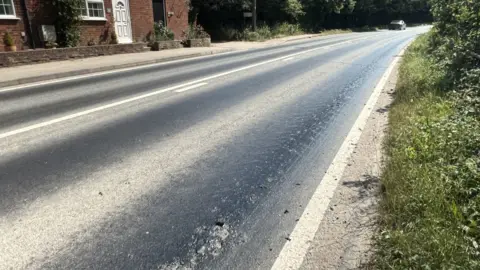
A motorist has raised concerns after part of a busy road started to melt in the high temperatures.
Luke Payne, 50, from Kesgrave in Suffolk, works as a decorator and while travelling on Tuesday noticed part of the A12 at Wickham Market had started to melt.
By Wednesday afternoon he said it had then worsened as temperatures rose above 30C and he told the BBC he was "very alarmed".
A spokesperson for Suffolk Highways said no treatment had been required on the road yet, but it was "actively" monitoring the situation.
 Contributed
Several weather warnings have been issued by the Met Office for extreme heat across Suffolk, while a red heat-health alert was issued by the UK Health and Security Agency.
Payne said he had noticed the melting road on his way back from Framlingham.
"I began to see, quite alarmingly, wide stretches of the A12 actually melting," he said.
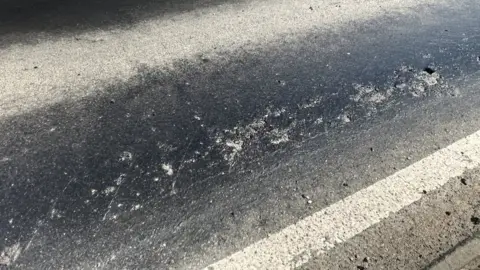
"At one point I pulled over after going through one patch and realised I actually had tar sitting on the tyres, which is incredibly dangerous, it affects the grip."
 Richard Daniel/BBC
Payne said while driving he could smell the tar and described it as "pungent".
"I've done various advanced driving courses and I was extremely concerned," he continued.
"So if you were a new driver or someone who doesn't drive all that much, you're not going to be able to handle that kind of condition."
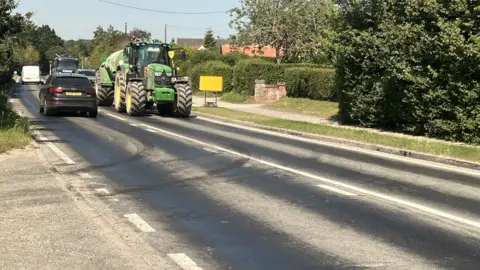
Other melted parts of the same road could be seen further north towards Yoxford on Wednesday.
RAC road safety spokesperson, Rod Dennis, said on Monday that darker patches on roads was often the clearest indicator of a road softening.
"Drivers may therefore see councils deploying gritting vehicles - a sight normally reserved for the winter - as applying a fine layer of granite dust can help maintain traction on melting roads," it added.
 Richard Daniel/BBC
Suffolk Highways told the BBC that it would put safety measures in place where needed across the county.
Talking about the A12, a spokesperson said: "While no treatment has been required yet, this part of the A12 is being actively monitored as a result of the extremely high temperatures currently being experienced in Suffolk and it will take place if necessary."
They encouraged people to look out for softening surfaces and to slow down, leave extra space between vehicles and avoid harsh braking or sharp turns.
Elsewhere across the county the extreme heat caused Cedarwood Primary School in Kesgrave to shut for the week, while Great Barton Church of England Primary Academy in Bury St Edmunds similarly decided to shut on Thursday.
The Met Office warned that there would be adverse health effects due to the heat, changes to working practices and daily routines, and some delays on roads.
Do you have a story suggestion for Suffolk? Contact us below.
Follow Suffolk news on BBC Sounds, Facebook, Instagram and X.
