Why are our roads melting – and what can be done?

 Luke Deal/BBC
Temperatures are due to hit 31C (87F) in parts of Suffolk later this week – and with the blistering hot weather already causing one main road to shut, why are our roads melting?
What is happening on the A143?
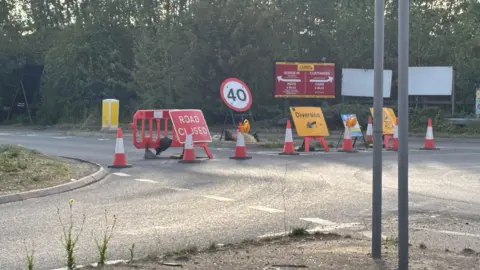
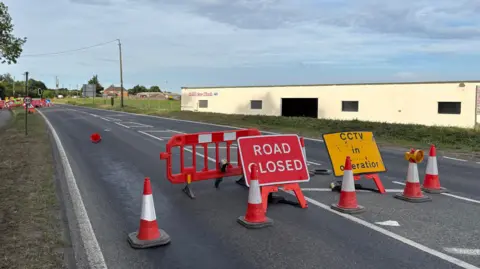
Reports that a main commuter road was melting during Monday's heat led to an emergency closure.
The A143 at Stanton, near Bury St Edmunds, Suffolk, was shut at 06:30 BST by Suffolk Highways.
BBC Radio Suffolk reporter Luke Deal says he has seen "patches of tarmac that have just been lifted up by cars travelling up and down" on the stretch of road between the village and nearby Ixworth.
The council says it is planned for the road to reopen on Monday following an initial phase of permanent repairs to the worst of the defects this week.
Highways workers will return to the site in the coming weeks to carry out further work on the carriageway.
It is the second time that the stretch of road surface has been said to be melting, following reports during June's heatwave.
 Luke Deal/BBC
West Suffolk district councillor Jim Thorndyke, who lives in Stanton, says problems started when the road was resurfaced in September.
"They used stone that wasn't washed, so we had dust everywhere – and then within a matter of days, because they did it when it was pouring with rain, the stones all came off," he says.
"The tar had cooled off too quickly, and the stones hadn't stuck.
"Now the bare road - when we got all this hot weather and again now – it's not just coming off in little bits, it's coming off in big lumps."
The Independent councillor says 30mph and 40mph speed limits had been put in place along the affected road about two months ago, but he is concerned by some motorists ignoring the restrictions and sticking to the 60mph speed limit, and by drivers overtaking.
Commuters use the road heavily, which runs between Gorleston, in Norfolk, and Haverhill.
 Luke Deal/BBC
Thorndyke says both commuters and Stanton's 2,800 villagers must also brace themselves for more disruption next week on the stretch due to roadworks starting for a new housing estate.
He says one-lane traffic measures are expected to be in place until November.
"Come Christmas, we're looking for a happier state," Thorndyke says.
The council says the deterioration on the A143 is due to the heat damage and "not related to any previous surface dressing works".
Its work later in August has been prompted by previous "unexpected rainfall", which has reduced the adhesiveness of the binding on the road surface.
"There is a warranty period for the surface dressing, which is standard in the industry, meaning that the aspect of our upcoming repairs which is related to the previous surface dressing will not be at the expense of the taxpayer," it adds.
While no temperature measurements have been taken of the road surface this week, the council says previous readings have shown it to be in excess of 60C (140F) due to the road retaining heat in prolonged periods of high temperatures.
Why do roads get so hot?
 Richard Daniel/BBC
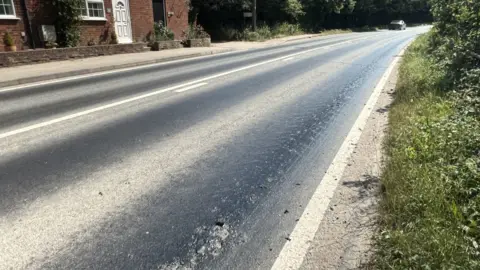
During June's heatwave, a motorist spoke of his alarm that parts of the A12 at Wickham Market and near Yoxford had melted.
According to the Road Surface Treatments Association (RSTA), "localised melting... is not surprising" during heatwaves.
"Asphalt is a bit like chocolate – it melts and softens when it's hot and goes hard and brittle when it's cold – it doesn't maintain the same strength all year round," says the association's chief executive, Howard Robinson.
Most roads will not start to soften until they hit a temperature of 50C (122F), the RSTA says.
However, roads can start to reach this temperature even on a sunny day in the 20Cs as the dark asphalt absorbs the heat, which then builds up during the day, it adds.
It can then make the bitumen in some road surfaces soften and rise to the top, making the road surface sticky and more susceptible to damage, such as ridges and rutting, from heavy vehicles.
Ben Moore, from a local road surfacing contractor, says roads being so busy and heavy vehicles using them are also causing issues.
"Roads need resurfacing a lot more - because if you look at the A12, it's single carriageway where it was going very, very soft," he says.
"That road has never got time to cool down – you've got HGVs constantly on that, and the tar just can't cope with it – it's just so hot."
How can roads be stopped from melting?
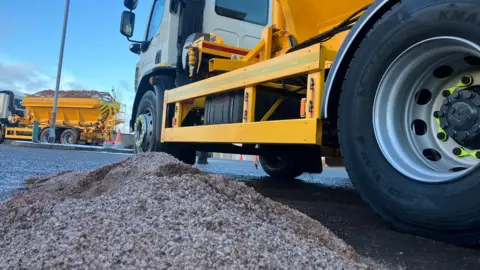
Local authorities will often send out gritters to spread granite dust to absorb the soft bitumen and stabilise the road surface, the RSTA says.
About 30 years ago, a new type of asphalt using polymer-modified binders was introduced to raise the asphalt softening point to 80C (176F), but the RSTA says this material is more expensive and only tends to be used on heavily-used roads.
But it adds that polymer-modified binders are contained in most surface dressings used to seal road surfaces and restore skid resistance, which will resist softening during spells of hot weather.
How to travel safely in the hot weather?
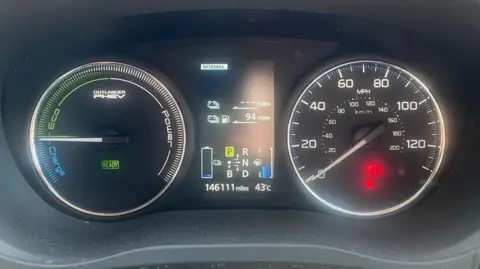
National Highways says the UK's roads are built to some of the highest standards in the world and are "highly resilient to extremes of weather, including hot weather".
But in some "isolated instances when it is very hot, tarmac can soften", which means it has to close lanes and consider carrying out repairs.
It advises road users to check travel conditions before setting out during the warmer weather.
RAC road safety spokesman Rod Dennis says basic checks – such as motorists topping up their vehicle's oil should be carried out, as well as ensuring they are carrying enough water to drink – before any major summer trips.
"Drivers will have seen darker patches of asphalt as the roads soften in the intense summer heat," he says.
"If a car's tyres pick up any of these sticky road deposits, they'll normally be very small and will easily wear off with regular driving - just as they do after travelling on a newly-laid patch of road.
"But in extreme cases, or if any of it makes it on to the car's bodywork, we recommend using a dedicated tar removal product. Just ensure it's safe to use with tyres."
Do you have a story suggestion for Suffolk? Contact us below.
Follow Suffolk news on BBC Sounds, Facebook, Instagram and X.
