Wildlife rescue centres 'inundated' with owls and hedgehogs due to drought

 BBC
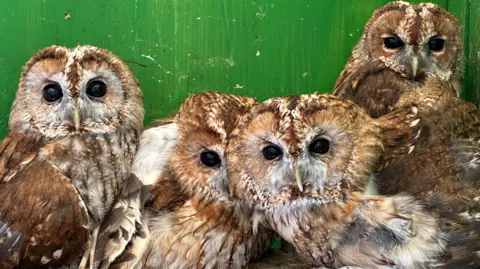
BBCWildlife rescue centres in drought-affected England and Wales say they are struggling to cope, because so many creatures are becoming dehydrated and suffering from heat exhaustion.
Hedgehogs and owls have been particularly badly affected during a succession of heatwaves, as food and water sources have dried up or disappeared.
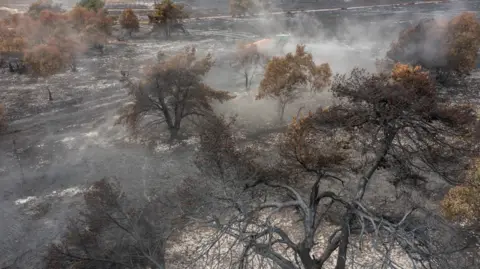
Woodland and heathland has been destroyed by fires, and important wetland areas have suffered extensively because of the prolonged dry spell.
The public is being asked to help wild animals by leaving out water, creating shaded areas in their gardens and clearing access to ponds where water levels have fallen.
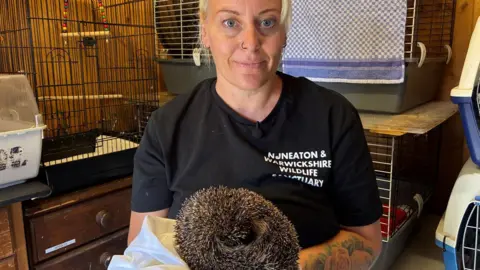
The Nuneaton and Warwickshire Wildlife Sanctuary said it had been overwhelmed since the first heatwave in May 2026.
Its hospital centre is filled with hedgehogs and hoglets, which were brought in by concerned members of the public when they were found to be sick and distressed.
They struggle to dig for food, with the ground so hard, and water sources have dried up.
Emma Hudson, its assistant manager, said: "It's been unprecedented, [they have] been really struggling with the heat... they just need fluids and time in the shade to recuperate."
 Justin Minns/National Trust/PA Wire
Birds, animals and insects have all been affected by the extreme heat and drought. Destruction of habitat by fires has added to the problems.
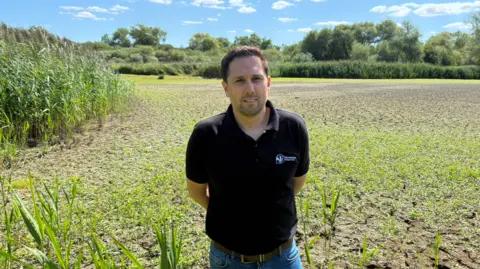
At Brandon Marsh in Warwickshire, water levels are extremely low, and one lake has completely dried up.
Karl Curtis, the director of nature reserves for Warwickshire Wildlife Trust, said the knock-on effect would be even worse.
"It's sort of a bit of a double whammy, where a lot of wildlife relies on food and water... but when you've got hard ground, baking hot sun and no water, that food just becomes scarcer," Curtis said.
He added it would take months of steady rain to replenish its water systems.
The Wildlife Trusts say members of the public who have gardens can help wildlife by making a few simple adjustments:
- Leave out water in shallow bowls and top it up regularly. This will help animals like hedgehogs. People could also put in stones to help insects that fall in.
- Provide cover from the sun. Leave out logs, let plants grow tall and "stay messy"; leaving stuff in the garden creates more shelter.
- Top up bird baths. Birds need water to bathe and keep their feathers clean.
 RSPCA
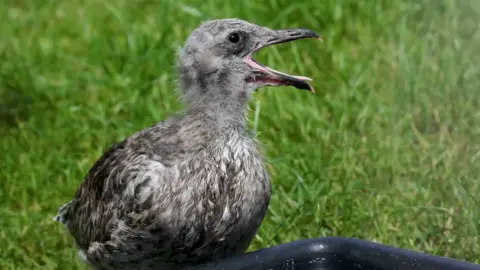
RSPCAThe RSPCA has seen a huge increase in heat-distressed herring gull chicks being brought into its four wildlife sanctuaries during the hottest periods.
It took in 380 in June and July 2025, but over the same period this year it accepted 1,297.
Staff have been filling paddling pools and running sprinklers to keep them hydrated and cool. When the chicks have been ready, staff at East Winch in Norfolk have been arriving at 06:00 BST to release them into the wild.
The organisation said the number of dehydrated and orphaned hedgehogs being cared for had risen by 30% over the same period compared with 2025.
Although cooler and wetter conditions are forecast over the next week in the drought areas, the situation for wildlife is unlikely to improve quickly.
Follow BBC Coventry & Warwickshire on BBC Sounds, Facebook, X and Instagram.
