Temporary units built to ease pressure on hospital

 BBC
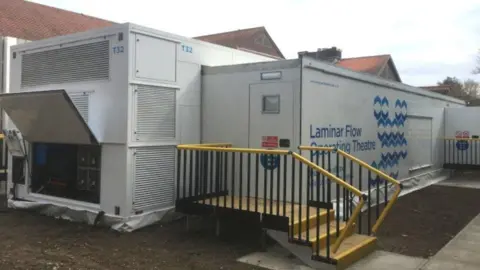
BBCMobile units will be created at a hospital which is struggling for patient bed space.
The temporary buildings at Great Western Hospital (GWH) in Swindon, Wiltshire, will be known as a "medical short stay unit" for people needing treatment for up to 72 hours and are expected to open later in the summer.
"It will provide 20 extra beds for patients who come to hospital with a medical condition, but do not need to be admitted to a ward," a spokesperson for the GWH NHS Foundation Trust said.
The temporary units, approved by Swindon Borough Council this week, come after the busiest winter on record for GWH, which led to long waits in urgent and emergency care services.
"In the longer term, the new units will also help provide capacity to enable us to carry out refurbishment work on wards in the main hospital, by giving us additional space to care for patients while this work is carried out," the GWH spokesperson added.
Currently, bed occupancy at the hospital sits about 98-100%, which exceeds the safe operational threshold of 85%.
An increase in ambulance arrivals and a busy emergency department "has also increased the strain on the hospital," a planning application submitted by the hospital trust to Swindon Borough Council stated.
Previously, a 2025 CQC inspection at GWH found that "people were cared for in corridors for extended periods" due to a lack of bed space.
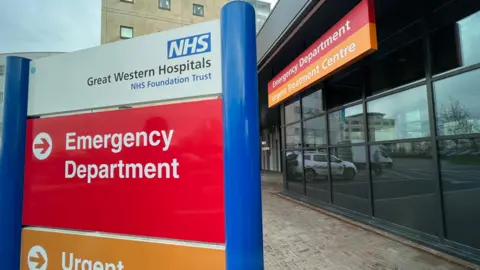
The mobile units are also intended to improve patient flow, facilitate safer staffing levels and eliminate "the reliance on corridor care" at GWH.
A Department of Health and Social Care spokesperson said that, despite sustained demand, 1.86 million patients were seen within four hours of arriving at A&E across the country in May - the highest number for any May in a decade.
"But we know there is much more to do," a spokesperson told BBC Wiltshire.
"That's why we are investing in more same-day emergency care and urgent treatment centres, expanding capacity and modernising services to help reduce pressure on A&E and make sure patients get the care they need as quickly as possible."
Follow BBC Wiltshire on Facebook, X and Instagram. Send your story ideas to us on email or via WhatsApp on 0800 313 4630.
