Blue-green algae returns to Lough Neagh

 Getty Images
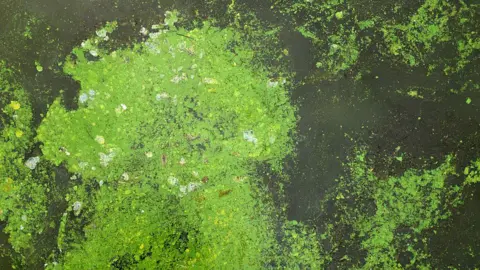
Blue-green algae has been recorded in Lough Neagh for the first time this year.
It was spotted on the south-west shore off the Washingbay Lough Walk.
The report, submitted to the Bloomin' Algae app, was marked as "verified" on Wednesday.
Other verified sightings have been reported at Brantry Lough in County Tyrone and Castlewellan Lake in County Down since the start of 2026.
A spokesperson for the Department of Agriculture, Environment and Rural Affairs said the first sighting at Lough Neagh was "sadly not surprising".
They added that the ecological and biodiversity crisis in the lough had been "decades in the making".
"Whilst there's no quick fixes, restoring and protecting the ecological health of the lough is possible by respecting the science and supporting the difficult decisions needed.
"The severity and scale of the problem this summer will depend on a number of factors including climate."
The stormy, cool and dull weather Northern Ireland has been experiencing has helped suppress growth of the algae.
But blooms are expected to resurge when the weather improves.
 PAUL FAITH/AFP via Getty Images
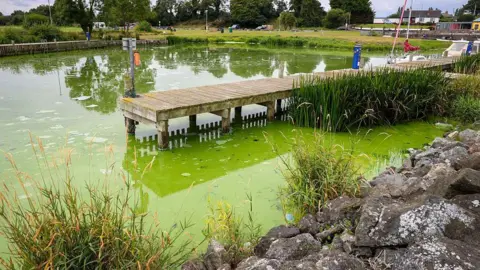
Lough Neagh, the UK's largest freshwater lake, has been blighted by blue-green algae in recent years.
Algal blooms have been recorded on the lough since the summer of 2023, when the algae was first detected at levels not seen since the 1970s.
A high level of nutrients in the water – phosphorus and nitrogen – is
Those nutrients come mainly from agriculture and wastewater treatment, as well as septic tanks, industry and households.
The invasive Zebra mussel species has changed the ecology of the Lough.
It eats ordinary algae and avoids blue-green algae as it is toxic.
That clears the water, allowing sunshine to penetrate deeper.
It also removes competition for the nutrients that all algae consume.
Climate change also plays a role, with the temperature of the Lough increasing by at least one degree since 1995.
What is blue-green algae?
Blue-green algae, technically known as cyanobacteria, is a collection of microscopic organisms that are naturally present in lakes and streams.
Under certain conditions, blue-green algae can become abundant in warm, shallow, undisturbed, nutrient-rich surface waters that receive a lot of sunlight.
When this occurs, blue-green algae can form blooms that discolour the water, or produce floating mats or scums on the water's surface.
The algae are bacteria, which can cause skin irritation and sickness in people who come into contact with it, but the biggest risk is to pets, livestock and wildlife.
