Wildlife group logs hundreds of dolphin sightings

 Alan Coe
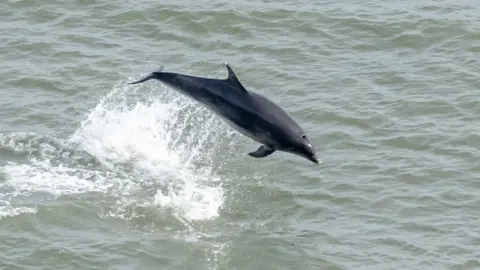
A newly-formed wildlife group has logged hundreds of dolphin sightings off Bempton Cliffs in East Yorkshire.
The site, managed by the RSPB, became England's first official Shorewatch location 16 months ago.
Since then, there have been 1,896 sightings of bottlenose dolphins and 51 whale sightings.
Shorewatch, run by the Whale and Dolphin Conservation (WDC) charity, trains volunteers to carry out surveys of marine life.
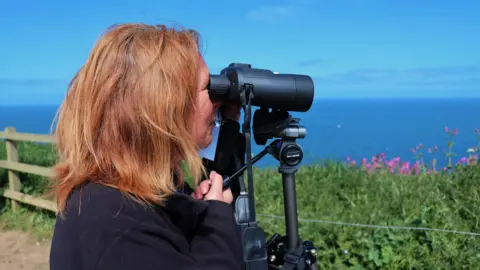
A 20-strong team of volunteers recently conducted its 1,000th observation from the clifftop at the site, which is internationally famous for its seabird colonies.
Susanna O'Neill, RSPB senior administrator and a Shorewatch volunteer, said reaching the milestone was "an incredible achievement and a testament to the dedication of our volunteers".
She added: "This project has introduced thousands of visitors to the marine wildlife on East Yorkshire's coast and to see how close the dolphins come to the cliffs has been amazing.
"By collecting long-term data on the mammals using these waters, we can better understand how environmental changes are affecting them and ensure conservation decisions are based on robust evidence."
Volunteers use specialist marine binoculars to scan the sea for 10 minutes before they log their findings into a dedicated app.
Since the project launched in East Yorkshire, the team has logged:
- 1,896 sightings of bottlenose dolphins
- 341 sightings of harbour porpoises
- 50 sightings of minke whales
- A single sighting of a humpback whale
 Ellen Leach
The Shorewatch programme was established by the WDC in Scotland in 2005 and produces data that is analysed to assess the health of the seas and wildlife.
Alice Walters, WDC Shorewatch data coordinator, said that marine mammals "face increasing pressures from climate change, pollution, underwater noise, entanglement, disturbance and changes in prey availability".
"The high cliffs at Bempton give excellent visibility, and the dedication of the volunteer team has been incredible," she said.
"Reaching 1,000 watches highlights the importance of citizen science in gathering vital evidence to understand how cetaceans use our coastline and how best to protect them."
Listen to highlights fromHull and East Yorkshire on BBC Sounds, and watch the latest episode of Look North.
Download the BBC News app from the App Storefor iPhone and iPad orGoogle Play for Android devices
