Balaclava ban could be enforced this year - police

 Getty Images
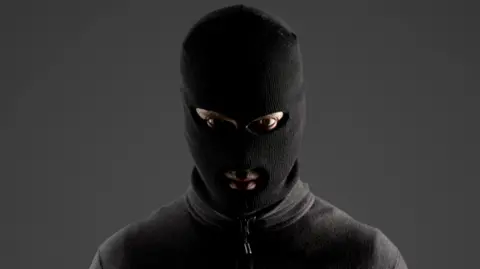
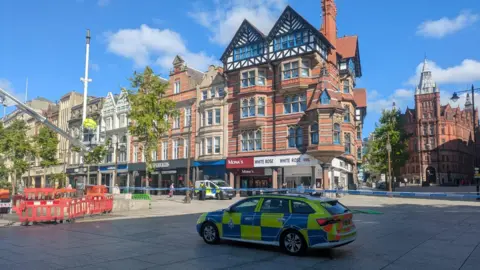
Police say a ban on balaclavas is likely to be introduced across Nottingham city centre by the end of the year.
Under the proposals, police and community protection officers will be able to ask people to remove face coverings if they "reasonably believe" they are being used to conceal their identity to commit crime or anti-social behaviour.
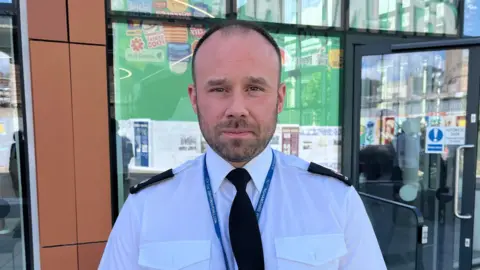
Nottingham City Council is yet to decide on the matter, but Nottinghamshire Police Supt Chris Pearson said the force was working hard to ensure it had those extra powers.
Colin Parr, the council's director for communities, environment and resident services, said recommendations would be drafted for the city's political leaders "in the coming weeks".
Nottinghamshire Police launched a survey in May asking residents, businesses, students and visitors to the city about where they felt most unsafe in the city centre and what could be done to improve their experience.
Respondents to the survey raised concerns such as lighting, graffiti and face coverings.
Pearson said: "Interestingly in the feedback that we got from the community, it is that [balaclavas] made them feel inherently unsafe.
"It was intimidating. I've experienced it myself in the city centre so we've been working incredibly hard to make sure we will get an extra tool to remove those face coverings."
A separate public consultation, launched by the city council earlier this year, also raised concerns about face coverings, such as balaclavas.
Parr said a consultation specifically asking whether the council should use its powers to impose a ban on face coverings had more than 2,000 responses.
"The early indications are that there is a significant public support for the restriction, we're collating the responses and we'll be drafting proposals and recommendations for our political leaders in the coming weeks," he said.
Pearson said he believed a ban on such face coverings was needed.
"I think it's needed because young people in particular cover their faces for one reason predominantly, and that is so that they can be involved in anti-social behaviour and crime, and not be identifiable to the police, not be identifiable on CCTV," he said.
If the ban is approved, Pearson said the expectation of police officers and staff was that they would investigate why the face coverings were being worn.
"There will be some legitimate reasons why those face coverings are worn.
"That could be through work, through health or indeed through religion.
"But where it is clear that those individuals are wearing them to intimidate the public or because they are involved in ASB [anti-social behaviour] or crime, those face coverings will be required to be removed and taken away by police," he said.
That outcome for adults would be a fine, while for young people, alternative measures such as the force's Immediate Justice project, would be considered.
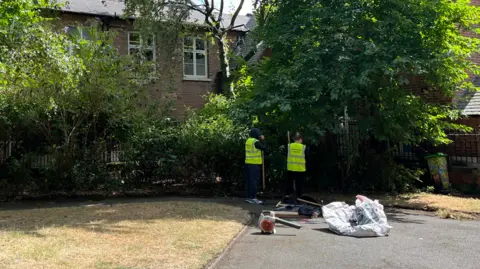
The Immediate Justice scheme gives low-level offenders or those who are involved in anti-social behaviour reparative outcomes, such as cleaning public spaces or volunteering in the community.
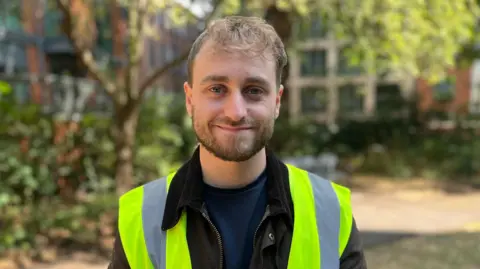
Jacob Cooke, operations manager of Immediate Justice, said the scheme allowed offenders to give back to their community as well as cut down on waiting times for court appearances.
"It also allows us to have interventions with offenders on the ground to prevent them from reoffending."
He added: "Having that intervention and discussing with them their offences on the ground, it also allows us to see them as people and not criminals which is really important."
Cooke said the scheme had received 2,200 referrals in the last three years.
The programme provides a pathway for young people as well as adult offenders.
"A lot are quite hesitant at first to join on to it, however, when they get on and they know what they'll be doing, a lot of them feel a sense of relief knowing that they're giving back to the community," Cooke said.
He added that members of the public had also expressed some "relief" knowing those offending in their communities were "also giving back".
The proposal is one of several measures as part of Operation Reclaim, a partnership approach involving the police, council and others, to tackle "major issues" affecting the city centre.
The other issues raised in the public survey included graffiti, lighting, homelessness and retail crime.
Nottinghamshire Police said it had made 821 arrests as part of Operation Reclaim, with a number of "prolific offenders" serving prison sentences for offences such as shoplifting.
"It's a very large number of arrests for the city centre but it's really reflective of all the police resource, partnership resource and hard work that's gone into Operation Reclaim," Pearson said.
The force said it was also working with voluntary organisations to tackle homelessness and anti-social behaviour involving young people.
Listen to BBC Radio Nottingham on Sounds and follow BBC Nottingham on Facebook, on X, or on Instagram. Send your story ideas to eastmidsnews@bbc.co.uk or via WhatsApp on 0808 100 2210.
