How will the heatwaves affect nature in the West?

 Getty Images
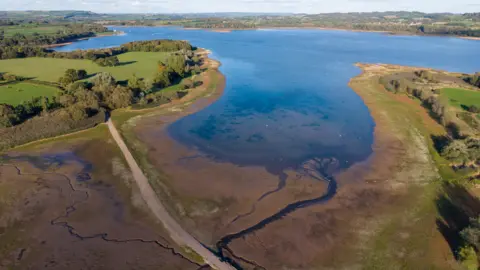
This year has seen a summer of record-breaking temperatures and prolonged dry weather across the West. But as meteorological summer comes to an end this month, what will the long-term impacts of the relentless heat be?
Five heatwaves, with temperatures reaching up to 36.7C at one point, have taken a toll on daily life, disrupting travel, forcing schools to close and causing wildfires.
Although temperatures have started to drop, experts say the earth beneath our feet and our wildlife has suffered lasting harm.
Heightened temperatures across the summer months have hit nature hard according to Stuart McCarthy-Thompson, who works at the Avon Wildlife Trust.
"These heatwaves have been quite devastating," he said.
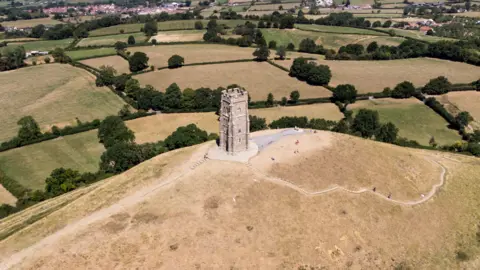
"Plants are desiccated, the grassland is pretty much gone and there's been a lot of soil erosion as well. We're also seeing a lot of trees that are quite stressed - losing leaves and their fruit."
 Getty Images
The lack of moisture has led to primary food sources, such as blackberries and seeds, ripening earlier in the year than usual.
"That's usually the autumn and winter larder for wildlife so we're concerned that there's not going to be natural food sources into the autumn months," McCarthy-Thompson explained.
Droughts have caused soil to harden, which has hit vegetable farmers across the region.
It has also led to animals such as earthworms burrowing deeper in order to find moisture, making it harder for birds to catch them.
"We're going to see some issues with insect emergence. If it's quite warm, insects arrive at different times and birds usually sync that with their eggs hatching," McCarthy-Thompson said.
"If those two things are not in sync then there's not enough food for the birds or they decide not to nest at all, because there isn't food for the young."
Will wet winters help?
 PA Media
Alongside searing summer heat, the UK also experienced a particularly wet winter in 2025-26.
Rainfall across England was 42% higher than the long-term meteorological average (LTA) for the season according to the Met Office and with a warming planet these extreme conditions are more likely.
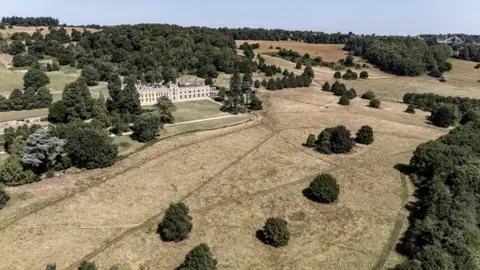
The prospect of increasingly damp winter months does provide some encouragement that the landscape will recover for councillor Oli Henman, cabinet project lead for climate change at Bath and North East Somerset Council.
"We're hopeful with rain it should generally recover but if the dry weather is too extensive and there's a lot of footfall then that can start to destroy some of the roots of the grass," he said.
But relying on the change of seasons may not be enough, which is why Henman said the council was considering measures to strengthen the resilience of the region's open spaces.
"The areas where you have shade under trees, generally the grass does better and that's one of the things we're looking at," he explained.
"One of the key things is how we manage our water resources better."
McCarthy-Thompson agreed more must be done to retain water reserves.
"Because of our landscape, water tends to run off very quickly," he said.
 Getty
Getty"This summer we've seen persistent water scarcity, lowering of groundwater levels, shrinking rivers and depleting reservoirs," said Nicholas Wray, curator at the University of Bristol Botanic Garden.
"All these stresses on ecosystems alter the hydrological regimes, which in turn affects wildlife and ultimately our long-term water supply."
The extreme heat has impacted the trees, said Wray, especially newly planted trees which have struggled to establish.
He also explained how trees can become more vulnerable to pests and diseases during heatwaves, which can cause trees to die or for dead branches to appear.
In large mature trees, Wray said dead branches may not appear until next year or the year after.
'Most struggling'
As for animals, heatwaves are a major and growing threat to a vast majority of wildlife, said Wray.
"Most will be struggling, they need water to live. A lot of birds and animals depend on fish and water environments, insects and invertebrates for food source."
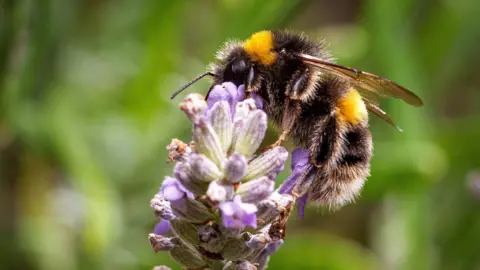
Increased temperatures and frequent heatwaves could also lead to a decline in bumblebee populations, said Wray.
"We have about 27 native species of bumblebees, but they're very hairy insects and they find it difficult to regulate the heat when they get too hot.
"If these weather patterns become the norm and we continue to get summer droughts, we may see a reduction in some of our native bumblebee populations."
And high temperatures has had an effect of farming, reducing dairy production and slowing growth rate in cattle and sheep.
"Overall, the climate is getting warmer," said Wray.
"And the thing with climate change is it's not a regular pattern. Next year could be the wettest summer on record and we'll forget all about the droughts.
"But we have to keep on doing these initiatives to help make our countryside, our gardens, society and cities, more resilient against extreme heat."
Follow BBC West social channels in Bristol, Gloucestershire, Somerset and Wiltshire. Send your story ideas to us on email or via WhatsApp on 0800 313 4630.
