'Football didn't come home but climate change did'

 PA Media
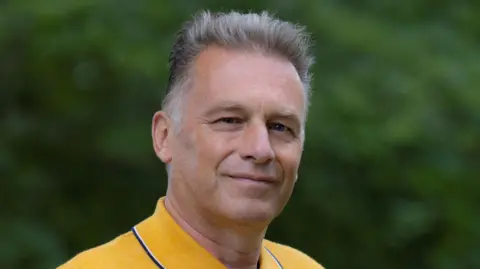
BBC Springwatch presenter Chris Packham said "football didn't come home, but climate breakdown has come home to the UK" this summer, following the devastating wildfire in Suffolk.
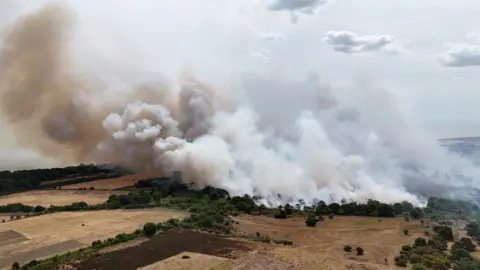
A major incident was declared at Dunwich Heath after 150 hectares (371 acres) of flora went up in flames on Wednesday.
The adjacent RSPB Minsmere site, where the fire began and which also got damaged, was chosen as the base for Springwatch to celebrate its 10th anniversary in 2014, and Packham called it an "extraordinary place".
He feared the UK would face similar fires in future due to climate change and called on politicians to take action. The government said it was investing nearly £100m into tackling wildfires.
Packham told BBC Radio Suffolk: "We have to act [on climate change], and that means acting at individual levels.
"That's you and I making choices about the way that we live our lives.
"But also our politicians now need to step up and be very brave and bold, and confront this issue in a way that they haven't done previously."
More on the wildfire at Dunwich:
 BBC Studios
At its height, the fire at National Trust's Dunwich Heath was at a size equivalent to 210 football pitches.
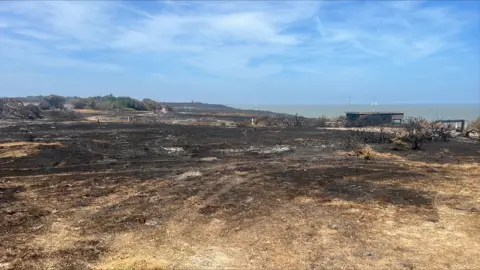
Firefighters are continuing to dampen down hot spots that are about 60C (140F) on the surface, and 600C (1,112F) underground.
The charity said there were some signs of life on the site, but it could take nature 25 years to fully recover.
The blaze came following the driest July on record for England and Wales, with Suffolk also being declared to be in drought.
Huge wildfires have also spread across other areas of the UK, France and Spain this summer.
 PA Media
 Richard Daniel/BBC
Packham said the affected area on the Suffolk coast had "one of the richest repositories of life that we have anywhere in the UK", thanks to its diversity and range of habitats.
Speaking about RSPB Minsmere, he said: "It's a national treasure, there's no doubt about that, and obviously Dunwich Heath... runs adjacent to that.
"Again, another really important piece of heathland, home to Dartford warblers, nightjars... all sorts of fascinating creatures.
"So I was tremendously saddened to know that amongst the plethora of wildfires which are sweeping across the UK, and more widely across Europe, that this particular site was going up in flames."
 Getty Images
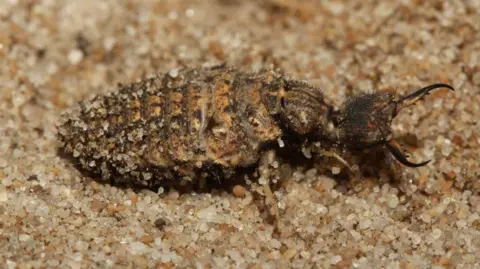
Packham explained the sites were home to numerous important species including antlions - an insect that in the UK can only be found along the Suffolk and Norfolk coastlines.
He said years of work and management went into nature reserves, and the heath would grow back given the opportunity.
But he stressed "you cannot rush nature" and it would take years for the site to recover to what it was.
A government spokesperson said it was investing nearly £100m into tackling wildfires, including in specialist equipment and wildfire training for firefighters.
It was also working to improve landscape resilience and support biodiversity recovery.
"We're working with local fire and rescue services to make sure they have what they need to tackle future risks, and have been clear that Suffolk Fire and Rescue Service will have all the resources they need to tackle this wildfire," the spokesperson added.
Do you have a story suggestion for Suffolk? Contact us below.
Follow Suffolk news on BBC Sounds, Facebook, Instagram and X.
