WW2 bomb detonated after building site discovery
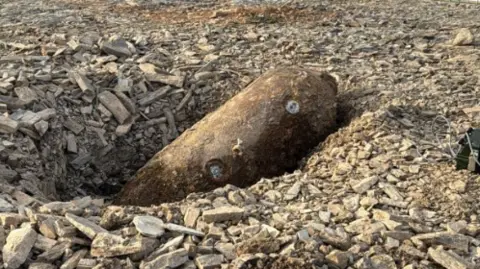
A controlled detonation has been carried out on a large World War Two bomb found at a building site.
More than 1,200 homes were evacuated in the Southway area of Plymouth after the device was found on Wednesday and a 400m (1,300ft) exclusion zone was put in place.
Plymouth City Council said the operation to make the 250kg (551lbs) German bomb safe started at 08:15 BST, with people in the area saying they heard "loud thuds" during the morning.
At 11:20, the council said the bomb - confirmed to be a German SC250 air-dropped bomb - had been "made safe", but the cordon remained in place until 13:45 while safety inspections were conducted.

 Royal Navy
BBC reporter Angela Kalwaites said a "big bang" could be heard at the site at about 11:15, shortly before it was confirmed the bomb had been detonated.
"You couldn't miss that one," Kalwaites said.
"As I looked across the barrier, there was smoke in the air and car alarms were going off.
"It was very loud and made us all jump."
Col Nick Handy, the senior explosives officer leading the operation, said the bomb could not be moved because its fuses could not be fully assessed.
He said X-ray examinations had failed to give a clear picture of one of the fuses, which meant it had to be blown in situ.
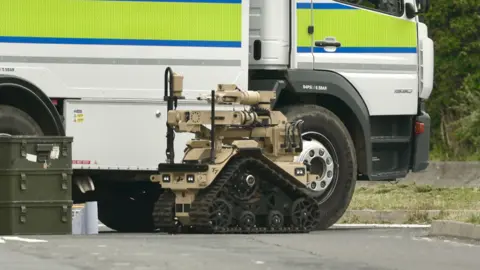
Drones were seen hovering over the site throughout the morning and a bomb disposal robot was sent to Southwark Drive.
Handy said the blast was caused by about a third of the explosives in the bomb, which was about 40mm (1.5in) thick.
"It could have been a lot bigger," he said during a press conference.
"We set out yesterday to deflagrate that item in order to limit the blast affects and we achieved that successfully."
He added the bomb burned at about 1,000C (1,832F) for about 10 minutes.
"The guys and girls on the ground were excellent in everything that they did - we won," Handy said.
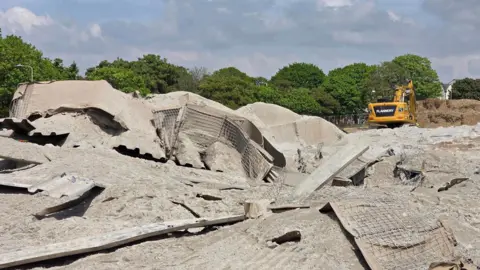
Councillor Sally Haydon, cabinet member for community safety, said 450 tonnes of sand had been transported to the site to place around the bomb before it was detonated.
She said: "Substantial protective measures were installed, including the erection of walls and the digging of trenches to mitigate the impact of any detonation and reduce ground shock."
Haydon added a "heartfelt thanks" had been paid to the military bomb disposal experts who carried out the operation.
"They quite literally put their lives on the line and it is thanks to their exceptional expertise, professionalism and care that this operation was brought to a safe conclusion," she said.
Jamie George, an army veteran who lives on the edge of where the cordon was set up, said he was in his bathroom when the blast happened.
George, who had just returned from a holiday, said the explosion brought back some traumatic memories from his 10 years in the military.
He said: "All of a sudden within like 30 seconds of me shutting my door, there was a big loud explosion.
"I just came outside and it's just full of smoke everywhere and it's been quite triggering."
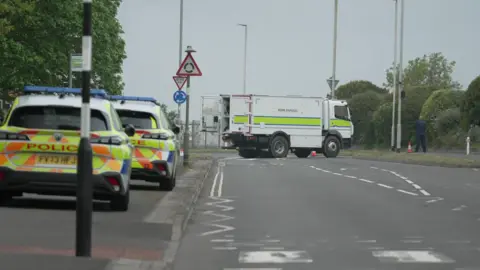
The council said following the completion of safety checks, the cordon was lifted with residents allowed to return home after "no significant damage" was found.
It added a number of temporary road closures would remain in place in the immediate area around the site while clean-up work was carried out.
Southway Youth and Community Centre in Hendwell Close remained open until 15:30 to residents and their pets who were evacuated from their homes.
The site had been used as an evacuation centre to help displaced residents following the bomb's discovery.
Resident Estella McNally made her way to the centre along with her husband, four children, a cat and four kittens.
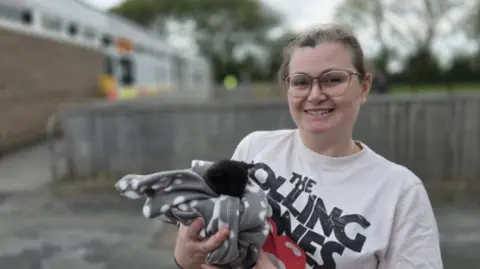
McNally said police and residents had been "amazing", adding the kittens were "loving the attention".
"They've had so many cuddles from everybody," she said.
Natasha Granville and Scott Bowhay, who live on Clittaford Road, said they were "right on top" of where the device was found.
Granville said they considered staying at home, but decided to leave for safety reasons.
"It's better to be safe than sorry," she said.
Follow BBC Devon on X, Facebook and Instagram. Send your story ideas to spotlight@bbc.co.uk.
